$43 Million WWII Shipwreck Treasure Sparks Global Maritime Legal Storm as Court Hands Victory to South Africa
A dramatic deep-sea treasure recovery has turned into one of the most talked-about maritime legal battles in recent years, after a massive $43 million silver haul from a World War II shipwreck triggered a high-stakes dispute over ownership, salvage rights, and sovereign immunity.
In a landmark ruling, the UK Supreme Court awarded ownership of the recovered silver bullion to the Republic of South Africa, ending years of legal confrontation with marine salvage firm Argentum Exploration Ltd.. The case has become a defining moment in global maritime law, particularly in the domain of shipwreck recovery and underwater resource ownership.
Historic Shipwreck: The “Indian Titanic” Resurfaces
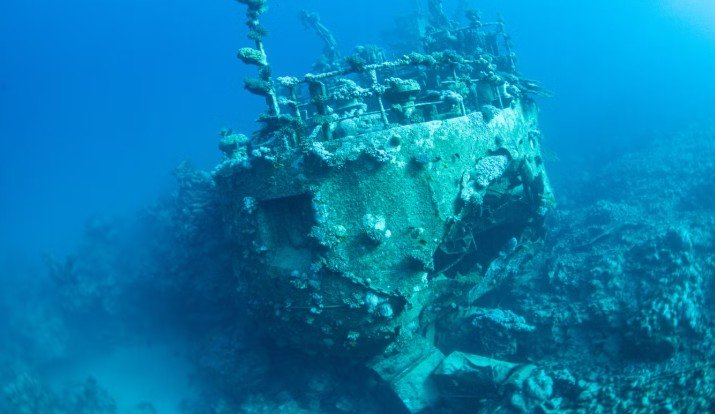
At the center of the controversy lies the ill-fated SS Tilawa, often dubbed the “Indian Titanic” due to the scale of its tragedy. The vessel sank on November 23, 1942, during World War II after being torpedoed by a Japanese submarine in the Indian Ocean near the Seychelles.
Originally sailing from Bombay (now Mumbai) to Durban, the ship carried over 950 people and a valuable cargo that included approximately 6,000 tons of goods, most notably silver bullion intended for coin minting in South Africa. The attack claimed around 280 lives, while hundreds of survivors were rescued after days adrift at sea.
Deep-Sea Salvage Operation Unlocks Hidden Fortune
The mystery of the sunken treasure remained unsolved for 75 years until 2017, when Argentum Exploration successfully recovered 2,364 bars of silver from a depth of nearly 3,500 meters. The operation utilized advanced subsea technology and the Norwegian vessel Seabed Worker, known for its role in deep-ocean recovery missions.
The salvage mission, supported by high-tech remotely operated vehicles (ROVs), marked a major breakthrough in deep-sea exploration and commercial salvage operations, industries increasingly tied to offshore resource recovery and maritime investment.
To avoid jurisdictional complications, the recovery team strategically transported the bullion via international waters, bypassing sensitive maritime zones before ultimately delivering it to the UK.
Legal Clash: Salvage Rights vs Sovereign Immunity
Following the recovery, Argentum claimed legal entitlement under the principle of voluntary salvage,a cornerstone of maritime law that allows salvors to seek compensation even without prior consent from the owner.
However, South Africa countered with a powerful legal defense rooted in the State Immunity Act 1978, arguing that the silver cargo was state-owned and intended for sovereign use, thereby granting immunity from legal claims.
While lower courts initially sided with Argentum, the UK Supreme Court overturned those rulings. The court concluded that the silver, destined for currency production, was linked to a sovereign function and therefore protected under international legal principles.
Maritime Industry Impact and Global Significance
This ruling is expected to reshape how future shipwreck salvage operations are conducted, particularly in cases involving state-owned cargo, wartime wrecks, and high-value underwater assets. Legal experts suggest the decision reinforces the importance of due diligence, ownership verification, and compliance with international maritime conventions.
Beyond the legal implications, the case has reignited global interest in the forgotten tragedy of the SS Tilawa, shedding light on unanswered historical questions surrounding its sinking and the circumstances of wartime maritime routes.
A Legacy Beneath the Waves
While the silver treasure has now found its rightful owner, the legacy of the SS Tilawa continues to echo across the maritime world,not just as a story of lost fortune, but as a powerful reminder of the risks, mysteries, and legal complexities that lie beneath the ocean’s surface.
As deep-sea exploration accelerates and underwater assets gain commercial value, this case stands as a precedent-setting moment in the evolving intersection of maritime law, global trade, and offshore resource recovery.