
6G Breakthrough: Visible Light Communication Set to Power Smart Maritime Networks with Ultra-High-Speed Data
A breakthrough in 6G wireless communication technology is set to reshape maritime connectivity and global data networks, as a new research publication highlights rapid advances in visible light communication (VLC), a high-speed, large-capacity optical solution poised to support next-generation digital infrastructure. According to findings published in Opto-Electronic Technology (DOI: 10.29026/oet.2026.260004), VLC is emerging as a powerful alternative to traditional radio-frequency systems, which are increasingly constrained by spectrum scarcity amid rising demand from data-intensive applications such as artificial intelligence, digital twins, and AR/VR systems.

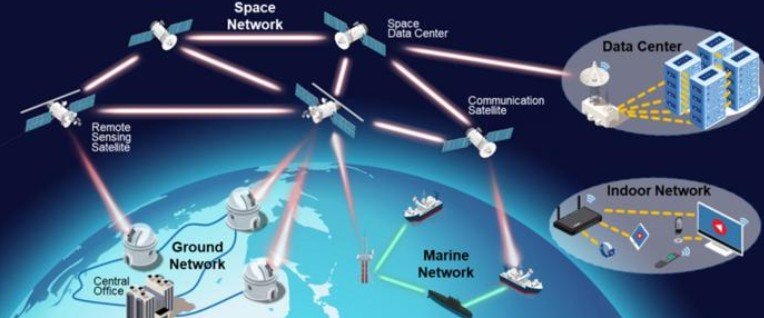
The study underscores how 6G networks are evolving toward an integrated space-air-ground-sea communication ecosystem, a development of particular relevance to the maritime industry, offshore operations, and smart shipping. By utilizing the 380–780 nm optical spectrum, VLC offers ultra-high-speed data transmission, low latency, and immunity to electromagnetic interference, making it highly suitable for complex maritime environments, including underwater communication, inter-satellite links, and port data systems. This positions VLC as a game-changing technology for smart ports, autonomous vessels, and maritime digitalization.
From a technological standpoint, the research outlines major progress across devices, algorithms, and system architectures. On the hardware side, innovations in micro-LEDs and laser diodes have enabled bandwidths in the GHz range, with single-channel data speeds exceeding 36.5 Gbps, while scalable device arrays are opening pathways toward terabit-per-second (Tbps) transmission capacity. Advanced photodetectors, including GaN-based sensors and avalanche photodiodes, are further enhancing receiver sensitivity and overall system efficiency, key factors for reliable communication in offshore and deep-sea operations.
Equally significant are breakthroughs in AI-driven signal processing and deep learning-based channel estimation, which are dramatically improving spectral efficiency and compensating for signal distortions. The integration of neural network-assisted equalization techniques is enabling more stable and high-performance communication links, even in challenging environments such as turbulent sea conditions or subsea data transmission systems.
At the network level, the adoption of multi-dimensional multiplexing technologies, including wavelength, spatial, and polarization division multiplexing,has already pushed VLC system capacities beyond 800 Gbps, with ongoing developments targeting Tbps-level performance. These advancements are expected to play a critical role in maritime IoT, offshore energy operations, naval communication systems, and real-time vessel tracking, where high-bandwidth, secure, and interference-free connectivity is essential.
Experts believe that continued innovation in optical communication systems, photonic integration, and perception-assisted predictive communication will accelerate VLC deployment across global maritime and logistics networks. As the shipping industry moves toward digital transformation and smart maritime infrastructure, visible light communication is rapidly emerging as a cornerstone technology for enabling next-generation 6G connectivity at sea and beyond.