
China, Canada Move to Reset Trade Ties as Trump Tariffs Force Strategic Rethink
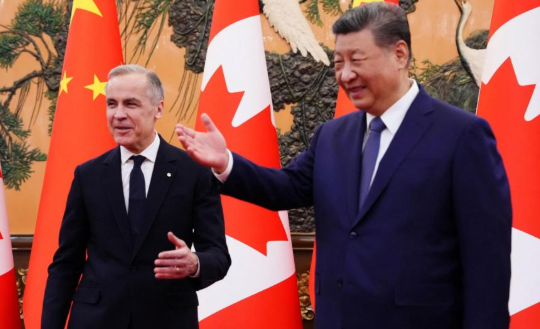
Canada and China are preparing to revive bilateral trade talks after years of diplomatic and economic strain, as shifting global trade dynamics and renewed US tariffs under President Donald Trump push both countries to reassess their reliance on Washington. Canadian Prime Minister Mark Carney’s first official visit to Beijing this week has signaled a possible reset in China–Canada trade relations, particularly in key sectors such as energy, agriculture, and raw materials.
Carney arrived in Beijing on Tuesday for a five-day visit, during which he is expected to hold discussions with Chinese officials on trade cooperation, agricultural exports, and energy ties. China is currently Canada’s second-largest single-country trading partner, with crude oil, copper, and iron ore among Canada’s top exports to the Chinese market.
Analysts say the visit reflects a broader strategic shift by both Beijing and Ottawa as they respond to increasing trade pressure from the United States. Liang Yan, a professor of economics at Willamette University in the US, described the trip as an important starting point for rebuilding economic engagement. He noted that such high-level talks would have been unlikely before Trump’s return to office, underscoring how US trade policies have reshaped global alliances.
Relations between Canada and China had deteriorated in recent years due to a series of high-profile arrests involving citizens from both countries, along with escalating trade disputes. In 2024, Canada imposed a 100 percent tariff on Chinese electric vehicles and levies of 25 percent on steel and aluminium imports. China responded with retaliatory duties on Canadian canola, pork, and seafood exports, further straining trade ties.
However, since Trump began his second term a year ago, both Chinese and Canadian officials have openly criticized US tariffs and broader trade restrictions. This shared opposition to Washington’s trade policies appears to be creating space for renewed dialogue between Beijing and Ottawa, raising expectations of a gradual thaw in economic relations.