China Explores Arctic’s Hidden Depths: Manned Submersible Dives 5,277 Meters beneath Sea Ice
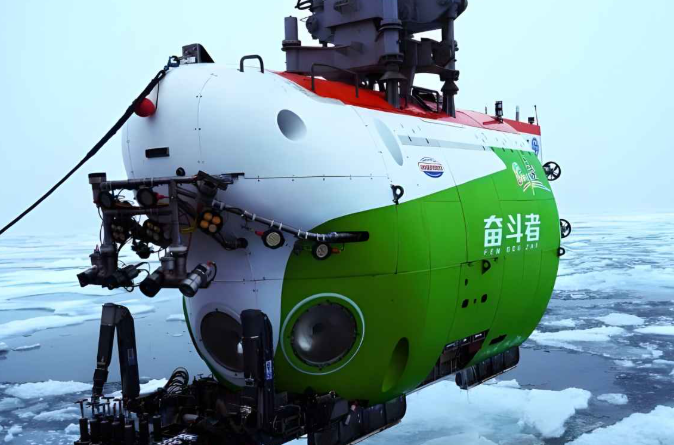
Beijing, China – In a groundbreaking expedition, Chinese scientists have successfully deployed a manned submersible to explore one of Earth’s last untouched seafloors beneath the Arctic pack ice. The Fendouzhe submersible reached a depth of 5,277 meters to survey the previously uncharted eastern Gakkel Ridge, a volcanic underwater mountain range stretching between Greenland and Siberia.
The mission, conducted from the ice-capable research vessel Tan Suo San Hao, involved 43 dives over a three-month period. According to official statements from the Chinese Academy of Sciences and reports in Nature, the expedition offers unprecedented insight into a region that may host unique deep-sea life and reveal how the Arctic is responding to rapid climate change.
Unlocking the Arctic’s Deep-Sea Secrets
The Gakkel Ridge forms part of the global mid-ocean ridge system, where tectonic plates separate and new oceanic crust is created. Until now, the eastern sector of this ridge remained largely unexplored, with only sonar maps and a handful of uncrewed surveys providing limited data. Previous studies of the western ridge uncovered hydrothermal vents and unique ecosystems thriving on chemical energy rather than sunlight. Scientists hope the eastern ridge will yield similar discoveries.
Innovative Ice-Covered Dive Techniques
Operating under extreme conditions, the Fendouzhe submersible worked in coordination with Tan Suo San Hao to navigate areas where sea ice covered more than 80% of the ocean surface. Icebreaking procedures created temporary pools for safe deployment, while onboard sonar and cameras guided the submersible during ascent and descent. Some dives also involved collaboration with the Jiaolong submersible to test multi-vessel operations under ice.
Samples That Could Rewrite Arctic Knowledge
During nearly 100 days at sea, the expedition collected sediment cores, rocks, seawater, and biological specimens, while high-resolution sonar mapping provided detailed images of underwater hills, canyons, and geological formations. Scientists aim to confirm the presence of hydrothermal vents along the eastern ridge, which could host extremophile life forms and inform studies of potential life in icy moons like Europa.
Global Implications of Arctic Research
Beyond scientific curiosity, the findings have real-world significance. The Arctic plays a critical role in global ocean circulation and climate systems. Data from the Gakkel Ridge will enhance climate models, guiding coastal planning, flood defense strategies, and environmental policy as the region warms at nearly twice the global average.
Chinese authorities emphasized that this expedition represents only the first stage of exploration. Collected samples and footage will undergo extensive analysis over the coming years, gradually expanding humanity’s understanding of Earth’s deep oceans and the rapidly changing Arctic.
Source: Chinese Academy of Sciences