Seafarer Abandonment Reaches Historic High as Global Shipping Faces Deepening Crisis
The global shipping industry recorded its worst year on record for seafarer abandonment, with more than 6,000 crew members left stranded worldwide, according to newly released data from the International Transport Workers’ Federation (ITF).
ITF figures show that in 2025, a total of 6,223 seafarers were abandoned across 410 vessels, marking a deepening humanitarian and labour crisis at sea. The data represents a 31% rise in ship abandonments and a 32% increase in abandoned seafarers compared to 2024, extending a troubling trend that has now broken records for six consecutive years.
Indian Seafarers Most Affected
Indian seafarers were the worst-hit nationality, with 1,125 crew members abandoned, followed by Filipino seafarers (539) and Syrians (309). In response, the Indian government announced blacklisting measures at the end of 2025 to shield seafarers from vessels with repeated abandonment records and unsafe practices.
Millions in Unpaid Wages
The ITF reported that abandoned seafarers were owed USD 25.8 million in unpaid wages in 2025. Through legal and union intervention, the federation successfully recovered USD 16.5 million, returning it to affected crew members.
“This is nothing short of a disgrace,” said David Heindel, Chair of the ITF Seafarers’ Section, warning that abandonment has become a systemic failure within the shipping industry, driven by unscrupulous shipowners avoiding responsibility.
Middle East and Europe Top Abandonment Regions
The Middle East emerged as the region with the highest number of abandonment cases, followed by Europe. On a country level, Türkiye (61 cases) and the United Arab Emirates (54 cases) recorded the highest number of vessels involved in abandonment incidents.
Flags of Convenience Dominate Abandonment Cases
Vessels operating under Flags of Convenience (FOCs) accounted for 82% of all abandonments, with 337 ships flying FOC flags. Panama remained the flag state with the highest number of abandonments, recording 68 cases, while abandonments involving unknown flags more than doubled year-on-year.
The ITF has long warned that the FOC system enables labour exploitation and weak enforcement, concerns that have gained renewed attention amid recent crackdowns on flag-switching shadow fleets.
Calls for Stronger IMO Action
ITF General Secretary Stephen Cotton urged stronger international enforcement, calling on the International Maritime Organization (IMO) to play a greater coordinating role.
“These are not just statistics—these are workers who keep global trade moving, forced into desperate conditions far from home,” Cotton said, adding that real solutions lie in accountability and transparency across the shipping industry.
ITF Demands Urgent Reforms
To tackle the growing crisis, the ITF has called for:
- Mandatory disclosure of beneficial ship ownership before flag registration
- National blacklisting of repeat offender vessels
- Government investigations into the widespread use of Flags of Convenience
Case Study Highlights Human Cost
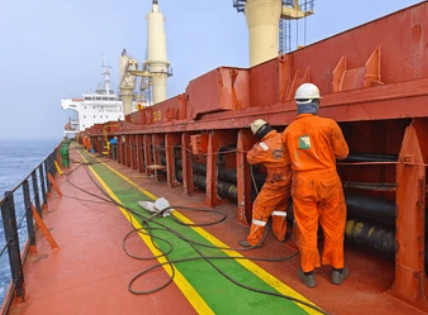
The crisis is underscored by the case of the Eleen Armonia, where Indian seafarers have been stranded off the coast of Nigeria since mid-2025 without pay or repatriation. Despite expired contracts and repeated appeals, crew members remain onboard, facing mounting stress and uncertainty.
The ITF has filed the vessel as abandoned and continues efforts to secure the crew’s wages and safe return.