
Guyana Set for Major Economic Growth in 2026 as Offshore Oil Production Surges
Georgetown, Guyana — Guyana’s economy is poised for strong expansion in 2026, with overall growth projected at 16.2 per cent, a slight moderation from the 19.3 per cent recorded in 2025, according to Finance Minister Ashni Singh in the presentation of the 2026 National Budget.
The country’s oil and gas sector remains the primary engine of growth, expected to expand by 17.9 per cent this year. Average crude production is forecast at around 840,000 barrels per day (bpd), reinforcing Guyana’s position as a rapidly growing energy producer on the global stage.
The minister announced that 309 crude oil cargoes are expected to be exported in 2026, up from 260 cargoes last year, generating an estimated US $2.79 billion in oil revenue. Each cargo represents roughly one million barrels of crude.
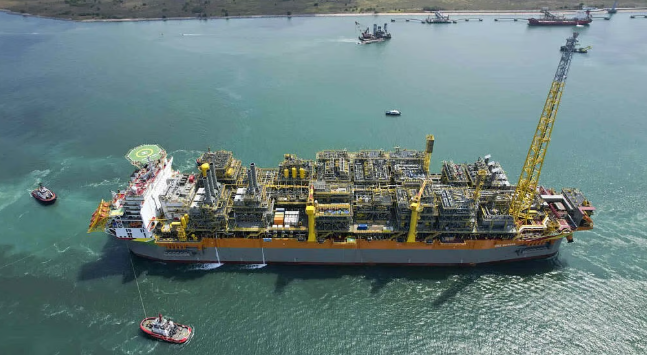
A fifth offshore oil project is slated to begin production later in 2026, underlining the sector’s central role in long term growth prospects. ExxonMobil, leading all offshore operations, increased its production capacity in Guyana to over 900,000 bpd in 2025 and is developing further projects that could raise output to approximately 1.15 million bpd.
Alongside oil-driven gains, the Government’s infrastructure-focused budget will channel petroleum revenues into national priorities, including plans to build 40,000 homes over five years and expand critical road networks.
In 2025, Guyana recorded its sixth consecutive year of double-digit economic growth. While growth in oil production eased compared to previous years, the non-oil economy expanded by 14.3 per cent, supported by strong performances in agriculture, mining, construction, and services.
Crude output last year reached 261.1 million barrels, up significantly from 225.4 million barrels in 2024, bolstered by the start-up of a fourth offshore project in August 2025.
Guyana, Latin America’s newest oil producer, has climbed to become the region’s fifth-largest crude exporter, trailing established producers like Brazil, Mexico, Venezuela, and Colombia.