Shipping Decarbonization in the Caribbean Requires Coordinated Regional Efforts, Say Leaders
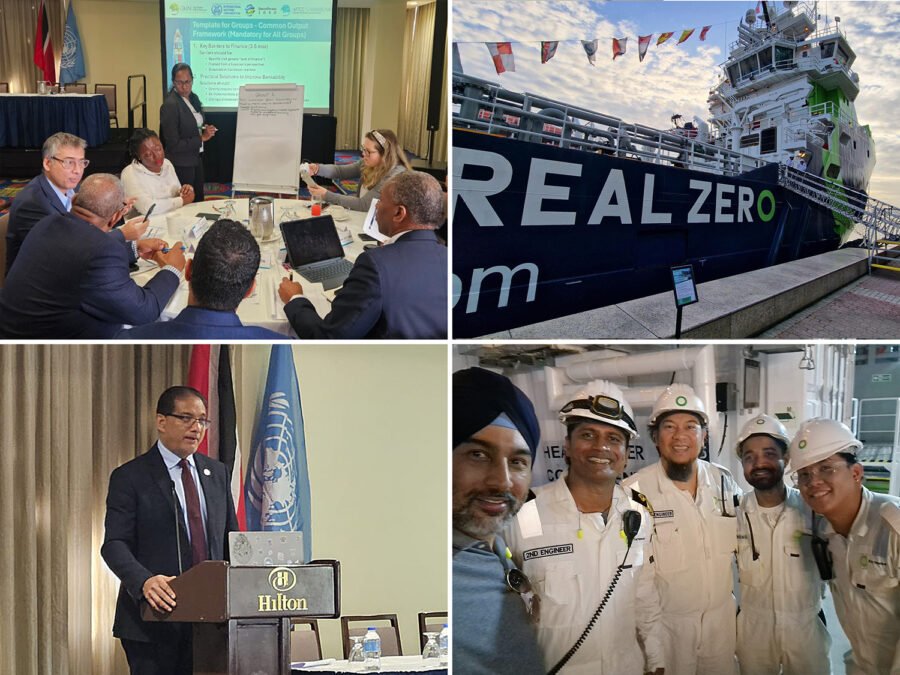
Caribbean maritime leaders are calling for a coordinated, cross-sector approach to decarbonize shipping, emphasizing that isolated projects or technologies alone will not be enough. Policymakers and financiers across the region stressed that successful decarbonization requires collaboration between countries and sectors, supported by evidence-based planning and investment-ready pathways. Senior representatives from Caribbean governments, maritime administrations, ports, energy authorities, development banks, and financial institutions gathered in Port of Spain, Trinidad and Tobago, on 29–30 January for a regional roundtable organized by the IMO GreenVoyage2050 Programme in collaboration with the Global MTCC Network (GMN Phase II).
The event, themed “Unlocking Maritime Decarbonization,” resulted in key draft policy recommendations focused on enhancing regional coordination to harmonize national policies, knowledge-sharing, capacity building, and facilitating investment. Participants highlighted the importance of moving from analysis to implementation by aligning policy, infrastructure planning, energy systems, and finance. The engagement of multilateral and regional development banks alongside policymakers and industry stakeholders helped link technical ambition with financial feasibility at an early stage.
Dr. Jose Matheickal, Director of the IMO’s Technical Cooperation and Implementation Division, emphasized the importance of bridging global ambition with national execution, stating that while the IMO GHG Strategy sets a clear global direction, implementation happens at the country and regional levels. He noted that creating the right policies, institutional capacity, and credible project pipelines is critical to allow finance to flow and turn ambition into action.
During the first day of the roundtable, participants explored how the 2023 IMO GHG Strategy could be delivered through technical cooperation and regional collaboration. Insights from the Jamaica Maritime Alternative Fuels Study, supported by the GreenVoyage2050 Programme, provided a concrete example of how Caribbean States can assess future fuel demand, supply pathways, infrastructure needs, and policy implications to guide investment and planning decisions. Building on this evidence, the discussions examined credible fuel pathways for the Caribbean, barriers to adoption, and how regional coordination could accelerate progress. Interactive mapping exercises identified existing initiatives, infrastructure gaps, and collaboration opportunities, while practical examples showed how policy intent is already translating into action through green port development, fleet initiatives, and pilot projects.
The second day of the roundtable focused on unlocking investment for a sustainable shipping transition, with development banks and financial institutions outlining strategies to improve project bankability and mobilize both public and private finance. Discussions included financial instruments, risk-sharing approaches, and policy signals needed to support investment in ports, clean fuels, and maritime infrastructure.
The event reinforced the importance of aligning national priorities with the expectations of financiers. Ms. Thandi McAllister, Director of Legal Services at the Maritime Administration Department of Guyana, highlighted that the roundtable provided a valuable platform for Caribbean States and maritime stakeholders to gain insights into opportunities that Small Island Developing States (SIDS) and Least Developed Countries (LDCs) can leverage to achieve their decarbonization goals. The program concluded with a visit to the ammonia-fueled vessel Fortescue Green Pioneer, giving participants a firsthand look at alternative fuel technology in operation onboard, demonstrating practical applications of green shipping solutions.
Source: IMO (International Maritime Organization)