
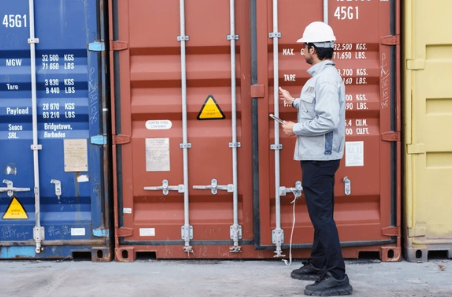
Enhancing Global Maritime & Logistics Safety through VDI 2700ff Load Securing Standards
In a world where trade routes are expanding globally and supply chains are becoming increasingly complex, cargo security between the port and the final destination is a major concern. The risks of improperly secured cargo extend beyond the shipment itself; drivers, logistics personnel, and other road users are also endangered. Research indicates that poorly secured cargo accounts for a significant portion of transportation accidents.Good load-securing standards have thus formed part of modern-day logistics, particularly for experts dealing in maritime routes, intermodal transport networks, and the global supply chain.
The guidelines series on load safety in road freight transport, the VDI 2700ff, created by the Verein Deutscher Ingenieure (Association of German Engineers), is one of the most frequently cited models. VDI2700ff, despite its European origins, has also shaped the practice of cargo securing all around the world, especially in areas where the road and port logistics are tightly tied into the international trade routes.
Understanding VDI 2700ff and Its Importance
The VDI 2700ff guidelines series describes a set of technical regulations dealing with provisions of securing loads on road vehicles. They include guidelines that address a variety of issues, such as the general principles of cargo safety, calculation of tie-down forces, specific methods of securing the cargo, and equipment needs of various types of vehicles (VDI 2700 Blatt 2, 2014; VDI 2700 Blatt 8.1, 2024).
The “ff” in VDI 2700ff denotes the series of subsequent parts that expand on securing measures for specific cargo categories and transport scenarios, such as heavy loads or vehicle carriers (VDI 2700 Blatt 13, 2010; VDI 2700 Blatt 8.1, 2024).
Despite being technical recommendations rather than national laws, adherence to VDI 2700 guidelines is often regarded as an acknowledged rule of technology, meaning that following these standards is typically expected in professional transport practices to demonstrate due care and compliance (ECG Association, 2025). Logistics professionals who apply VDI 2700ff understand not just the legal context of load securing, but also the operational implications that affect cargo safety and supply chain reliability.
Cargo Securing: A Safety and Compliance Imperative
The term cargo securing means any means of ensuring that transported goods do not move, fall, or get damaged in transport (Derda Logistik GmbH, n.d.). It is based on the physical rules like friction, fitting, distribution of loads, and proper use of securing means like straps and anchors. Poor security practices does not only raise the chances of accidents, but it also puts the transport firms at risk of legal cautions and destruction of image.
Besides, proper load securing is not only a procedural point, but it is one of the elements of operational safety. In other jurisdictions, transport laws mandate the use of securing means that ensure cargo is fixed in place such that it does not slop or shift in case of emergency braking (Ratgeber Ladungssicherung, 2025). Although the VDI guidelines are not laws, they usually provide a foundation on which the competent authorities and courts assess the reasonability of securing practices adopted.

Why Maritime and Logistics Professionals Should Care
For maritime logistics and port operators, the risks of poor load securing extend beyond road transport. International transport frequently involves intermodal transitions ,moving cargo from ships to trucks or rail systems. Each mode change introduces opportunities for cargo shift and damage, and requires re‑assessment of securing measures according to the latest technical guidelines (Ratgeber Ladungssicherung, 2025).
Academic and industry research emphasizes the dynamic forces acting on cargo during transport. As an illustration, the nature of vehicle acceleration and friction might have a significant impact on the stability of loads in real-life scenarios . The insights add to the significance of learning the theoretical frameworks as well as practical approaches to load securement.
Bringing Theory to Practice: Professional Training for Load Securing
Because proper load securing is such a complex technological and operational task that requires many professionals, structured training is of great value to many professionals. Among the courses that are particularly interesting in this respect is the Load Securing of Road Vehicles according to VDI 2700ff program – a professional degree of learning that integrates the ideals of VDI provisions into a professional curriculum with global applicability.
This training is particularly useful for:
- Maritime logistics planners
- Port and terminal safety teams
- Road freight operators involved in intermodal routes
- Compliance officers within international shipping companies
- Supply chain managers working across diverse regulatory contexts
Through participating in this program, participants develop usable skills that can be used to align their practice with internationally recognised load securing standards. This kind of expertise will contribute to the safety of operations, minimize the risk of cargo damage, and facilitate the delivery of expectations of the industry in various regions.
Explore the course and elevate your professional skills:
🔗https://www.digistore24.com/redir/574423/maritimecurrent/
The Operational Benefits of Load Securing Mastery
Investing in load securing knowledge has tangible advantages for both individuals and organisations First, it facilitates a safer transport operation when it comes to cargo shifts and risks of accidents, which are the issues that are of interest to European Commission estimates that indicate that a large proportion of truck accidents are linked to the approach of load securing. Second, well-trained staffs in companies is in a better state to deal with complicated international logistics issues such as multimodal transfers and customer or statutory compliance.
Moreover, efficient load securing may result in the cost reduction through the reduction of cargo damages and insurance payments and increase the credibility of clients and partners who count on the services of professional logistics.
Future of Cargo Safety and Logistics Compliance
With the international trade steadily expanding and supply chains becoming increasingly connected, such a cargo securing standard as VDI 2700ff will keep being among the tools which would allow professionals to govern the risk and ensure the high quality of operations. The recognition of the necessity of the formal training and knowledge development in the logistics industry is enhanced by new studies on load dynamics, simulation methods, and new securing technologies.
Those professionals who will actively develop their competence in these areas will gain the ability to achieve better safety results, improved compliance, and competitive advantage in global transport markets.
Take the next step in professional development; learn from a training course based on recognized load securing standards:
🔗 https://www.digistore24.com/redir/574423/maritimecurrent/
References:
- Derda Logistik GmbH. (n.d.). Load securing. Retrieved from https://derda.de/en/glossary/load-securing/
- ECG Association. (2025). VDI Guideline on lashing. Retrieved from https://www.ecgassociation.eu/publications-and-reports/vdi-guideline-on-lashing/
- Ratgeber Ladungssicherung. (2025). Safe loading and transport depend on proper load securing. Retrieved from https://www.ladungssicherung.eu/ratgeber/safe-loading-through-load-securing/
- VDI 2700 Blatt 2 (2014). Securing of loads on road vehicles: Calculation of tie‑down forces — Fundamentals. Retrieved from https://standards.globalspec.com/std/9914600/vdi-2700-blatt-2
- VDI 2700 Blatt 8.1 (2024). Securing loads on road vehicles — Passenger cars and cargo minivans. Retrieved from https://www.bsbedge.com/standard/securing-of-loads-on-road-vehicles-securing-of-passenger-cars-and-cargo-minivans-vdi-2700-blatt-8-1-2024