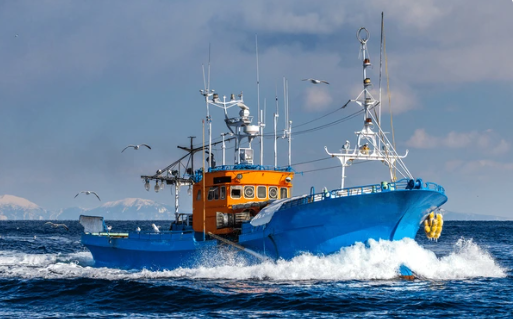
Global Treaty on Fishing Vessel Safety to Take Effect in 2027
The long-awaited global fishing vessel safety treaty is officially set to enter into force in February 2027 after Argentina acceded to the 2012 Cape Town Agreement, closing a major gap in the international maritime safety framework.
Argentina’s accession was confirmed on 24 February 2026 when H.E. Ms. Mariana Edith Plaza, Ambassador of the Argentine Republic to the United Kingdom, deposited the instrument of accession at the headquarters of the International Maritime Organization in London. The move brings the total number of Member States that have consented to be bound by the treaty to 28, collectively representing 3,754 qualifying fishing vessels of 24 metres or more in length. Under the treaty’s conditions, it enters into force 12 months after at least 22 States representing no fewer than 3,600 qualifying vessels join, requirements that have now been fulfilled.
According to FAO data, the Agreement will establish mandatory safety standards for more than 45,000 fishing vessels worldwide measuring 24 metres and above. These vessels are typically ocean-going ships operating on the high seas. The new global rules aim to prevent casualties, improve working conditions for fishers, enhance fleet competitiveness and strengthen environmental protection standards across the maritime sector.
Welcoming the milestone, IMO Secretary-General Mr. Arsenio Dominguez highlighted the human cost behind the reform, noting that thousands of fishers lose their lives each year while working to meet growing global demand for seafood. He emphasized that the 2012 Cape Town Agreement will significantly improve protection for fishing crews while safeguarding vessels at sea.
Once the treaty enters into force in 2027, States Parties will be required to incorporate its provisions into national legislation and enforce compliance. Flag States must ensure vessels registered under their flags meet the Agreement’s standards. Port States will also have the authority to inspect foreign fishing vessels visiting their ports to verify compliance. The safety requirements cover vessel design, construction, equipment, stability, seaworthiness, machinery, electrical installations, life-saving appliances, fire protection systems and communications equipment.
Beyond improving maritime safety, the Agreement is also expected to contribute to reducing marine plastic pollution caused by abandoned or lost fishing gear, a growing concern for ocean sustainability.
The 2012 Cape Town Agreement represents the culmination of decades of regulatory efforts led by the International Maritime Organization. It builds upon earlier instruments that failed to enter into force, including the 1977 Torremolinos International Convention for the Safety of Fishing Vessels and the 1993 Torremolinos Protocol. With its entry into force in 2027, nearly 15 years after adoption, the Cape Town Agreement becomes the fourth pillar of global fishing vessel safety governance.
It now joins three other key international instruments already in force: the STCW-F Convention adopted by the International Maritime Organization, the Work in Fishing Convention, 2007 adopted by the International Labour Organization, and the Agreement on Port State Measures developed by the Food and Agriculture Organization to combat illegal, unreported and unregulated fishing.
With Argentina’s accession, the 28 Contracting States to the Cape Town Agreement now include Argentina, Belgium, Belize, Congo, Cook Islands, Croatia, Denmark, Finland, France, Germany, Ghana, Iceland, Japan, Kenya, Namibia, Kingdom of the Netherlands, New Zealand, Nicaragua, Norway, Peru, Portugal, Republic of Korea, Saint Kitts and Nevis, Sao Tome and Principe, Solomon Islands, South Africa, Spain and Vanuatu,marking a significant step toward stronger global fishing vessel safety standards and enhanced protection for crews operating worldwide.
Source: International Maritime Organization (IMO)