Port of Long Beach Imports Fall 13% as Trade War and Tariff Uncertainty Impact Cargo Volumes
California Imports through the Port of Long Beach declined 13 percent in January compared with the same month last year, reflecting the ongoing turbulence caused by escalating trade tensions and tariff policies.
The drop follows a surge in shipments a year earlier, when importers rushed to move freight ahead of tariff measures introduced under former President Donald Trump.
Total Container Volumes Down 11%
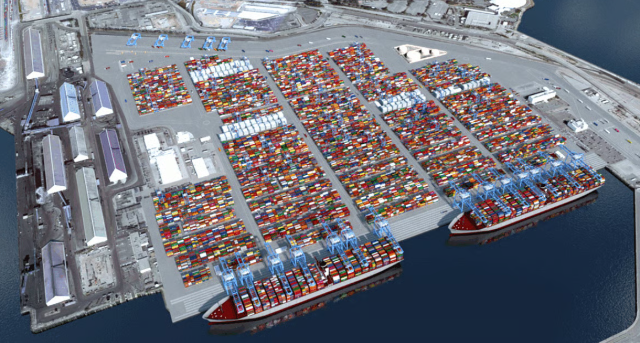
Overall container volumes at the Port of Long Beach fell 11 percent year on year in January. Loaded import containers decreased 13.1 percent to 409,818 twenty-foot equivalent units (TEUs), according to official port data.
Export containers remained nearly unchanged at 99,478 TEUs, while empty container movements dropped 11.5 percent to 338,470 TEUs.
Despite the decline, Port of Long Beach CEO Noel Hacegaba stated that the facility ranked as the busiest port in the United States last month, surpassing its Southern California counterpart, the Port of Los Angeles.
Sector-Specific Cargo Declines
Hacegaba emphasized that strong overall cargo figures do not mean the port has been unaffected by tariffs.
“Our strong cargo volumes do not suggest we are not being affected by tariffs,” he told reporters Wednesday.
Several commodity categories recorded significant declines:
- Iron and steel tonnage dropped 32 percent year on year
- Toys and sports equipment fell 15 percent
- Synthetic fiber imports plunged 43 percent
- Salt, sulfur, and cement declined 21 percent
Tariff Uncertainty Adds Supply Chain Volatility
Ongoing uncertainty surrounding US tariff policy continues to add instability to global supply chains. Hacegaba noted that the administration’s response to a recent ruling by the Supreme Court of the United States, which invalidated a key component of Trump’s global tariff framework, has heightened unpredictability in the market.
US Trade Representative Jamieson Greer said it could take “a couple months” for the administration to restore the tariff regime in a manner that complies with existing international agreements.
A 10 percent worldwide tariff took effect Tuesday. However, within 24 hours, few details were provided regarding how the administration plans to implement the president’s proposal to increase the levy to 15 percent while honoring trade agreements with major partners.
Trade War Impact on US West Coast Ports
The latest figures highlight the broader impact of the US trade war on West Coast port activity, container throughput, and supply chain stability. While the Port of Long Beach maintained its position as the nation’s most active port in January, declining import volumes signal continued pressure on global trade flows.