Suez Canal Traffic Flowing Normally as Shipping Contract Talks Begin despite Iran War and Carrier Suspensions
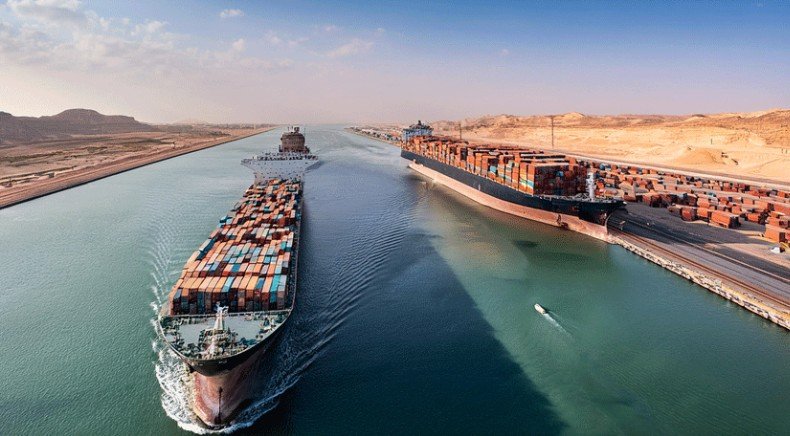
Vessel traffic through the Suez Canal is continuing without disruption despite the widening Iran war and the withdrawal of some major container shipping lines from the key Middle East trade corridor.
Osama Rabie, Chairman of the Suez Canal Authority (SCA), confirmed Tuesday that “traffic through the Canal is flowing normally in both directions,” underscoring that navigational services are operating around the clock.
The update comes as global shippers and carriers begin negotiations on long-term ocean freight contracts for the year, a critical period for the container shipping industry as it assesses geopolitical risks in the Red Sea and broader Middle East.
Suez Canal Vessel Traffic Remains Stable
On Monday alone, 56 vessels transited the Suez Canal, representing approximately 2.6 million gross tons. Of those, 24 ships were part of the northern convoy while 32 vessels transited southbound.
Over the past three days, 100 vessels passed through the strategic waterway connecting the Mediterranean Sea with the Red Sea and Gulf of Aden, totaling 3.8 million tons in net tonnage.
Rabie stated that vessel traffic has not been affected by the outbreak of hostilities involving Iran and that operations remain normal in both directions.
Major Shipping Lines Maintain Temporary Suspensions
While traffic continues, some of the world’s largest container carriers have maintained temporary suspensions of Suez Canal transits. Since late 2023, the largest container ships and product tankers have diverted around the Cape of Good Hope after Houthi rebels in Yemen launched attacks on shipping in support of Gaza.
The Houthis have since threatened to resume attacks following the outbreak of war involving Iran, a key backer of the group, further heightening Red Sea shipping risks.
CMA CGM and Maersk recently announced continued suspension of Suez Canal transits. According to Rabie, these measures remain temporary and are contingent on developments in the regional security situation.
He expressed optimism about a potential breakthrough, citing the fundamental importance of freedom of navigation in the region.
Suez Canal Traffic Trends: From Record Highs to Red Sea Crisis Impact
Prior to 2024, Suez Canal traffic had been on a steady growth trajectory. In 2023, the canal recorded a historic peak of 26,434 vessel transits, marking a 10.8% increase compared to the previous year. Net tonnage also reached an all-time high of approximately 1.568 billion tons, reflecting an 11.2% rise.
However, the ongoing Red Sea crisis has significantly disrupted traffic flows. In 2025, total vessel transits fell to 12,758, representing a 3.4% decrease from 13,213 in 2024. Net tonnage reached 522 million tons, down 0.5% from 524.5 million tons the year prior.
Despite these declines, daily operational activity remains steady, with the canal continuing to serve as a critical artery for global trade between Europe, Asia, and the Middle East.
Ocean Freight Rates and Market Outlook
Industry analysts suggest that escalating regional hostilities could keep major carriers away from the Suez Canal route through 2026. Earlier tentative returns by Maersk and CMA CGM were seen as mixed signals for the global container market.
Diversions around Africa have absorbed an estimated 2.5 million TEUs of capacity, helping to support freight rates. A large-scale return of tonnage to the Suez-Red Sea corridor could add capacity back into the market and place further downward pressure on already weakening ocean freight rates.
Read : Shipping Firms Advise Vessels to Avoid Gulf amid Rising US-Israel-Iran Tensions
As shipping contract negotiations move forward, carriers, charterers, and cargo owners are closely monitoring security developments in the Red Sea, the Gulf of Aden, and the broader Middle East,factors that will continue to shape global shipping routes, freight rates, and supply chain stability.