Climate Change in the Arctic Threatens Greenland Fishing Industry as Melting Sea Ice Forces Traditional Fishers toward Boat Fishing
Rapid climate change in the Arctic region is reshaping the traditional fishing industry in Greenland, as melting sea ice forces local fishers to abandon centuries-old ice fishing practices and move toward boat-based or commercial fishing methods.
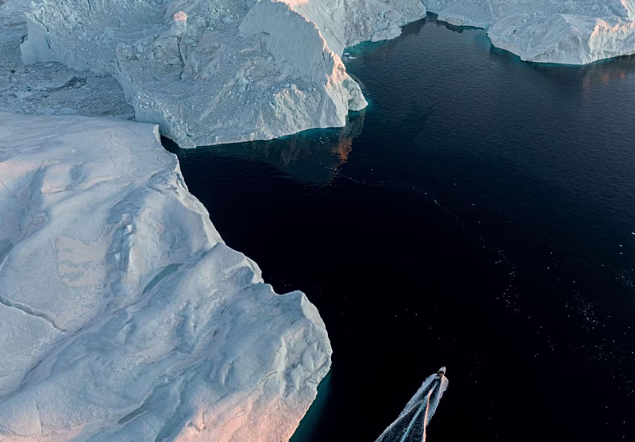
Fisherman Helgi Áargil says fishing conditions in Greenland’s fjords have become increasingly unpredictable. Spending several days at sea with his dog while navigating the icy waters under the Northern Lights, Áargil says each trip can either bring a major catch worth around 100,000 Danish kroner (about €13,400) or result in no catch at all.
Last year, his vessel became trapped in drifting ice from a nearby glacier. This year, unusually wet conditions have replaced the heavy ice that once dominated the region. These dramatic shifts highlight the growing impact of global warming and Arctic climate change on local livelihoods.
Greenland, a semiautonomous territory of Denmark, is experiencing some of the fastest warming on the planet. Scientists say the Arctic region is heating faster than any other part of the world, largely due to emissions from burning oil, gas and coal.
The changing climate poses serious questions for Greenland’s fishing industry, which drives the island’s economy. Fisheries account for up to 95 percent of Greenland’s exports, supplying seafood such as halibut, cod, shrimp and snow crab to major global markets including China, the United States, Japan and European countries.
Disappearing Arctic Sea Ice
The decline of sea ice has been dramatic over the past decades. According to Karl Sandgreen, who leads the Icefjord Center in the town of Ilulissat, thick sea ice once covered the waters where traditional fishermen worked.
He recalls that fishermen once drilled through ice layers more than one and a half metres thick to catch fish beneath the frozen surface. However, the region’s sea ice began disappearing around 1997, forcing many traditional ice fishers to transition to boat-based fishing.
While boats allow fishermen to cover wider fishing grounds, they also bring higher fuel costs and increased marine pollution and carbon emissions, which may further contribute to climate warming.
Traditional Fishers Could Move Toward Commercial Fishing
Fishing remains the heart of Greenland’s coastal communities. Harbours across the island serve as economic hubs where fishermen unload their catch and supply processing facilities.
At the capital city of Nuuk, fish are lifted from boats and transported to processing factories operated by Royal Greenland, the island’s largest employer.
Chief executive Toke Binzer warns that shrinking sea ice could push traditional fishermen into larger towns and eventually into the ranks of commercial fishing fleets.
He notes that current weather patterns are creating an unusual challenge: sometimes there is too much ice for boats to navigate, but too little ice for traditional ice fishing, making it difficult for fishermen to operate consistently.
Royal Greenland has already started supporting fishermen by offering loans for purchasing boats, which are repaid through fish sales.
Concerns Over Overfishing
However, experts warn that a shift toward boat fishing could increase pressure on fish stocks.
Boris Worm from Dalhousie University says expanding boat fishing could potentially lead to overfishing in Arctic waters.
Evidence of this is already emerging near Greenland’s coastline, where halibut are becoming smaller ,a typical sign that larger fish are being caught faster than populations can recover.
At the same time, warmer temperatures and increased rainfall may introduce more nutrients into Arctic waters, potentially boosting plankton growth and temporarily supporting fish populations. Yet scientists warn fish behavior may become less predictable as changing ocean conditions alter their feeding patterns.
Limited Economic Alternatives
For many Greenlanders, fishing remains the primary source of income and cultural identity. While tourism is slowly growing across the Arctic island, it is still far from replacing fishing as the backbone of the economy.
Traditional lifestyles are also being disrupted. Dog sledding, once an essential mode of transport, is becoming more difficult as sea ice disappears.
Read More:Global Fishing Updates: China-Backed Research in Pakistan & Morocco Imposes Sardine Export Ban
According to Ken Jakobsen, the ability to go out to sea remains central to life in Greenland. In Nuuk alone, more than 1,000 fishing boats fill the harbour during summer, in a territory with a total population of just over 50,000 people.
As climate change accelerates across the Arctic, Greenland’s traditional fishing communities now face an uncertain future ,balancing economic survival, environmental change and the preservation of long-standing maritime traditions.