Global Shipbuilding Boom 2026: Advanced Research Vessels, Survey Ships & Maritime Training Fleet Expand Across US, Europe, and Asia
The global maritime and shipbuilding industry continues to accelerate in 2026, with multiple high-tech research vessels, offshore survey ships, and specialized workboats being delivered across key regions including Europe, the United States, and Asia. These developments highlight growing investments in ocean research, subsea engineering, and maritime training infrastructure.
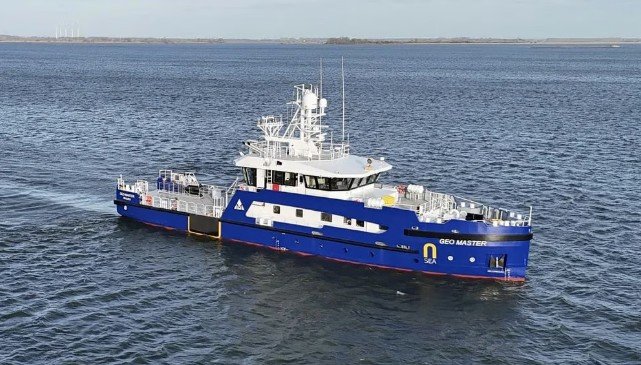
In the Netherlands, subsea solutions provider N-Sea Group has initiated sea trials for its latest hydrographic survey vessel, Geo Master. Built by Neptune Marine, the vessel follows a similar design to Geo Ranger, already under the company’s operational fleet. Delivery of Geo Master is scheduled for March 2026, with commercial offshore survey operations expected to begin shortly after. The vessel is designed with enhanced fuel efficiency and reduced emissions, including compatibility with biofuel, aligning with global decarbonization trends in maritime transport.


Meanwhile, in Asia, Hong Kong Marine Department has taken delivery of a new explosives-capable workboat, Ever Safe No 1, constructed by China State Shipbuilding Corporation subsidiary CSSC Guijiang Shipbuilding. The vessel is one of two ordered in 2024 and will support the safe transport of hazardous cargo for infrastructure projects led by the Hong Kong Civil Engineering and Development Department. These new vessels will replace legacy units that have been in operation since 1998, marking a significant upgrade in maritime safety and logistics capability.
In Europe’s ocean research sector, the Royal Netherlands Institute for Sea Research (NIOZ) has officially christened its newest state-of-the-art research vessel, Anna Weber-van Bosse. The naming ceremony was attended by Queen Máxima. The vessel is equipped to support multidisciplinary marine research, including biological, geological, and oceanographic studies, as well as maritime archaeology and deployment of underwater monitoring systems, strengthening Europe’s leadership in marine science innovation.
Read:US Shipbuilder HII Integrates AI to Automate Unmanned Shipbuilding Tasks
Japan has also expanded its maritime education capabilities, with National Institute of Technology, Toyama College receiving a newly built training vessel, Wakashio Maru, from Mitsubishi Heavy Industries. Measuring 56.48 meters in length and accommodating up to 60 personnel, the vessel will play a critical role in hands-on maritime training, navigation exercises, and oceanographic research for students and local communities. This marks the institution’s first newbuild vessel acquisition in three decades.
In the United States, University of Hawaii at Hilo has strengthened its marine research fleet with the addition of Kaiola, a 38-foot aluminum research vessel delivered by North River Boats. The vessel arrived in February 2026 and is currently undergoing final outfitting before entering service. According to marine science faculty, the vessel was selected for its operational stability and flexibility, enabling advanced coastal and oceanographic research in the Pacific region.
These developments reflect a broader global trend toward modernization of maritime fleets, driven by increasing demand for offshore energy exploration, marine environmental monitoring, and advanced maritime education. With sustainability, safety, and technological innovation at the forefront, the shipbuilding sector is poised for continued growth as nations invest in next-generation vessels to support the blue economy.