Taiwan Boosts Maritime Defense Strategy at Pratas Islands amid Rising China Pressure in South China Sea
Taiwan is stepping up its maritime security and coastal defense capabilities at the strategically located Pratas Islands, as tensions in the South China Sea geopolitics intensify due to increasing Chinese presence in the region. The move highlights Taiwan’s growing focus on island defense systems, naval readiness, and regional security stability.
Speaking on Thursday, Kuan Bi-ling, head of Taiwan’s Ocean Affairs Council, confirmed that the government is strengthening defenses at the Pratas,also known as Dongsha,amid expanding Chinese “grey zone” operations. These activities include non-combat maritime patrols, coastguard incursions, and surveillance missions designed to exert pressure without triggering open conflict.
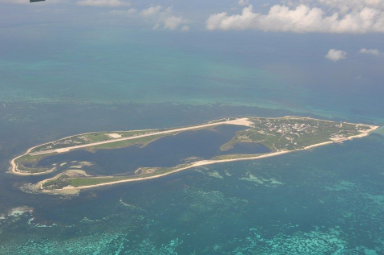
Located between southern Taiwan and Hong Kong, the Pratas Islands sit over 400 km from Taiwan’s mainland, making them a high-risk strategic hotspot in the ongoing China-Taiwan maritime dispute. Security analysts consider the atoll particularly vulnerable due to its remote location and limited military presence.
Rising Chinese Activity and Strategic Concerns
According to Taiwanese officials, Chinese coastguard and government vessels have significantly increased their presence around the Pratas since last year. Previously, such activity was concentrated near Taiwan’s main island and the Kinmen archipelago, closer to mainland China.
Kuan noted that Beijing’s expanding maritime footprint reflects a broader strategy to assert control over contested waters. “From a political and strategic perspective, seizing Dongsha would carry considerable significance,” she stated, underscoring the island’s importance in regional maritime dominance and defense logistics.
China continues to claim both Taiwan and the Pratas Islands as its territory, further complicating the already tense cross-strait relations and Indo-Pacific security dynamics.
Taiwan Enhances Naval Infrastructure and Readiness
In response, Taiwan has upgraded infrastructure on the main island, including renovation of the key wharf facility to support larger and more capable patrol vessels. Plans are also underway to deploy ships with enhanced operational capabilities to ensure rapid maritime response and defense preparedness.
Kuan emphasized that Dongsha is a critical site for developing a comprehensive island defense system, though she did not disclose detailed plans. Taiwan’s coastguard,rather than its military,currently oversees the island’s security, reflecting a hybrid maritime defense approach.
Drone Incursions and Military Preparedness
Earlier this year, Taiwan reported that a Chinese reconnaissance drone briefly entered the airspace above the Pratas, an act the defense ministry labeled “provocative and irresponsible.” Such incidents highlight the increasing use of aerial surveillance and unmanned systems in modern maritime conflicts.
In the event of escalation, Taiwan’s coastguard vessels,including advanced Anping-class corvettes based on naval warship designs,could be equipped with anti-ship missile systems, boosting their role in wartime operations.
Read:Pakistan-China Naval Drill Sea Guardian IV Boosts Maritime Security in Arabian Sea
Accelerating Defense Transition Strategy
Kuan added that China’s sustained pressure is forcing Taiwan to accelerate its transition from peacetime operations to full-spectrum defense readiness, ensuring quicker mobilization during crises. However, she also noted that these tensions divert resources from humanitarian missions such as search and rescue operations at sea.
The situation around the Pratas Islands continues to draw global attention as a key flashpoint in the South China Sea conflict, with implications for international shipping routes, regional stability, and global trade security.