Panama Canal Transit Fees Hit $4 Million as Strait of Hormuz Closure Sends Global Shipping Costs Soaring
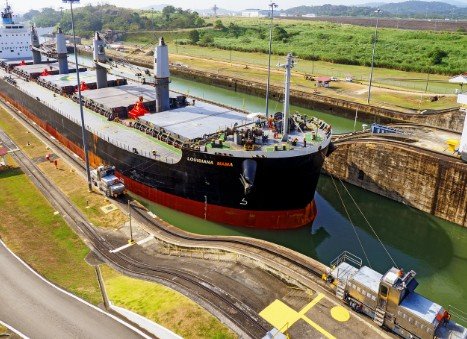
Global shipping costs are spiking to record levels as the effective closure of the Strait of Hormuz forces carriers to scramble for alternative routes, and the Panama Canal is now charging up to $4 million per priority transit slot, with no sign of relief in sight.
The Strait of Hormuz, the narrow chokepoint through which roughly a fifth of the world’s oil flows, has become impassable for commercial shipping, triggering a chain reaction across global maritime trade routes. Vessels that once transited the Gulf are now being diverted westward, driving an unprecedented surge in Panama Canal traffic and sending auction-based booking fees to levels never seen before.
According to reporting by the Associated Press, shipping companies are paying up to $4 million for last-minute booking through the Panama Canal’s priority slot system, far above the canal’s standard fixed-rate schedule. The canal’s auction mechanism, designed for occasional surges, is now operating under near-constant pressure.
Why it matters: The Panama Canal priority auction typically sees modest premiums above standard rates. A jump to $4 million signals a systemic breakdown in global route planning, not a temporary spike. Freight forwarders and cargo owners should expect elevated shipping rates and booking uncertainty to persist as long as the Hormuz situation remains unresolved.
The economics are straightforward: with the Hormuz route effectively closed, demand for Panama Canal transit has skyrocketed. Fast-track “booking slots” allow vessels to bypass multi-day anchorage queues ,and in a market where time is money, carriers are willing to pay a steep premium. The $4 million figure represents what some operators consider the cost of staying commercially viable rather than losing weeks in a growing backlog.
Industry analysts note that this pressure is unlikely to ease quickly. The Panama Canal already operates near capacity during normal conditions. With Hormuz traffic redirected, it is absorbing a volume it was never designed to handle simultaneously ,creating a compounding effect on global container shipping rates, LNG freight costs, and crude oil tanker scheduling worldwide.
The broader picture is a stark reminder of how a single geopolitical chokepoint can cascade through the entire global supply chain. From European importers to Asian exporters, rising Panama Canal fees are now baked into shipping cost calculations , and those costs, inevitably, find their way to end consumers.
Port operators, logistics managers, and commodity traders are being advised to monitor developments closely. Alternative routing through the Cape of Good Hope adds significant voyage time and fuel cost, but for some cargo types it may soon represent the more economically rational choice if canal fees continue to climb.
Related:
- Panama Canal Sees Surge as US Crude Oil Tanker Traffic Hits Four-Year High
- Op-Ed: Panama and its Important Role in International Maritime Trade and its Ship Registry
- Hong Kong Port Operator Launches Arbitration against Maersk over Panama Canal Terminal Dispute
- Panama Canal Port Dispute Escalates: China Issues Warning as Court Voids CK Hutchison Deal, Raising Global Shipping and Supply Chain Risks