South Korea Launches Probe into Ship Debris from Strait of Hormuz Attack
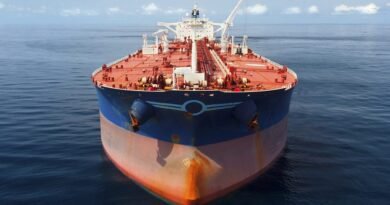
South Korea has begun a detailed investigation into debris recovered from the cargo vessel HMM Namu after the ship was damaged in an alleged aerial attack in the strategically critical Strait of Hormuz, one of the world’s busiest maritime oil shipping routes.
According to Seoul’s foreign ministry, debris from the fire-damaged vessel arrived in South Korea by air on Friday after coordination with authorities in the United Arab Emirates. The materials will now undergo forensic examination by a specialized institution as investigators attempt to determine who was behind the incident.
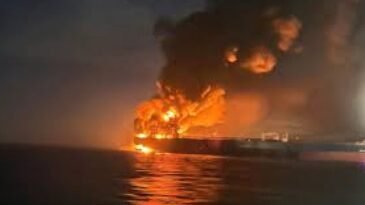
The Panama-flagged cargo ship, operated by South Korean shipping giant HMM Co., was reportedly struck on May 4 by “two unidentified aircraft” while sailing near the Strait of Hormuz amid escalating regional tensions linked to the ongoing conflict involving Iran, the United States, and Israel.
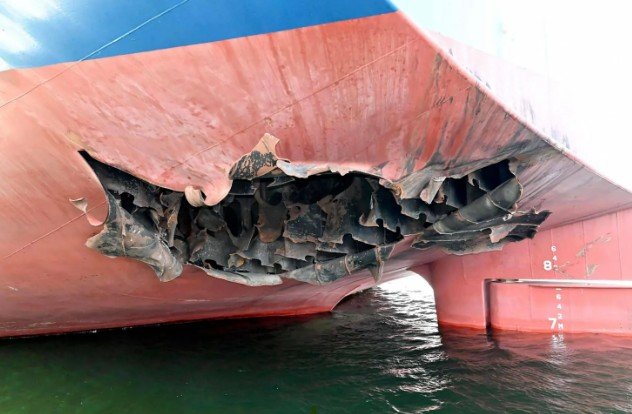
South Korean officials said the attack hit the vessel’s port-side ballast tank near the stern, igniting a fire inside the engine room. The ship later arrived in Dubai for an initial inspection and damage assessment.
Authorities revealed that CCTV footage captured the aircraft involved in the strike, but investigators are still unable to confirm the aircraft type, launch location, or exact size of the objects involved.
A senior South Korean government official told local media that the possibility of another actor besides Iran being responsible for the attack appears “low.” However, Tehran has strongly denied any involvement. Iran’s embassy in Seoul issued a statement rejecting and categorically denying accusations linking Iranian forces to the incident.
The attack comes as shipping traffic through the Strait of Hormuz faces severe disruption. Iran has largely restricted maritime movement through the chokepoint since conflict erupted with the United States and Israel on February 28, while Washington has imposed a blockade on Iranian ports.
The Strait of Hormuz remains one of the most critical global energy corridors, handling a significant portion of the world’s crude oil, LNG, and petrochemical exports. For energy-dependent economies like South Korea, the disruption poses serious economic and energy security risks.
Read More: Trump and Xi Agree Strait of Hormuz Must Remain Open for Global Energy Trade
As Asia’s fourth-largest economy and a major petrochemical producer, South Korea depends heavily on Middle Eastern crude oil and fuel shipments that normally transit through Hormuz. The ongoing shipping crisis has already pushed Seoul to introduce a fuel price cap for the first time in nearly three decades, highlighting growing concerns over global energy supply chains and maritime security in the Gulf region.