
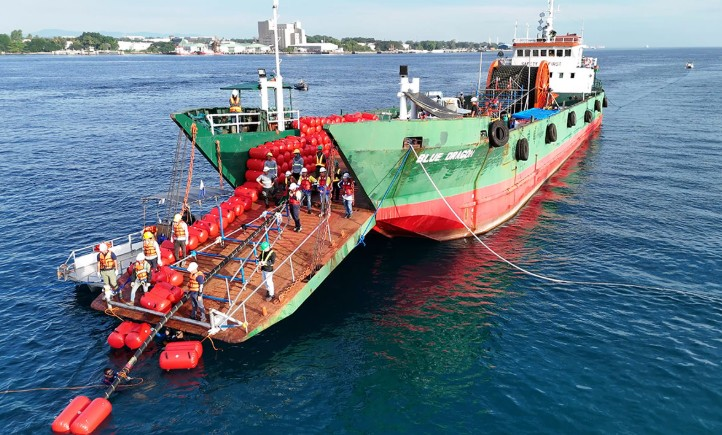
Philippines Grants Duty Relief for Submarine Cable-Laying and Repair Vessels to Boost Maritime Telecom Infrastructure
The Bureau of Customs (BoC) has announced temporary duty and tax relief for foreign-flagged vessels engaged in submarine cable installation and repair operations, a move aimed at strengthening the Philippines’ maritime telecommunications and critical infrastructure network.
Under Customs Administrative Order No. 02-2026, the BoC has established a formal framework allowing the temporary admission of foreign-owned and foreign-registered International Cable-Laying and Repair Vessels (ICLRVs) without the imposition of import duties and taxes.
The agency has classified these highly specialized ships as professional equipment, granting them conditional exemption from customs duties to support faster deployment of submarine fiber optic cable projects, undersea connectivity systems, and essential offshore communication infrastructure.
According to the BoC, the policy is designed to “facilitate the timely and cost-efficient implementation of submarine cable-laying and repair projects that are critical to national telecommunications and energy infrastructure.”
To qualify for the exemption, vessels must be owned and imported by a non-resident and used exclusively by, or under the direct supervision of, the visiting operator in the Philippines. The vessel must be declared under conditional import status and supported by documentation including a special permit from the Maritime Industry Authority, a charter or service agreement, proof of vessel valuation, a commercial invoice, and a certificate of registry.
The order also introduces operational guidelines for projects spanning multiple customs jurisdictions. Project authorization must clearly define covered ports, routing plans, scope of work, and estimated duration of operations at each location.
Importantly, the BoC stated that “movement of the ICLRV between these specified ports shall not require the filing of a new import entry nor give rise to the assessment of duties and taxes,” ensuring smoother logistics for submarine cable repair vessels and offshore installation operations.
However, the directive clarifies that any cable, pipe, or auxiliary material used in the project that does not become an integral and permanent part of the vessel will still be subject to standard import regulations, including applicable duties and taxes unless otherwise exempted by law.
This policy is expected to enhance the Philippines’ position in the global subsea cable infrastructure, maritime connectivity, and offshore telecommunications development sector, supporting faster deployment of international data cable networks.