US Launches Second Consecutive Night of Airstrikes on Iran Following Drone Attack on Commercial Tanker in Strait of Hormuz
Middle East tensions escalated sharply on Saturday after the United States launched a second consecutive night of military strikes against Iran, citing another alleged Iranian drone attack on a commercial oil tanker transiting the Strait of Hormuz.
According to the U.S. Central Command (CENTCOM), Saturday’s military operation was carried out under the direct orders of President Donald Trump following what it described as continued Iranian aggression against commercial shipping.
CENTCOM said U.S. forces targeted Iranian military surveillance infrastructure, communications systems, air defense installations, drone storage facilities, and mine-laying capabilities.
Explosions Reported Near Strategic Iranian Port
Local reports indicated explosions near the village of Tahrui, close to the strategic port of Sirik in southern Iran, the same area targeted during Friday’s U.S. strikes. Iranian state media also reported explosions on Qeshm Island, another strategically important location overlooking the Strait of Hormuz.
Shortly after the strikes began, President Donald Trump issued a warning on social media, stating that further military action could follow if Iran continued violating the ceasefire agreement.
Trump accused Tehran of repeatedly breaching the June 17 memorandum, allegations that Iran has rejected while accusing Washington of violating the same agreement.
“It is very possible that they will never learn,” Trump wrote, adding that if Iran failed to comply, the United States could be forced to expand military operations.
Drone Strike on Oil Tanker Triggers New US Response
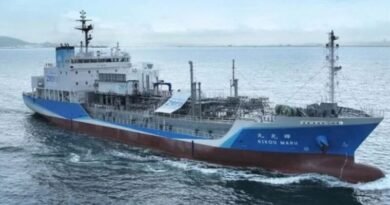
Saturday’s military action followed an incident involving the Panama-flagged crude oil tanker Kiku, which was reportedly struck by an unidentified projectile while sailing through the Strait of Hormuz at approximately 4:30 a.m. Eastern Time (08:00 GMT).
No injuries were reported among the crew, and the vessel did not suffer any oil leakage.
CENTCOM stated that the tanker, carrying more than 2 million barrels of crude oil, was struck by what it described as a one-way attack drone.
Shipping data from MarineTraffic indicates that the vessel departed the Al Shaheen oilfield on Thursday and is scheduled to arrive in Fujairah, United Arab Emirates, on Sunday.
Similar Incident Preceded Friday’s Airstrikes
The latest developments closely mirror events that unfolded one day earlier.
On Thursday, the Singapore-registered container ship Ever Lovely was reportedly hit by a drone while transiting the Strait of Hormuz. The vessel continued its voyage without injuries to the crew.
Following that incident, President Trump described the attack as a “foolish violation” of the June 17 ceasefire memorandum.
Hours later, the United States launched airstrikes around Sirik, while Iran responded by targeting U.S. military facilities in the Middle East.
Announcing Saturday’s operation, CENTCOM said Iran had been given an opportunity to uphold the ceasefire after Friday’s U.S. response to the attack on M/V Ever Lovely, but instead allegedly carried out another drone strike against the tanker Kiku.
The U.S. military also reaffirmed its commitment to protecting commercial navigation through the Strait of Hormuz.
“U.S. forces remain vigilant, lethal, and ready,” CENTCOM said.
Strait of Hormuz Remains at the Center of the Crisis
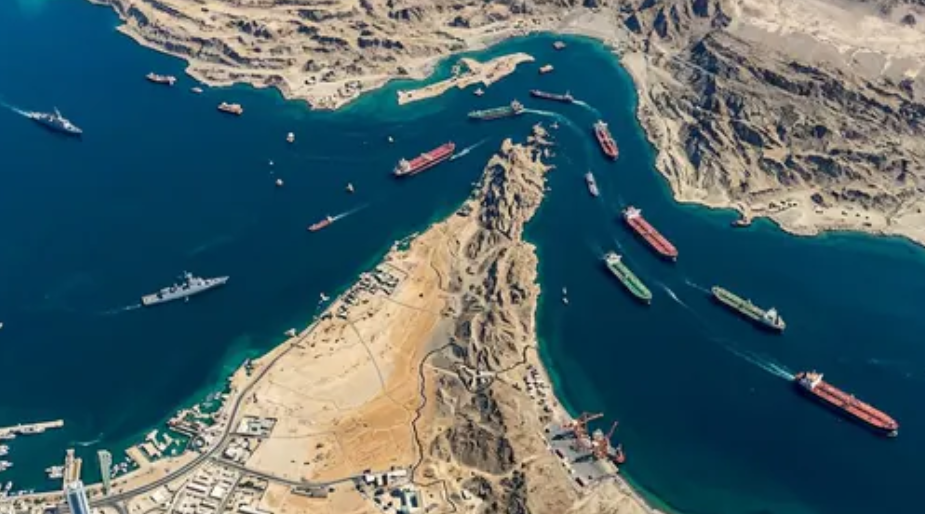
The Strait of Hormuz remains one of the world’s most strategically important maritime chokepoints, carrying nearly 20 percent of global oil supplies, along with significant volumes of liquefied natural gas and other critical commodities.
Following the outbreak of the current conflict after U.S. and Israeli strikes on Iran on February 28, Tehran moved to restrict maritime traffic through the waterway, sending global oil prices sharply higher and disrupting international shipping markets.
The June 17 memorandum sought to ease tensions by calling for an immediate halt to military operations while encouraging the uninterrupted movement of commercial shipping through the Strait of Hormuz.
Under the agreement, Iran committed to making its best efforts over a 60-day period to allow commercial vessels to transit the strait without charge, while Iran and Oman would jointly determine future maritime administration and services.
However, renewed fighting and differing interpretations of the memorandum have brought the agreement under increasing strain.
Dispute Over Shipping Rules Deepens
Iranian officials argue that all vessels navigating either Iranian or Omani waters within the Strait of Hormuz must coordinate with Iranian authorities before transit.
The United States maintains that ships sailing through Omani territorial waters are not required to seek Iranian clearance.
This disagreement has become a major source of tension, with Washington accusing Tehran of interfering with international commercial shipping, while Iran argues that its actions are necessary for national security and maritime control.
Analysts say the conflicting interpretations have complicated efforts to preserve the ceasefire.
Experts Warn of Escalating Maritime Security Risks
Regional experts believe both countries remain deeply distrustful of one another.
Iranian analyst Hassan Ahmadian said Tehran views vessel coordination requirements as a defensive measure designed to distinguish commercial shipping from potentially hostile military traffic.
Meanwhile, retired U.S. naval officer Harlan Ullman warned that continued military exchanges could rapidly spiral into a wider regional conflict.
He noted that renewed instability in the Strait of Hormuz could drive oil prices significantly higher, increasing pressure on governments and global energy markets while threatening international shipping operations.
Political Pressure Mounts in Washington
The latest strikes have also generated criticism within the United States.
Several congressional Democrats argue that continued military operations violate the recently approved War Powers Resolution, which requires President Trump to seek congressional authorization before undertaking further military action against Iran.
Representative Ro Khanna warned that lawmakers could pursue legal action if the administration continues military operations without congressional approval.
Global Shipping Industry Watches Developments Closely
As military exchanges continue, shipping companies, energy traders, insurers, and naval forces are closely monitoring developments in the Strait of Hormuz.
Any prolonged disruption to one of the world’s busiest maritime corridors could have far-reaching consequences for crude oil exports, LNG shipments, freight markets, marine insurance costs, and global supply chains.
With both Washington and Tehran accusing each other of violating the June ceasefire memorandum, analysts warn that the risk of further escalation remains high, keeping one of the world’s most critical shipping lanes firmly in the international spotlight.