Iran and Oman Launch First Strait of Hormuz Talks as US-Iran Shipping Deal Faces Uncertainty
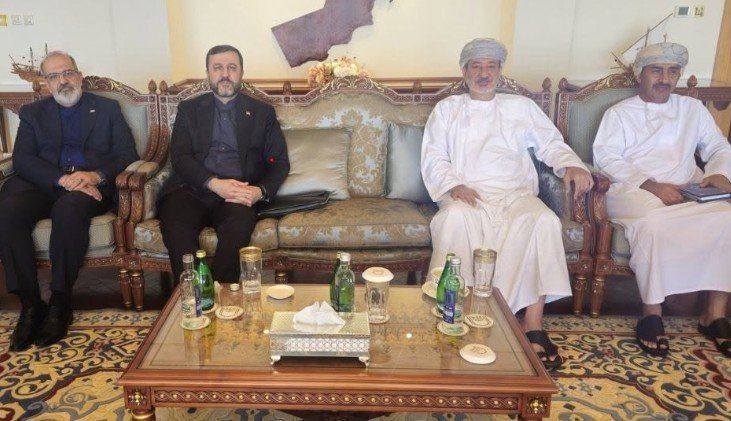
Iran and Oman have held the first meeting of the Joint Hormuz Committee in Muscat, marking a significant step in discussions over the future management of the Strait of Hormuz, one of the world’s most strategic maritime trade routes, even as uncertainty continues to surround a broader US-Iran diplomatic framework aimed at restoring regional stability and protecting global shipping.
Iranian Deputy Foreign Minister Kazem Gharibabadi confirmed that the inaugural committee meeting focused on current issues affecting the Strait of Hormuz and future maritime management. The announcement comes amid conflicting reports over whether Iran and the United States are preparing to resume technical negotiations following weeks of heightened military tensions that disrupted international shipping and global energy markets.
Several US media outlets reported that Washington and Tehran had agreed to hold fresh technical talks in Doha on Tuesday after both sides reportedly sought to reduce tensions following recent military exchanges. However, Tehran dismissed those reports, with Gharibabadi stating that consultations with Qatar remain ongoing but that reports of scheduled technical negotiations in Doha could not be confirmed. He said the first round of technical discussions would only proceed once all necessary conditions were fulfilled and a mutually agreed date and venue had been finalized through intermediary countries.
Shortly afterward, US President Donald Trump contradicted Iran’s position by posting on Truth Social that Iran had requested a meeting and that negotiations would proceed in Doha the following day, further highlighting the uncertainty surrounding diplomatic efforts.
The latest developments come after a framework agreement signed on June 17 by President Donald Trump and Iranian President Masoud Pezeshkian sought to establish a pathway toward a comprehensive settlement covering Iran’s nuclear programme, sanctions relief, and the long-term status of the Strait of Hormuz. The agreement was designed to ease tensions following months of conflict that severely disrupted maritime trade, oil exports, LNG shipments, and commercial navigation across the Middle East.
Despite the framework, major disagreements remain over the future governance of the Strait of Hormuz, through which roughly one-fifth of global oil and liquefied natural gas shipments moved before the recent conflict. The strategic waterway continues to represent Iran’s strongest source of geopolitical leverage, while differing interpretations of the agreement have complicated progress toward a final settlement.
Iran effectively closed the Strait of Hormuz on February 28 following the outbreak of hostilities involving the United States and Israel, triggering sharp increases in global oil prices, disrupting international supply chains, and creating significant challenges for tanker operators, shipping companies, and energy traders worldwide. The continued blockade remains one of the most sensitive issues in ongoing diplomatic discussions.
During the Muscat meeting, Iranian and Omani officials exchanged views on the future administration of the waterway, reinforcing Oman’s role as a regional mediator in Gulf security and maritime stability.
Tehran also warned that any attempt by commercial vessels to bypass Iran’s preferred shipping corridor through the Strait of Hormuz would increase regional tensions. Although the waterway includes both Iranian and Omani territorial waters, international maritime law generally guarantees the right of transit passage and does not permit either coastal state to block commercial navigation or impose transit fees under normal circumstances.
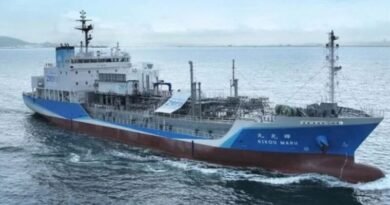
Tensions escalated further after US Central Command (CENTCOM) announced strikes against ten Iranian military targets following what it described as continued Iranian aggression against commercial shipping. The operation followed an Iranian drone attack on the Panama-flagged crude oil tanker M/T Kiku, which was sailing toward Fujairah in the United Arab Emirates.
Iran subsequently announced retaliatory strikes targeting US military facilities in Kuwait and Bahrain, including the headquarters of the US Fifth Fleet at Salman Port in Bahrain and Ali Al Salem Air Base in Kuwait. Both Gulf nations condemned the attacks.
Iran continues to insist that vessels transiting the Strait of Hormuz should follow a corridor close to its coastline, although numerous commercial ships have recently navigated closer to Omani waters. In response, the US Navy’s Joint Maritime Information Center announced an expanded shipping route along the Omani side of the strait, directly challenging Tehran’s interpretation of navigational authority.
Iranian Foreign Minister Abbas Araghchi warned that any attempt to establish alternative maritime arrangements outside those administered by Iran would complicate efforts to fully reopen the Strait of Hormuz and further increase regional instability.
The memorandum of understanding published by Tehran states that the future administration of the strategic waterway will be discussed with Oman and other Gulf states while remaining consistent with international law. Meanwhile, Iran’s Islamic Revolutionary Guard Corps (IRGC) announced stricter enforcement measures for vessels operating within the strait and warned that violations would face stronger responses.
Mohammad Mokhber, adviser to Ayatollah Mojtaba Khamenei, stated that continued Iranian management of the Strait of Hormuz would prevent what he described as Washington’s ambitions in the region from succeeding.
President Donald Trump has also reiterated that the United States would respond with overwhelming military force if Iran resumes attacks on commercial shipping, warning that Iran would face severe consequences should hostilities restart.
As diplomatic contacts continue through regional intermediaries, the future of the Strait of Hormuz remains central to international shipping, maritime security, global oil markets, LNG exports, tanker traffic, and supply chain stability, making every development closely watched by the global maritime and energy industries.