Iran Accuses US of Targeting Maritime Rescue Vessels, Calls Attack ‘War Crime’ in UN Complaint
Iran has submitted a formal complaint to the United Nations, accusing the United States of carrying out a “war crime” by allegedly targeting two Iranian maritime search and rescue (SAR) vessels operating in Iranian territorial waters. The complaint has raised fresh concerns over the protection of humanitarian maritime assets, international maritime law, and the safety of search and rescue operations during periods of armed conflict.
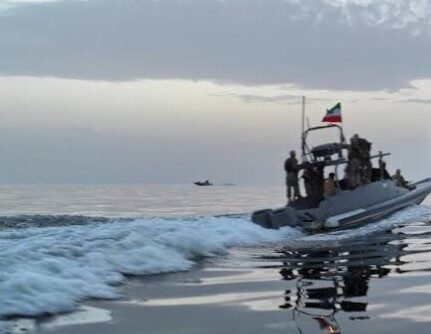
According to a letter sent to UN Secretary-General António Guterres and the President of the UN Security Council, Iran’s ambassador and deputy permanent representative to the United Nations, Gholamhossein Darzi, stated that the United States attacked the Iranian rescue vessels Naji-15 and Naji-16 in the early hours of 23 July 2026 while they were conducting operations near Hormozgan Province.
Iran claimed that the two vessels were exclusively engaged in maritime search and rescue missions and were not involved in any military activities at the time of the alleged attack. The Iranian government said the vessels suffered significant damage and described the incident as a violation of international humanitarian law and international maritime law.
In its communication to the United Nations, Iran stated that search and rescue vessels are protected humanitarian assets because they perform life-saving operations for people in distress at sea. The letter referenced Article 27 of the Second Geneva Convention of 1949, which provides protection for small vessels used by states or officially recognized rescue organizations for coastal rescue operations.
Iran further alleged that the incident was part of a broader pattern of attacks against humanitarian maritime assets since the beginning of the ongoing conflict involving the United States and Israel on one side and Iran on the other. The Iranian representative claimed that rescue vessels and sea ambulances carrying out humanitarian duties had repeatedly become targets.
The Iranian UN mission argued that deliberately attacking maritime search and rescue infrastructure threatens not only rescue personnel but also the wider global maritime community, including commercial shipping crews, fishermen, and passengers who depend on emergency response services during accidents at sea.
“Search and rescue vessels perform an exclusively humanitarian function by saving the lives of persons in distress at sea,” Iran stated in its letter, adding that attacks against such assets undermine international efforts to maintain maritime safety and protect human life.
Iran has called on the United Nations Security Council to investigate the incident, ensure accountability, and take measures to prevent future attacks against humanitarian maritime operations. Tehran also urged the UN Secretary-General to involve international maritime and humanitarian organizations, including the International Maritime Organization (IMO) and the International Committee of the Red Cross (ICRC), to strengthen protection for maritime rescue services.
The allegations come amid heightened tensions in the Middle East maritime security environment, particularly around the Strait of Hormuz and the Persian Gulf, one of the world’s most strategically important shipping routes for global energy transportation. Any disruption affecting maritime safety operations in the region could have consequences for international shipping, oil and gas supply chains, and marine security.
Iran stated that it would continue providing maritime search and rescue services to vessels and individuals in distress, regardless of nationality, and reaffirmed its commitment to international obligations related to maritime safety, humanitarian assistance, and navigation security.
The United States has not yet publicly responded to Iran’s allegations at the time of publication. Independent verification of the reported attack and the circumstances surrounding the incident remains pending.
Maritime Security Implications
The reported incident highlights growing concerns regarding the protection of humanitarian maritime infrastructure during armed conflicts. Under international maritime frameworks, search and rescue services are considered essential for safeguarding lives at sea, particularly in regions with heavy commercial shipping activity.
For the global maritime industry, incidents involving rescue vessels can increase risks for merchant shipping, offshore operations, naval movements, and regional maritime trade routes. The Strait of Hormuz remains a critical chokepoint where maritime security developments are closely monitored by shipping companies, energy markets, and international maritime organizations.