Pakistan Accelerates CPEC 2.0, Gwadar Port and Maritime Infrastructure Projects
Pakistan has accelerated the implementation of key CPEC 2.0 projects aimed at strengthening Gwadar Port, maritime infrastructure, coastal development, regional connectivity, and the blue economy, following directives issued by Federal Minister for Planning, Development and Special Initiatives Ahsan Iqbal during the 91st meeting of the CPEC Projects Review and National Steering Committee.
The high-level meeting reviewed progress across strategic sectors, including infrastructure, energy, petroleum, water resources, agriculture, Special Economic Zones (SEZs), and preparations for upcoming Joint Working Group (JWG) meetings and the 15th Joint Cooperation Committee (JCC). The minister instructed all ministries to expedite implementation of the five strategic pillars of CPEC 2.0,Growth, Livelihood, Innovation, Green Development, and Regional Connectivity, building on investments made during the first phase of the China-Pakistan Economic Corridor.
A major focus of the meeting was the Karachi Coastal Comprehensive Development Zone (KCCDZ), where the Ministry of Maritime Affairs (MoMA) and the Government of Sindh presented the latest implementation status. Expressing concern over delays, the minister directed all stakeholders to submit their observations within one week and resolve outstanding technical issues without further postponement. He emphasized that signed Memorandums of Understanding (MoUs) should move swiftly from documentation to execution and instructed the Government of Sindh, MoMA, and the Board of Investment to hold coordinated discussions with the Chinese company involved to accelerate project implementation.
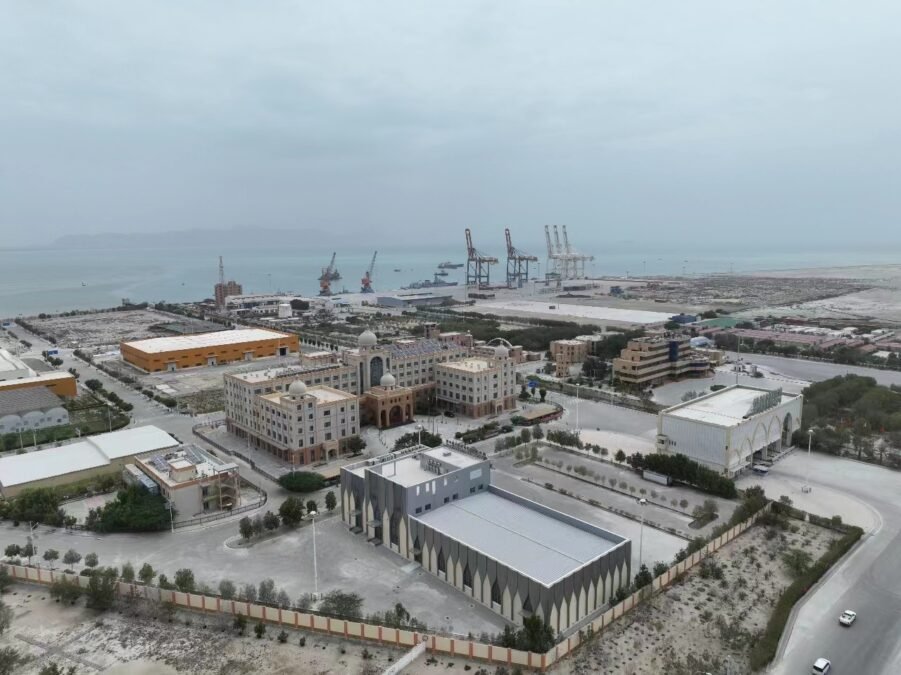
The committee also reviewed progress on the Power Supply Stability Project for Gwadar Port and the Gwadar Free Zone, reaffirming the government’s commitment to ensuring reliable electricity for industrial expansion and port-based economic activities. Officials were instructed to resolve remaining issues on a priority basis to strengthen infrastructure supporting Gwadar’s growing role in regional trade and logistics.
In addition, the National Highway Authority (NHA) informed the committee that financing arrangements for the Karakoram Highway (KKH) Phase II project would be discussed during the next working group meeting expected later this month. The minister directed authorities to finalize financing while ensuring construction timelines remain aligned with the 2028 deadline, adding that work should begin through domestic resources if financing is delayed to prevent future infrastructure risks associated with the Diamer-Bhasha Dam reservoir. He also encouraged greater participation of leading Pakistani construction companies in the bidding process.
Preparations for upcoming Joint Working Group meetings and the 15th Joint Cooperation Committee were also reviewed. Officials confirmed that the meeting calendar had been finalized in coordination with Pakistan’s Mission in Beijing and shared with the Chinese side to facilitate timely engagement under the CPEC framework.
For Pakistan’s maritime sector, the meeting signals that CPEC 2.0 is increasingly shifting from traditional transport infrastructure toward integrated maritime economic development. The emphasis on the Karachi Coastal Comprehensive Development Zone, Gwadar Port energy reliability, and regional connectivity reflects a broader strategy to strengthen Pakistan’s position along the Arabian Sea and major international shipping routes. If implementation challenges are resolved efficiently, these projects could enhance port competitiveness, attract foreign investment into coastal industries, improve logistics efficiency, and reinforce Pakistan’s long-term ambitions within the regional blue economy. However, the ultimate economic impact will depend less on project announcements and more on timely execution, institutional coordination, and sustained policy continuity.