Houthi Red Sea Attack Kills Four Crew, Two Rescuers
Red Sea Maritime Security Comes Under Renewed Pressure
The security situation for commercial shipping in the Red Sea and Gulf of Oman has deteriorated following two separate incidents involving merchant vessels, raising fresh concerns over maritime security, shipping routes and global supply chains.
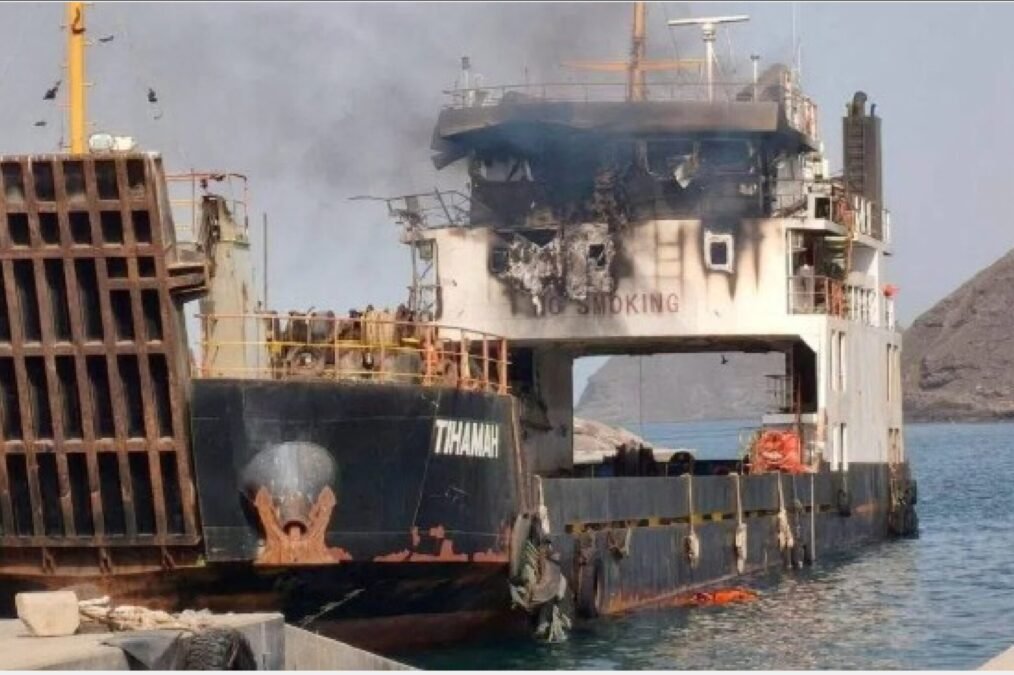
Four crew members were killed when the Egyptian-owned cargo ship Tihamah came under attack in the Bab el-Mandeb Strait on Tuesday, according to Yemen’s Transport Ministry. Two Yemeni rescuers were also killed after a second attack occurred when rescue teams reached the vessel.
The incident occurred while the vessel was at anchor northeast of Perim Island, Yemen. British maritime security company Ambrey reported the attack, while Yemeni authorities said the vessel lost control following the strike.
Three Pakistani Crew Members among those Killed
Pakistan’s foreign minister confirmed that three Pakistani nationals were among the four crew members killed. The fourth victim was an Indonesian national.
Yemen’s Transport Ministry said the attack resulted in the crew losing control of the vessel. Ten people were injured, including seven crew members, two Coast Guard personnel and one member of the National Resistance Forces.
The Houthis later acknowledged attacking a ship in the Bab el-Mandeb, claiming that the vessel was transporting Saudi military equipment. That claim has not been independently verified.
The attack represents a significant escalation in the threat environment for Red Sea shipping, particularly because commercial seafarers were among those killed.
Rescue Operation Also Targeted
The maritime security situation worsened when rescue personnel arrived at the damaged vessel.
According to Yemen’s Coast Guard, two rescuers affiliated with the National Resistance Forces were killed during a subsequent attack. The incident highlights the risks faced not only by merchant crews but also by emergency and maritime rescue teams operating in contested waters.
The Houthis declared a maritime embargo against Saudi Arabia in the Red Sea on July 20, citing what they described as a Saudi siege. Riyadh has rejected the allegation that Yemen is under siege.
US Strike Disables Container Ship in Gulf of Oman
In a separate maritime security incident, U.S. Central Command said American forces struck the Panama-flagged container ship Vela Nova while it was sailing toward an Iranian port.
The U.S. military said two Hellfire missiles were fired at the vessel after repeated warnings to stop what Washington described as a violation of its naval blockade of Iranian ports.
The strikes disabled the vessel’s steering gear.
The incident reportedly occurred approximately 71 nautical miles (131 km) off Pakistan’s coast, adding another layer of risk to commercial shipping operating in the Gulf of Oman.
According to the information provided, the Vela Nova was the 12th vessel targeted by U.S. forces since the blockade was announced in April and the third since the blockade was reimposed on July 14.
Red Sea and Hormuz Shipping Traffic Declines
The latest incidents come as commercial vessel movements through several strategically important maritime chokepoints continue to decline.
Traffic through the Bab el-Mandeb Strait and Red Sea has fallen by more than 50% compared with the earlier period of Houthi attacks between 2023 and 2025.
Kpler data showed an average of approximately 32 ships per day passed through the Bab el-Mandeb last week, compared with around 50 before the latest Houthi maritime blockade.
The decline has been even more pronounced in the Strait of Hormuz. Only six vessels crossed the waterway on Monday, compared with a 10-day average of approximately 11 vessels and pre-war levels of around 130–140 vessels.
Shipping Risk Is Spreading Across Critical Chokepoints
The significance of the latest incidents extends beyond the individual vessels involved. The Bab el-Mandeb, Red Sea and Strait of Hormuz form part of a highly interconnected maritime transportation system that supports global trade and energy flows.
The killing of four commercial seafarers demonstrates that the threat to merchant shipping is no longer limited to vessel damage or temporary disruption. Loss of life among crews can significantly influence shipowners’ risk assessments, insurance decisions, voyage planning and willingness to operate through high-risk maritime corridors.
For shipping companies, continued attacks could increase war-risk insurance premiums, security costs, voyage times and fuel consumption if vessels are diverted around high-risk areas.
The potential consequences also extend to global supply chains. Longer routes can increase transportation costs and delay deliveries of manufactured goods, commodities and energy products. Container shipping operators may therefore face pressure to balance schedule reliability against maritime security risks.
The simultaneous disruption around the Bab el-Mandeb and Gulf of Oman is particularly significant. A shipping company avoiding one strategic chokepoint may have limited alternatives if another major maritime corridor is also experiencing elevated security risks.
Implications for Global Maritime Trade
The latest attacks underline the vulnerability of international shipping to geopolitical conflict concentrated around strategic maritime chokepoints.
The Bab el-Mandeb Strait provides an important connection between the Red Sea and Gulf of Aden, while the Strait of Hormuz is a critical route for global energy transportation. Persistent disruption in either corridor can affect vessel routing, freight markets, marine insurance and supply-chain reliability.
For shipowners and maritime operators, the combination of Houthi attacks, naval blockades and military intervention creates a complex operating environment in which commercial vessels can face risks from multiple actors.
The decline in vessel traffic indicates that these security concerns are already influencing maritime movement. If the situation persists, shipping companies could increasingly rely on alternative routes, potentially adding significant sailing distances and operating costs.
Outlook for Red Sea Shipping Security
The deaths aboard the Tihamah and the subsequent killing of rescuers mark a serious development in the security environment surrounding Red Sea commercial shipping.
Meanwhile, the U.S. strike against the Vela Nova demonstrates that maritime risks are extending beyond the Red Sea into the Gulf of Oman.
For the global shipping industry, the key concern is whether these incidents remain isolated or develop into a sustained pattern of attacks, blockades and military interventions across interconnected maritime corridors.
Continued disruption could place additional pressure on shipping insurance, freight rates, vessel routing, energy markets and global supply chains, making maritime security one of the most important factors shaping international shipping operations in the region.
Read: Red Sea Cargo Ship Attacked as Fighting Escalates near Yemen’s Hodeida