Egypt Strengthens National Fleet with Two 82,000-Ton Kamsarmax Bulk Carriers from China
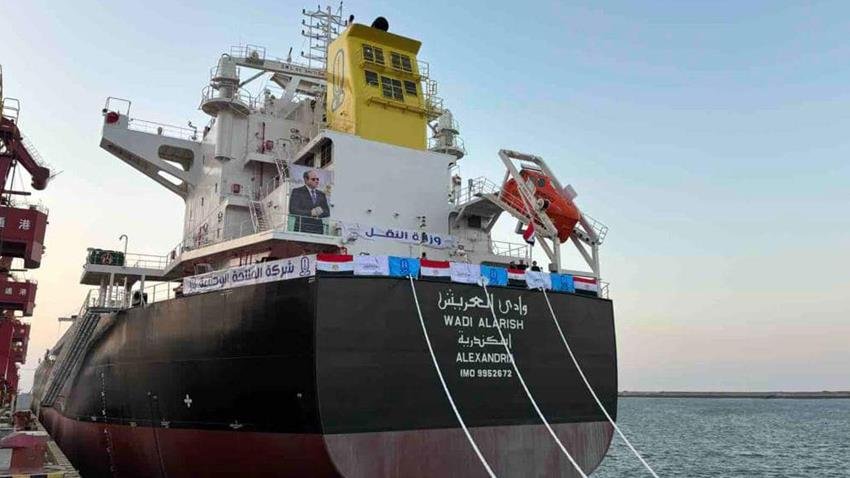
Egypt has added two new 82,000-deadweight-ton bulk carriers to its national commercial fleet after the National Shipping Company, affiliated with the Ministry of Transport, received the vessels from Chinese shipbuilder Jiangsu New Hantong Ship Heavy Industry (NHT) on Friday.
Named Wadi Al-Nile and Wadi Al-Qamar, the two vessels began their voyage to Egypt from the Chinese shipyard on Saturday. The acquisition is part of Egypt’s efforts to support and modernize its national commercial fleet and strengthen its competitiveness in regional and international maritime markets.
Both vessels are based on the KAMSARMAX model and have identical technical specifications. Each bulk carrier has a deadweight capacity of 82,000 tons, a length of 229 meters, a width of 32.26 meters, and a draft of 14.5 meters.
The vessels were designed and built with modern international technologies aimed at improving operational efficiency and reducing fuel consumption. Their specifications make them among the more modern vessels in Egypt’s commercial fleet, particularly as shipping operators continue to place greater emphasis on efficiency and environmental performance.
Modern Engines and Emission-Control Systems
Each ship is powered by a MAN B&W main engine producing 7,490 kilowatts. Both vessels are also equipped with Selective Catalytic Reduction (SCR) systems to reduce emissions and support compliance with international environmental standards.
The ships also feature ballast water management systems designed to protect the marine environment by reducing the transfer of marine organisms between different ecosystems. The systems form part of the vessels’ environmental equipment and are aligned with international environmental requirements and agreements.
Advanced Navigation and Long-Voyage Capability
Wadi Al-Nile and Wadi Al-Qamar are equipped with integrated navigation systems, modern communications equipment, and systems for monitoring and controlling engine performance. These technologies are intended to enhance vessel safety and operational efficiency during commercial voyages.
Each vessel has a fuel capacity of 2,054 cubic meters, allowing it to operate continuously for up to 90 days without refueling. The ships are also fitted with integrated seawater desalination plants capable of producing 20 tons of fresh water per day, supporting their operational requirements during long sea voyages.
What the New Ships Mean for Egypt’s Maritime Fleet
The addition of these two Kamsarmax bulk carriers gives Egypt’s national commercial fleet additional modern dry-bulk carrying capacity. Their 82,000-ton deadweight capacity, combined with fuel endurance, modern navigation systems, emission-control technology, and ballast-water management equipment, reflects the technical requirements of contemporary commercial shipping.
From a maritime industry perspective, the vessels’ specifications also show how fleet modernization increasingly involves more than cargo capacity alone. Fuel efficiency, emissions control, environmental protection, navigation technology, and the ability to undertake extended voyages are becoming important elements of modern ship operations.
For Egypt, the arrival of Wadi Al-Nile and Wadi Al-Qamar therefore represents a fleet-modernization step aimed at supporting the country’s commercial shipping capabilities and competitiveness in regional and international markets.