Panama-Flagged Container Ship Launches Direct China–Vietnam Shipping Route
A Panama-flagged container ship has completed the inaugural voyage of a new direct China-Vietnam shipping route, linking southwest China with Vietnam’s Mekong Delta through a river-sea service. The new connection adds another option for container shipping, international trade and regional logistics, according to Vietnam’s Ministry of Industry and Trade logistics portal.
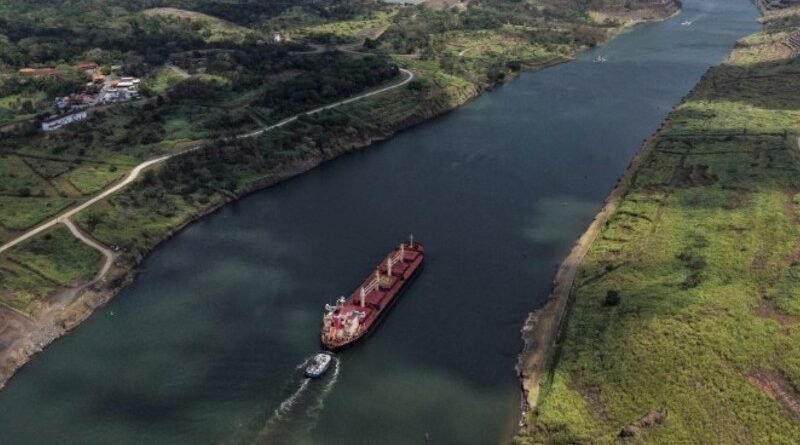
The BBG Nan Ning Bo Run arrived at Cai Cui terminal in Can Tho on 24 September after sailing from Nanning Port’s Liujing operating area. It departed on 16 September, the same day the 134.2-km Pinglu Canal opened to traffic.
New China-Vietnam Container Shipping Service
The new service is being developed by Can Tho Port JSC, Vietnam Maritime Corporation (VIMC) and Guangxi Beibu Gulf International Port Group.
The route is scheduled to operate twice a month, with a transit time of about seven days. The operating plan calls for river-sea vessels of about 4,900 dwt, with capacity for up to 500 TEU.
Refrigerated containers are expected to account for about 25% of capacity, while dry containers are expected to make up the remaining 75%.

BBG Nan Ning Bo Run Carries Western China Cargo
Built in 2021, the BBG Nan Ning Bo Run is about 100 metres long and 22 metres wide.
Its inbound cargo was listed as 153 physical containers and separately as 252 TEU. The cargo included wood panels, sodium sulphate and automotive components from western China.
The vessel was due to load 80 containers of rice bran for its return voyage.
Pinglu Canal Shortens Inland-Waterway Distance
The Pinglu Canal cuts the inland-waterway distance from southwest China to the sea by more than 560 km compared with the traditional route towards Guangzhou.
Guangxi Beibu Gulf International Port Group chairman Hu Huaping said using the canal for China-Vietnam cargo could shorten transport time by seven to 10 days and reduce overall logistics costs by 18% to 30%.
These figures are statements attributed to Hu Huaping and represent the company’s assessment of the potential impact of the new route.
Trial Voyage Preceded New Service
A trial voyage preceded the launch. Li Da Tong 2 Hao arrived at Cai Cui from Qinzhou on 4 August before loading 66 containers of Mekong Delta agricultural products for Guangxi.
The trial voyage was followed by the inaugural voyage of BBG Nan Ning Bo Run on the new direct river-sea connection.
New River-Sea Route Cuts Transit Distance and Logistics Costs
The new service provides a direct river-sea connection between southwest China and Vietnam’s Mekong Delta. Its planned twice-monthly operation and capacity of up to 500 TEU provide a dedicated option for moving both refrigerated and dry container cargo.
The Pinglu Canal is central to the route because it reduces the inland-waterway distance to the sea by more than 560 km compared with the traditional route towards Guangzhou. According to Hu Huaping, the canal could also reduce transport time by seven to 10 days and overall logistics costs by 18% to 30%.
For international freight, container transportation and supply-chain logistics, the new connection could therefore provide an additional cargo route between the two markets. The stated time and cost reductions, however, are estimates provided by the chairman of Guangxi Beibu Gulf International Port Group.
Key Maritime and Port Operators on the China–Vietnam Route
Can Tho Port JSC is a Vietnamese joint-stock port company within the VIMC port network and operates Cai Cui and Hoang Dieu terminals.
Vietnam Maritime Corporation (VIMC) is a Vietnamese state-controlled maritime group active in ports, shipping and maritime services.
Guangxi Beibu Gulf International Port Group is a Chinese port and logistics group involved in port infrastructure and cargo connections in Guangxi.
Recommended Stories
- Panama Lifts Port Concession Restrictions as New Port Tenders Loom
- Panama and China Renew Maritime Port Agreement to Boost Shipping and Trade Relations
- Panama Canal Cuts Transit Slots as El Niño Threatens Water Supply and Shipping Capacity
- China Defends Port State Control on Panamanian Ships as IMO Debate Highlights Global Maritime Safety