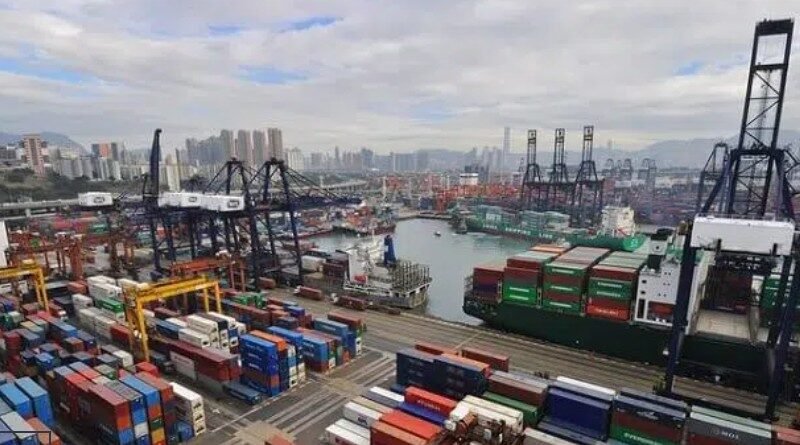
Hong Kong, Greece Launch Green Shipping Corridor
Hong Kong has established its first green shipping corridor with Greece, linking Hong Kong Port with the Port of Piraeus to advance maritime decarbonisation along major Asian-European shipping routes. The agreement marks an important step in Hong Kong’s efforts to strengthen its position as an international maritime hub and support the global transition towards sustainable shipping.
Chief Executive John Lee Ka-chiu announced the initiative at the World Maritime Merchants Forum on Monday. He also outlined plans to strengthen green maritime fuel supply chains through partnerships with mainland Chinese ports and establish a dedicated task force to develop a green-fuel trading platform for the shipping industry.
Lee described the Hong Kong–Piraeus corridor as a significant development in promoting lower-emission shipping. Green shipping corridors are maritime routes connecting ports where zero-emission shipping is demonstrated and monitored through technological, commercial or regulatory initiatives, according to the UK Hydrographic Office.
Hong Kong’s Action Plan on Green Maritime Fuel Bunkering identifies these corridors as an important part of the city’s port transformation, supporting investment in infrastructure for alternative maritime fuels and helping shipping stakeholders achieve their decarbonisation targets.
The initiative forms part of Hong Kong’s first five-year development plan for 2026–2030, which prioritises the maritime industry alongside international finance, trade, aviation, innovation and technology, and talent development. Hong Kong ranked fourth globally in this year’s International Shipping Centre Development Index and is home to approximately 1,200 port and maritime-related enterprises.
Lee also announced plans for maritime cooperation with mainland China, including partnerships involving Yangpu Port in Hainan and Zhanjiang in Guangdong province. The proposed agreements will strengthen port cooperation and support the development of Hong Kong’s first green energy corridor with Zhanjiang, connecting green fuel produced in mainland China with international maritime markets.
Under the five-year plan, Hong Kong aims to establish five green energy corridors by 2030 and become an international centre for green maritime fuel bunkering and trading. The strategy also targets the use of green maritime fuels by 7 per cent of Hong Kong-registered vessels by 2030.
Read:MOL Ocean Bulk Signs 25-Year Green Shipping Deal with Vale
To support the development of the green-fuel market, the government has established a task force comprising leading industry experts. It will advise on the trading platform’s strategic direction, infrastructure requirements and operating rules, with the aim of integrating the green fuel value chain and promoting international trading partnerships.
Hong Kong is also expanding its wider maritime network. Lee highlighted the city’s agreement with Shanghai to establish a “brother port” partnership, following earlier “partner port” agreements with Guangxi, Dalian and San Antonio Port in Chile.
Speaking at the Hong Kong Global Maritime Trade Summit on Monday, Financial Secretary Paul Chan Mo-po reaffirmed Hong Kong’s commitment to maintaining an open port, free trade and zero tariffs, while developing its green maritime fuel industry.
Chan noted that mainland China accounts for approximately 60 per cent of the world’s operating green methanol capacity. He outlined a supply-chain model under which fuel would be produced and stored in South China, bunkered and traded in Hong Kong, and supplied to ships worldwide.
He also emphasised that fuel trading is as important as bunkering, explaining that the ability to price and hedge fuel can make projects easier for producers to finance.
The World Maritime Merchants Forum and Hong Kong Global Maritime Trade Summit are being held as part of the 10th edition of Hong Kong Maritime Week, which runs until November 21.