WinGD, Hanwha Partner on LNG and LPG Dual-Fuel Engines
WinGD and South Korea’s Hanwha Engine have partnered to advance dual-fuel marine engine technology, preparing two new engine concepts for production and commercial deployment. The collaboration aims to strengthen fuel flexibility and support the shipping industry’s transition towards lower-carbon marine propulsion systems.
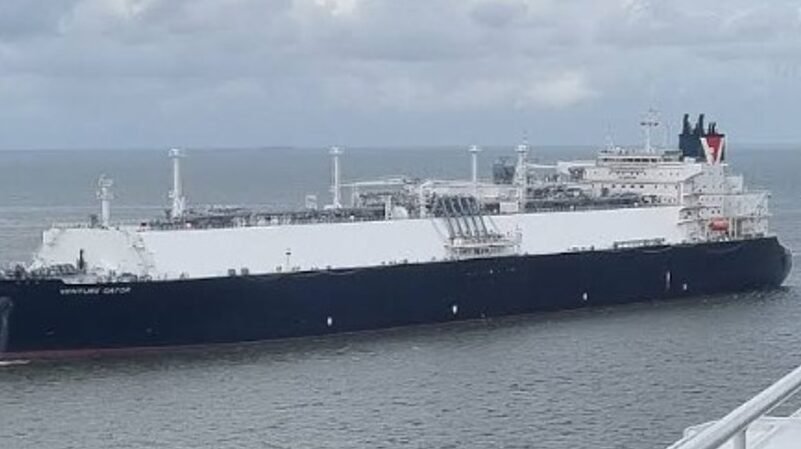
The agreement covers WinGD’s high-pressure LNG dual-fuel engine, designed for large container ships, and its LPG dual-fuel engine, developed for very large gas carriers (VLGCs). The partnership brings together the companies’ engineering capabilities to support the development and commercial application of alternative-fuel propulsion technologies.
The agreement was signed at Hanwha Engine’s production facility in Changwon, South Korea, on November 13. It establishes a framework for cooperation on the two engine projects, including technical requirements and preparations for production.
The companies will also discuss technical requirements for new LNG carrier construction projects featuring WinGD’s X72DF-2.2 engine, potentially extending their cooperation to another segment of the gas shipping market.
Read:CMA CGM Tenere Completes First Dry Dock Inspection, Milestone for Dual-Fuel LNG Container Ships
A key feature of the LNG dual-fuel engine is its ability to operate on bio-methane and e-methane without modifications. Meanwhile, the LPG dual-fuel engine requires only minor adaptations to operate on carbon-neutral ammonia while maintaining performance comparable to WinGD’s X-DF-A ammonia engines already in service.
Both engine concepts are designed to fit standard vessel designs. Their use of commonly adopted interfaces is intended to simplify installation and commissioning, potentially reducing integration challenges for shipbuilders and vessel operators.
Read:How Maritime Insurance Works: Coverage, Costs, and Key Risks for Shipowners
The partnership highlights growing industry interest in alternative marine fuels, dual-fuel propulsion systems and next-generation ship engine technologies as shipping companies explore solutions to improve fuel flexibility and reduce the environmental impact of maritime transport.