Oruç Reis Arrives in Karachi for Pakistan Offshore Oil and Gas Survey
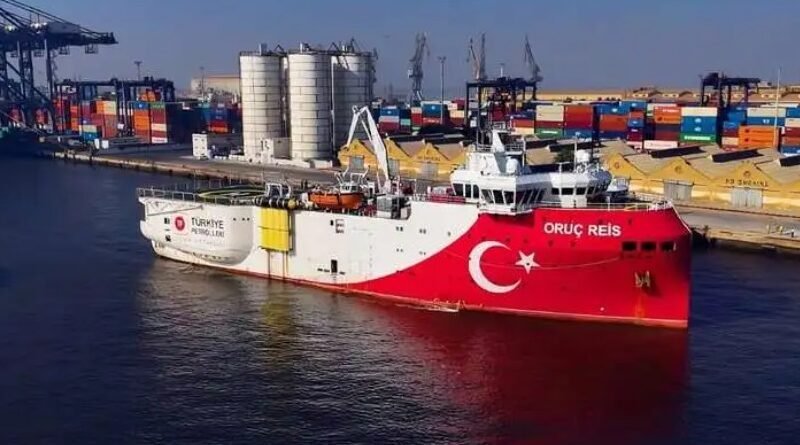
Türkiye’s seismic research vessel Oruç Reis has arrived at Karachi Port ahead of a major offshore oil and gas exploration programme in Pakistan’s Indus-C and Makran blocks. The seismic survey aims to assess potential hydrocarbon resources and support Pakistan’s efforts to revive offshore energy exploration.
A welcoming ceremony was held at Karachi Port on Friday, attended by Turkish Minister of Energy and Natural Resources Alparslan Bayraktar, Pakistan’s Deputy Prime Minister and Foreign Minister Mohammad Ishaq Dar, and Federal Minister for Petroleum Ali Pervaiz Malik. The Sindh Governor, representatives of Turkish Petroleum Corporation (TPAO), Pakistani energy companies, and maritime and military officials also attended.

The deployment marks Oruç Reis’s second overseas intercontinental mission following its survey assignment off Somalia. In Pakistan, the vessel will conduct 3D and 2D seismic surveys in two offshore areas to evaluate their geological potential for oil and natural gas resources.
According to Türkiye’s Ministry of Energy and Natural Resources, the programme includes a 3D seismic survey covering approximately 670 square kilometres and a 2D survey extending across 2,353 kilometres of survey lines.
The first phase, known as the Marjan 3D Seismic Project, will focus on the Indus-C Block offshore Karachi. Data collection and preparations are expected to take approximately 50 days after the vessel reaches the designated survey area.
After completing the first phase, Oruç Reis will return to Karachi Port before proceeding to the Makran offshore blocks. The second phase, the Makran 2D Seismic Project, will collect data along approximately 2,353 kilometres of survey lines and is expected to take around 25 days.
Speaking at the welcoming ceremony, Turkish Energy Minister Alparslan Bayraktar described the vessel’s arrival as the beginning of a new phase in Pakistan-Türkiye energy cooperation. He said Türkiye intended to build on its deepwater exploration experience through collaboration with Pakistan and indicated that drilling operations in areas identified through the surveys were targeted for 2027.
The seismic surveys will map underground geological structures and help identify potential locations for exploratory drilling. However, the findings will not independently confirm commercially viable oil or gas reserves, which can only be established through further assessment and drilling.
The mission follows energy cooperation agreements signed between Pakistan and Türkiye in December 2025. These arrangements established partnerships between Turkish Petroleum Corporation (TPAO) and Pakistani energy companies, including Oil and Gas Development Company Limited (OGDCL), Pakistan Petroleum Limited (PPL), and Mari Energies.

Under the partnership arrangements, Turkish companies are participating in Pakistan’s hydrocarbon exploration activities. In the Eastern Offshore Indus-C Block, a TPAO subsidiary acquired a 25 percent participating interest and operatorship, while Pakistani companies retain the remaining interests.
Pakistan relaunched its offshore exploration efforts in January 2025, opening an offshore bidding round after an 18-year gap. The initiative offered exploration opportunities in the Indus and Makran basins to attract international investment and technical expertise.
Read:Pakistan Reopens Offshore Exploration Sector, Awards New Licences for Offshore Energy Blocks
Despite its extensive maritime area, Pakistan’s offshore hydrocarbon resources remain relatively underexplored. The latest seismic programme is expected to improve geological understanding of these basins and provide essential data for future investment and exploration decisions.
Built in Türkiye in 2017, Oruç Reis is an 87-metre-long seismic research vessel operated by Turkish Petroleum. Equipped for both 2D and 3D seismic data acquisition, it supports offshore oil and gas exploration as well as research into the continental shelf and the Earth’s crust.
Before arriving in Pakistan, the vessel completed its first intercontinental mission off Somalia, collecting 3D seismic data across approximately 4,464 square kilometres in three offshore blocks. Turkish officials have stated that the data gathered during that assignment helped prepare the ground for Türkiye’s subsequent deepwater drilling operation in Somalia.
Read:TGS Expands OBN Work in Europe for 2026 Season
The results of the Indus-C and Makran surveys will help determine whether Pakistan’s offshore areas contain promising hydrocarbon prospects. If commercially attractive locations are identified, the targeted 2027 drilling programme could advance the country’s efforts to develop domestic oil and gas resources and strengthen its energy security.
The deployment also represents a practical step in Pakistan-Türkiye cooperation, combining Turkish seismic survey capabilities with Pakistani energy companies’ participation in offshore exploration.