Protecting Pakistan’s Coastal Mangroves: A Key Step toward Maritime Sustainability
Mangrove forests are one of the most useful and endangered ecosystems within the marine ecosystem. Mangroves are used as natural infrastructure to shield coastlines, support fisheries and enhance climate resilience; once dismissed as being non-productive swamps, they are now globally appreciated as such. In the case of Pakistan, where the country has a long coastline and millions of people, which rely on ocean resources, mangroves protection is no longer a choice but a necessity to maritime sustainability.
What is the Significance of Mangroves to the Sea?
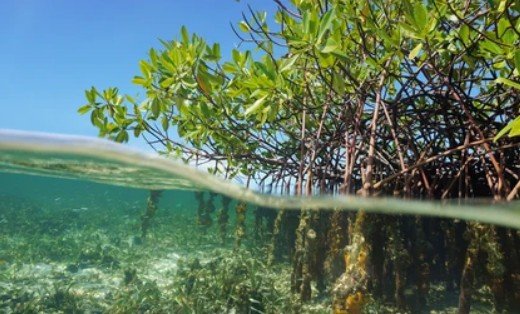
Mangroves serve as a natural buffer between land and sea. Their thick root systems stabilize the coasts, minimize the erosion of the coasts and absorb the effects of storms, cyclones, and tides. UNEP estimates that mangroves are able to decrease the energy of the waves up to 66 per cent, which decreases the risk of coastal disasters significantly.
Their contribution to marine biodiversity is equally important. The mangroves support fish, shrimp, crabs, and mollusks which are the basis of the coastal and offshore fisheries of Pakistan. According to Food and Agriculture Organization (FAO), mangroves are considered to be important habitats to the food security and livelihood of millions of people living along the coasts of the globe.
Mangroves are also very effective in the fight against climate change. These forests have been claimed to be one of the most efficient natural carbon sinks in the sense that they are able to absorb up to four times more carbon per hectare of land than tropical rain forests. Through this blue carbon ability, mangroves form an important resource in the reduction of greenhouse gas emissions and the global climate obligations.
The Mangroves in Pakistan: A local Resource at Risk
Pakistan also has one of the largest arid-zone mangrove forests in the world, mainly in the Sindh coast of the Indus Delta, such as Korangi Creeks, Sandspit, and Keti Bandar. Smaller but ecologically important mangrove swamps also occur at the Balochistan coast in places like Jiwani, Miani Hor and Kalmat Khor. Although significant in nature, the mangroves in Pakistan have been degraded to extreme levels in the last five decades. According to the studies by the WWF-Pakistan and the International Union to conserve nature (IUCN), various threats are outlined, including:
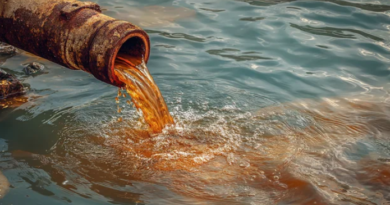
- Industrial effluents and sewage pollution of the marine environment.
- Plastic pollution and solid waste dumping.
- Irresponsible fuelwood and fodder harvesting.
- Less freshwater flow of the Indus River.
- Blistering urbanization of the coasts and growth of industry.
These stresses have contributed to habitat degradation, the reduction of fish populations and the exposure of coastal societies to climatic based catastrophes.
Economic and Social Effect to Coastal Community
The deterioration of the mangrove ecosystems would have a direct impact on fishers and the coastal communities who rely on the presence of healthy marine communities to survive. This will decrease fish breeding areas, which cause lower catches, instability in income and food insecurity.
The World Bank says that nations that invest into the protection of mangroves enjoy fewer disaster recovery, robust fisheries, and sustained economic resilience. In the case of Pakistan, conservation of mangroves is a socioeconomic necessity besides an environmental matter.
Government and Conservation Efforts
The Government of Pakistan has made significant efforts towards mangrove restoration to appreciate the level of the urgency of the situation. The degraded coastal areas are being covered with around 43.5 million mangrove saplings under the Ten Billion Tree Tsunami Programme. This project is in line with the objectives of the climate adaptation of Pakistan and is indicative of an increased awareness of mangroves as strategic maritime resources.
The programme is being revised for next four years (2024-2028) with an increased coverage of carbon finance mechanisms, scientific resource assessment, livelihood creation, and biodiversity preservation. The Ministry of Climate Change and Environmental Coordination is collaborating with the Global Environment Facility (GEF) and the Green Climate Fund (GCF) to cut and minimize the carbon footprint and ensure sustainable management of the coastal and terrestrial forests.
Along with efforts being undertaken by provincial governments in partnership with organizations like WWF-Pakistan, IUCN, and local fishing communities, conservation, sustainable harvesting, and coast practice at community levels, and coastal monitoring programs are also being executed. Some of the various projects financed by such initiatives are Community Resilience Partnership Program, Distribution of Solar Products, Transforming the Indus Basin, Recharge Pakistan and Scaling up of Glacial Lake Outburst Flood (GLOF) Risk Reduction in Northern Pakistan.
Global Warming, Tidal Waves, and a Call to Action
The Pakistani government has also been rated as one of the top 10 countries most vulnerable to climate change based on Climate Risk Index by German Watch. The increase in sea level, severe storms, flash floods, droughts, lake outbursts by glaciers, and unpredictable precipitation is becoming a major threat to ecosystems, livelihoods, and major infrastructure. Particularly at risk are the mangroves found along coasts, which are natural nursery grounds to fish species and storm protection.
According to the Sixth Assessment Report by the Intergovernmental Panel on Climate Change (IPCC), there is likelihood that extreme weather patterns will become more frequent and more severe. To overcome these issues, the government of Pakistan has come up with a package of policy interventions comprising of National Clean Air Policy (NCAP), Nationally Determined Contributions (NDCs), Pakistan Policy Guideline of Trading Carbon Markets, National Adaptation Plan (NAP) and Climate Budget Tagging Initiative among others.
Securing the Maritime Future of Pakistan
Mangroves are not just trees but they are life lines in terms of protecting the coastal zones, maintaining fisheries, keeping the climate steady and ensuring a steady state of the economy at sea. The conservation of these ecosystems forms a key element in ensuring a resilient and sustainable maritime future of Pakistan where the country still grapples with the challenges of climate change, rising sea levels, and robust coastal development.
The preservation of mangroves in the present will shape the sustainability of the maritime industry of Pakistan in the future. A sustainable future in the sea does not just lie in ports, ships, and trade routes but in the silent systems that are natural and sustaining.