AD Ports Group Expects Cargo Volume Growth as Global Shipping Routes Shift Away from Strait of Hormuz
Global shipping routes are undergoing significant adjustments as geopolitical tensions and maritime security concerns influence vessel movements across key trade corridors. In response to these developments, AD Ports Group expects an increase in cargo volumes across its international maritime and logistics network as shipping companies reroute vessels away from traditional Gulf shipping lanes.
The Abu Dhabi-based ports and logistics operator stated that shifting global trade routes are beginning to redirect vessel traffic toward alternative maritime pathways. These changes could potentially increase activity across several of the company’s overseas terminals and maritime logistics assets located in the Middle East, Europe, Africa, and Asia.
Despite the expected growth in cargo movement across its wider international network, the company noted that vessel calls at Abu Dhabi’s primary gateway may temporarily decline as global shipping patterns continue to adjust.
AD Ports highlighted that its diversified global footprint positions the company to absorb redirected maritime traffic. The group currently manages a broad portfolio of ports, logistics platforms, shipping services, and industrial zones across multiple continents, allowing cargo flows to be distributed across a wider network rather than concentrated in a single regional corridor.
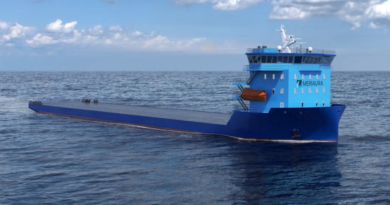
The company also emphasized that most of its fleet—comprising 122 shipping vessels—operates outside the Strait of Hormuz, reducing direct exposure to disruptions affecting maritime traffic through the strategically important waterway.
Ships that remain within the Gulf region are expected to continue operating intra-regional services where feasible, maintaining maritime connectivity between ports across the Gulf and surrounding areas.
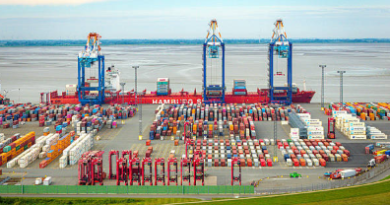
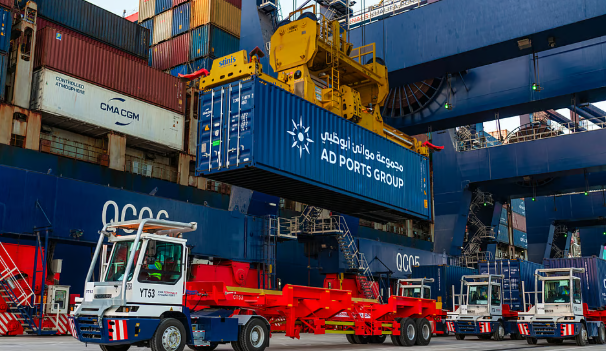
Meanwhile, operations at Khalifa Port, Abu Dhabi’s main deep-water port and one of the fastest-growing container hubs in the Middle East, remain fully operational. AD Ports confirmed that cargo handling, port logistics, and maritime services continue without disruption.
However, the operator acknowledged that vessel arrivals at the Abu Dhabi terminal could decrease temporarily if shipping companies decide to bypass the Strait of Hormuz during ongoing regional uncertainties.
Related:
- AD Ports Group Enters 30-Year Concession for Douala Dry Bulk Terminal, Commits $87 Million to Phase One Expansion
- Mawani and Qatar Ports Sign MoU to Strengthen Regional Maritime Trade and Port Cooperation
- Pakistan Maritime Minister Calls on AD Ports Group to Review Terminal Cargo Handling Charges at Karachi Port
The Strait of Hormuz remains one of the most critical maritime chokepoints in global trade, responsible for transporting nearly 30 percent of the world’s seaborne crude oil shipments along with large volumes of containerized cargo.
Any slowdown or disruption in shipping through this corridor typically forces vessels to delay voyages or choose alternative maritime routes across international waters.
Industry analysts note that such maritime disruptions rarely eliminate global trade flows entirely. Instead, cargo shipments are often redistributed across alternative global port networks, benefiting port operators with diversified international logistics and shipping infrastructure.
AD Ports Group stated that it continues to closely monitor the evolving maritime situation while maintaining full operational capability across its global logistics, shipping, and port infrastructure platforms.