
Adani Ports Launches India’s First Port of Refuge, Strengthening and Global Shipping Security
India has taken a major step in maritime safety and emergency response with the operationalization of its first Port of Refuge (PoR), announced by Adani Ports and Special Economic Zone Ltd (APSEZ) on Friday. The initiative addresses a long-standing gap in coastal emergency infrastructure, providing a structured mechanism for handling ships in distress along India’s extensive 11,000-kilometre coastline and critical global shipping routes.
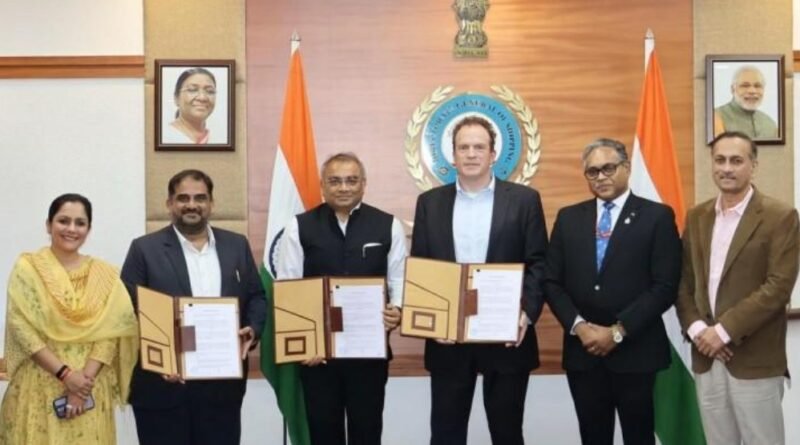
The PoR framework is backed by a tripartite MoU with SMIT Salvage, the emergency response division of Royal Boskalis Westminster NV, and the Maritime Emergency Response Centre (MERC), integrating international expertise for coordinated, rapid-response maritime operations. According to the International Maritime Organisation, a Port of Refuge is a designated location where vessels can safely stabilize conditions, protect life, and limit environmental and cargo damage, a standard long used by major maritime nations.

APSEZ, India’s largest and world’s fastest-growing integrated transport utility, handling nearly 27% of the country’s port cargo volumes, will operate two PoRs: Dighi Port on the west coast for traffic across the Arabian Sea and routes to the Persian Gulf, and Gopalpur Port on the east coast for vessels navigating the Bay of Bengal and the Malacca Strait, one of the busiest corridors in global maritime trade. These facilities will offer salvage and wreck removal, pollution containment, firefighting, and emergency coordination through trained teams and specialized equipment.
“This milestone strengthens India’s maritime safety ecosystem,” said Ashwani Gupta, APSEZ Whole-time Director and CEO. “Ports connect economies—but a Port of Refuge protects lives. By establishing dedicated PoR infrastructure, we are elevating India’s preparedness and setting a benchmark for world-class coastal safety.”
The initiative also aligns with international maritime conventions, enhancing India’s role in global shipping security, environmental protection, and sustainable maritime logistics. Shyam Jagannathan, Director General of Shipping, highlighted that a standardized PoR framework ensures timely and coordinated action during maritime incidents, safeguarding lives, cargo, and the coastal environment. Richard Janssen, MD of SMIT Salvage, added that global best-in-class salvage capability will ensure faster, safer, and more professional handling of maritime emergencies along India’s strategic trade routes.
This development positions India at the forefront of maritime emergency preparedness, improving operational readiness in high-traffic international shipping lanes while reinforcing the country’s commitment to safe and sustainable coastal and ocean transport infrastructure.