Federal Minister Junaid Chaudhry Advocates Space-Based Monitoring for Maritime Safety and Port Expansion in Pakistan
ISLAMABAD – Federal Minister for Maritime Affairs Muhammad Junaid Anwar Chaudhry highlighted the critical role of advanced space-based monitoring systems in enhancing maritime safety, environmental protection, and port expansion in Pakistan.
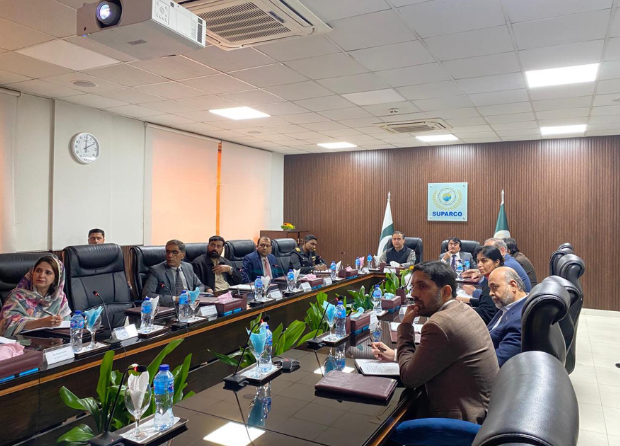
During his historic visit to the Pakistan Space and Upper Atmosphere Research Commission (SUPARCO) headquarters, the first-ever by a maritime affairs minister, Chaudhry emphasized the strategic use of satellite technology to improve maritime management and environmental response.
SUPARCO Chairman Yusuf Khan and senior officials briefed the minister on the organization’s capabilities in satellite monitoring, port management, and maritime safety. The briefing included a satellite-based assessment of potential sites for new ports, aligning with Pakistan’s plan to expand its maritime infrastructure.
Minister Chaudhry underlined the importance of leveraging satellite technology and artificial intelligence (AI) for disaster preparedness, ecological protection, and sustainable management of marine resources. He stressed Pakistan’s commitment to conserving ocean biodiversity, combating climate change impacts, and ensuring responsible use of marine resources, in line with global conservation efforts.
Highlighting international collaboration, the minister noted Pakistan’s membership in the Ocean Biodiversity Treaty and its support for global initiatives aimed at protecting ocean ecosystems. He also praised SUPARCO’s role in Cospas-Sarsat, a satellite-based search and rescue program, and discussed integrating beacon-based systems for enhanced maritime safety and emergency response.
The visit also focused on AI-driven solutions for ports, including monitoring cargo dwell times and addressing customs inefficiencies via the Artificial Intelligence Maritime Secretariat (AIMS) under the Ministry of Maritime Affairs. Both parties agreed to institutionalize cooperation, appoint focal persons, and formalize joint initiatives through an upcoming signing ceremony.
SUPARCO officials showcased their use of high-resolution satellite imagery and digital modelling for coastal monitoring, mangrove tracking, oil spill detection, and storm surge hazard modelling. The agency’s capabilities in early warning systems for cyclones and floods were highlighted as essential tools for disaster management, potentially saving lives and reducing economic losses along Pakistan’s coastline.
Minister Chaudhry emphasized the increasing vulnerability of Pakistan’s coastal areas to climate change, rising sea levels, coastal erosion, and extreme weather events, urging stronger collaboration between maritime authorities and scientific institutions. He concluded that continuous coastal ecosystem monitoring and data-driven policymaking are vital to safeguarding Pakistan’s maritime sector and port infrastructure.