France and South Korea Boost Defence and Energy Collaboration amid Middle East Tensions
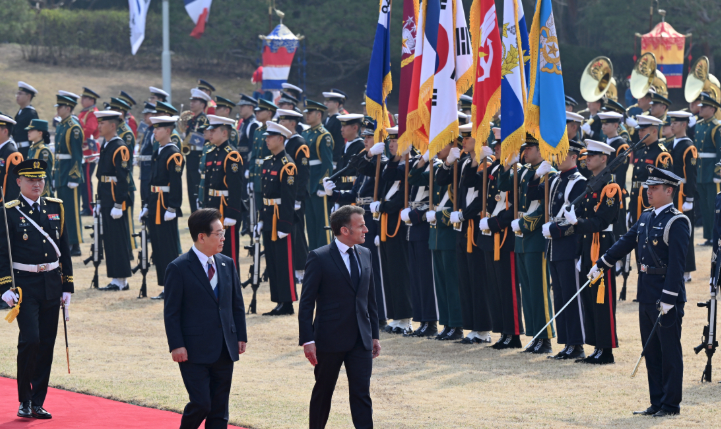
France and South Korea have agreed to expand defence cooperation and strengthen energy security partnerships following a landmark two-day visit by French President Emmanuel Macron to Seoul. This historic state visit marks the first by a French president to South Korea in over a decade, amid rising global defence and energy challenges triggered by the ongoing Middle East conflict.
Leaders Address Middle East Crisis and Strategic Security
South Korean President Lee Jae Myung confirmed that discussions focused on managing the fallout from the Iran war. “President Macron and I agreed to share policy strategies to jointly navigate the economic and energy crises caused by the Middle East conflict,” Lee said after the summit.
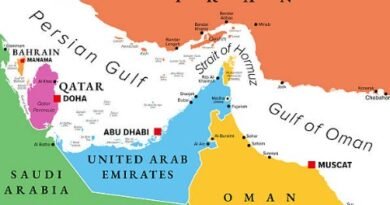
Both leaders emphasized the importance of ensuring safe maritime transport through the Strait of Hormuz, a critical global shipping lane for oil and energy imports. Macron added that France and South Korea, as major arms producers, will intensify military production cooperation and conduct joint exercises to strengthen strategic security.
“On both sides, we aim to equip ourselves with greater strategic depth in military capabilities,” Macron stated.
Expanding Cooperation in Technology, Defence, and Energy
Beyond defence, France and South Korea are set to sign preliminary agreements covering critical minerals, semiconductors, quantum technologies, nuclear energy, and wind power. The goal is to grow bilateral trade from $15 billion in 2025 to $20 billion by 2030.
President Lee highlighted a memorandum of understanding between South Korea’s state-run nuclear operator, Korea Hydro & Nuclear Power, and French companies Orano and Framatome. The partnership will secure nuclear fuel supplies for South Korea and create opportunities in the global nuclear energy market.
Energy security remains a priority as South Korea relies heavily on imports passing through the Strait of Hormuz. The route has been effectively blocked by Iran in retaliation for U.S.-Israeli actions starting February 28, causing spikes in global energy prices.
Macron noted that reopening the strait through military action would be unrealistic, following calls from U.S. President Donald Trump for allies to restore access. Macron’s visit to South Korea followed a trip to Japan, where he coordinated with Prime Minister Sanae Takaichi on similar strategic and energy measures.