Germany Expands Indo-Pacific Naval Strategy, Eyes Japan Forces Pact to Boost Maritime Security and Defense Industry
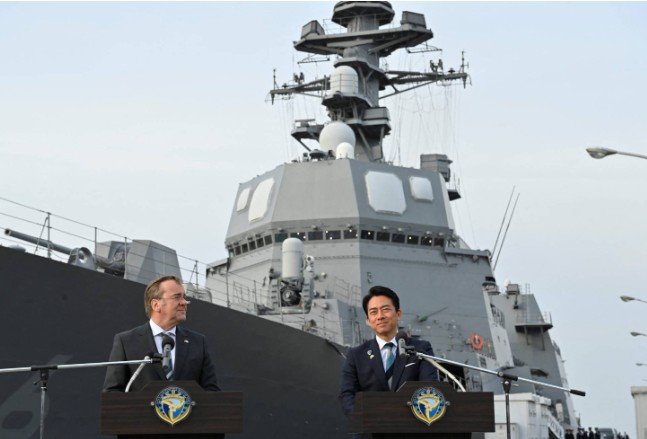
In a move set to reshape Indo-Pacific maritime security dynamics, Shinjiro Koizumi and Boris Pistorius have agreed to significantly deepen military and naval cooperation between Japan and Germany. The high-level talks took place at a naval facility in Yokosuka, underscoring the maritime focus of the partnership.
The two nations are now exploring a visiting-forces agreement, a strategic defense pact that would enable smoother troop deployments, joint naval exercises, and maritime operations,a development with major implications for global shipping routes, sea lane security, and Indo-Pacific trade stability.
Indo-Pacific Maritime Security and Global Shipping Lanes in Focus
Both Tokyo and Berlin emphasized that strengthening deterrence and safeguarding critical sea lines of communication (SLOCs) is essential amid rising geopolitical tensions. Germany’s increasing naval deployments across the Indo-Pacific highlight its commitment to protecting international shipping corridors and freedom of navigation, especially in key maritime hotspots like the South China Sea and Taiwan Strait.
German naval expansion, including Bundeswehr warship deployments and participation in multinational maritime drills, reflects a broader strategy to secure global maritime trade flows, a sector worth trillions in annual economic activity.
Defense Industry Growth and High-Value Military Contracts
A major highlight of the visit was the strong presence of leading defense companies such as Airbus Defence and Space, MBDA, Hensoldt, and Rohde and Schwarz. Their involvement signals expanding opportunities in defense technology, naval systems, drones, and missile development—high-value sectors driving global investment.
Both countries are exploring joint projects, including collaboration on the Eurodrone program, alongside advanced air defense systems, counter-drone technologies, and quantum-based military solutions. This aligns with growing demand for interoperable defense systems and resilient maritime infrastructure.
Strategic Alliances and Indo-Pacific Power Balance
Japan has already signed similar reciprocal access agreements with key partners, including Australia, United Kingdom, and Philippines, while negotiations continue with France and Canada. Germany’s entry into this framework would further strengthen a network of alliances aimed at ensuring regional stability, maritime trade protection, and defense readiness.
Both nations, long-standing allies of the United States, reiterated that European and Indo-Pacific security are increasingly interconnected, particularly in light of rising concerns over regional military buildups and threats to open sea routes.
Naval Cooperation and Freedom of Navigation
Germany’s naval leadership has stressed that disruptions to maritime routes would have global economic consequences, reinforcing the importance of secure shipping lanes for energy transport, LNG trade, and container shipping. Recent deployments, including German warships transiting sensitive waters, demonstrate Berlin’s support for freedom of navigation operations (FONOPs).
Japan, meanwhile, continues to diversify its defense partnerships beyond Washington, aiming to strengthen multilateral maritime security frameworks while maintaining stability in regional waters.
Hormuz Strait and Energy Security Coordination
Beyond the Indo-Pacific, both countries also discussed cooperation related to the strategically vital Strait of Hormuz, a critical chokepoint for global oil and LNG shipping. Officials indicated readiness to support safe maritime passage and potential demining operations, highlighting the growing overlap between energy security and naval defense strategies.