Global Oil Shipping Crisis: Trump Says Allied Warships May Secure Strait of Hormuz as Iran Tightens Control
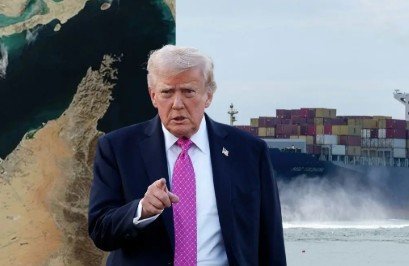
Tensions in global energy markets are escalating after Donald Trump said that several nations could deploy naval forces to help keep the critical shipping corridor of the Strait of Hormuz open amid an ongoing standoff with Iran. The narrow maritime chokepoint, responsible for transporting roughly one-fifth of the world’s oil and liquefied natural gas supplies, has been effectively disrupted for more than two weeks during the continuing conflict involving the United States, Israel and Iran.
Posting on Truth Social, Trump said multiple countries affected by the disruption of global energy shipping would send naval vessels “in conjunction with the United States” to maintain maritime security and ensure the safe passage of oil tankers. He mentioned potential participation from China, France, Japan, South Korea and the United Kingdom, though no formal coalition details were confirmed.
Trump also claimed that U.S. forces had severely degraded Iran’s military capability but warned that Tehran could still deploy drones, naval mines, or short-range missiles capable of threatening vessels transiting the strategic waterway. The U.S. president pledged continued military pressure along the Iranian coastline to ensure the shipping route remains “open, safe and free.”
However, Iranian officials rejected the claims. Alireza Tangsiri, naval commander of the Islamic Revolutionary Guard Corps, said the strait had not been formally closed but remained under Iranian control. He dismissed U.S. statements about destroying Iran’s naval capability and accused Washington of exaggerating the situation while seeking international support for naval operations.
Meanwhile, diplomatic negotiations have allowed limited commercial shipping to pass through the waterway. Two Indian-flagged LPG tankers safely crossed the strait after discussions between Narendra Modi and Masoud Pezeshkian, according to officials from India. Iranian Ambassador Mohammad Fathali confirmed that Tehran granted the vessels a rare exemption. A Turkish-owned ship was also allowed passage following negotiations with Turkey, while additional vessels await clearance.
The U.S. military is reinforcing its regional presence, sending roughly 2,500 Marines and the amphibious assault ship USS Tripoli toward the Middle East following a request from United States Central Command approved by Defense Secretary Pete Hegseth.
Energy analysts warn the standoff could have far-reaching consequences for global trade and food security. The Center for Strategic and International Studies cautioned that disruptions to LNG shipments through the strait could threaten fertiliser production worldwide, which supports staple grain crops responsible for more than 40 percent of global caloric consumption.
Read :Strait of Hormuz Shipping Disruptions Trigger Energy Market Volatility and Global Trade Concerns
The crisis has already forced India to invoke emergency measures to secure cooking gas supplies for more than 333 million households dependent on LPG imports. Meanwhile, Tom Fletcher, the United Nations humanitarian chief, warned that millions of people could face risks if humanitarian cargo cannot safely transit the strait.
Security analysts say the situation highlights how even limited threats to shipping can paralyse maritime trade. Andreas Krieg of King’s College London noted that occasional attacks or threats against vessels could deter insurers and commercial operators, effectively shutting down the waterway without a full military blockade.
The Strait of Hormuz remains one of the world’s most critical energy shipping routes, and any prolonged disruption could drive oil prices higher, destabilise global supply chains, and deepen geopolitical tensions across the Middle East and global energy markets.