HMM Sets Global Record with Delivery of 10,800-CEU Mega Car Carrier
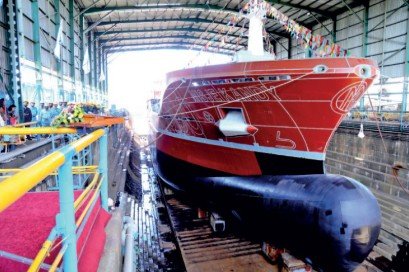
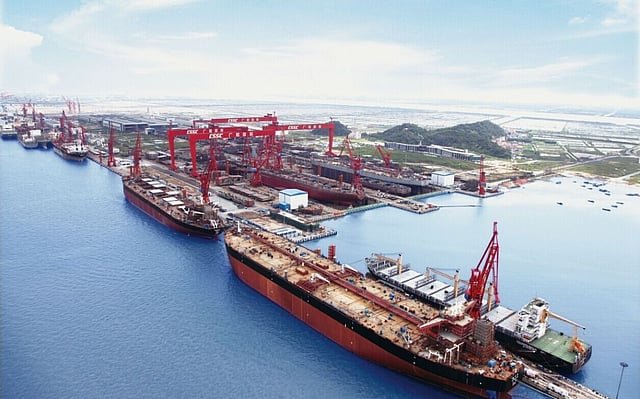
South Korean shipping giant HMM has taken delivery of the world’s largest pure car and truck carrier (PCTC), marking a new milestone in the rapid evolution of global car shipping. Built by Guangzhou Shipyard International (GSI), a subsidiary of China State Shipbuilding Corporation (CSSC), the vessel is capable of carrying 10,800 car equivalent units (CEU), the largest capacity ever recorded for a car carrier.
This delivery marks the third time in less than a year that Chinese shipbuilders have set a new global size record in the car carrier segment. The new HMM vessel surpasses last year’s record-holder, the 9,500 CEU Anji Ansheng, highlighting the accelerating trend toward mega car carriers.
The LNG-powered ship measures 230 metres in length and features 14 vehicle decks, combining scale with improved fuel efficiency and lower emissions. HMM has confirmed that four sister vessels are currently under construction at the same shipyard, signaling the company’s strategic return to the global car carrier market.
Car Carriers Enter Their Own ‘Mega Ship’ Era
Over the past decade, car carriers have quietly undergone a transformation similar to container shipping’s mega-vessel boom. Between 2014 and 2015, a typical deep-sea PCTC operating on Asia–Europe and transpacific routes carried 6,000 to 7,000 CEU, with the largest vessels capped at around 7,500–7,800 CEU due to port and canal limitations.
By the early 2020s, strong growth in seaborne vehicle exports, particularly from Japan, South Korea, and China’s rapidly expanding automotive sector, pushed shipowners to order larger and more efficient vessels. Today, mega PCTCs routinely carry between 8,500 and 9,500 CEU, with HMM’s new delivery setting a new benchmark.
Larger Vehicles and Emissions Rules Drive Growth
Industry experts say the shift toward higher-capacity car carriers is being driven by multiple factors, including the rise of larger and heavier vehicles such as SUVs, pickup trucks, and electric vehicles (EVs) equipped with large battery packs. At the same time, shipowners are under pressure to reduce unit freight costs and comply with stricter environmental regulations, encouraging investment in LNG-fuelled and methanol-ready designs.
As a result, the global PCTC fleet is becoming younger, larger, and more efficient, while ports worldwide are being forced to upgrade ramp strength, stability standards, and terminal infrastructure to accommodate the new generation of ultra-large car carriers.