International Seminar Highlights Biofuels’ Role in Maritime Decarbonization
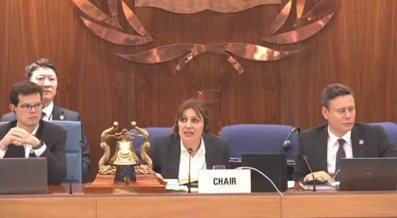
An international seminar organized by the IMO Future Fuels and Technology Project explored the latest developments in biofuels for the maritime sector, addressing both opportunities and challenges in using plant-based, waste oil, or agricultural residue fuels to reduce greenhouse gas (GHG) emissions from shipping. The seminar, held at IMO headquarters in London on 12 February, aimed to provide information and insights to policymakers and industry stakeholders on alternative fuels and emerging technologies, without engaging in formal policy negotiations.
The event drew around 700 participants from IMO Member States, industry, academia, and international organizations, while over 1,300 additional viewers joined the live broadcast online. Sessions were moderated by Dr. Roberta Cenni, Head of Biofuels at the Mærsk Mc-Kinney Møller Center for Zero Carbon Shipping, and focused on three key areas: the current state of biofuel use in shipping, production and certification pathways, and onboard experience with biofuels.
Speakers highlighted the potential of biofuels to decarbonize shipping while addressing sustainability, supply chain dynamics, engine compatibility, and onboard safety. Case studies were presented from Brazil, Indonesia, Türkiye, and the United States, illustrating practical applications and lessons learned.
David Osborn, Director of IMO’s Marine Environment Division, concluded the seminar by noting that further technical seminars are planned, with participant feedback identifying ammonia, LNG, and methanol as priority topics for future discussions. The IMO Future Fuels and Technology Project, a partnership between the Government of the Republic of Korea and IMO, supports global efforts to reduce GHG emissions by promoting the uptake of future fuels and related technologies.
This seminar was the third technical session organized under the project, following previous events focused on onboard carbon capture and storage (OCCS) and the energy transition of global shipping, reinforcing IMO’s commitment to sustainable maritime operations and the decarbonization of international shipping.
The event drew around 700 participants from IMO Member States, industry, academia, and international organizations, while over 1,300 additional viewers joined the live broadcast online. Sessions were moderated by Dr. Roberta Cenni, Head of Biofuels at the Mærsk Mc-Kinney Møller Center for Zero Carbon Shipping, and focused on three key areas: the current state of biofuel use in shipping, production and certification pathways, and onboard experience with biofuels.
Speakers highlighted the potential of biofuels to decarbonize shipping while addressing sustainability, supply chain dynamics, engine compatibility, and onboard safety. Case studies were presented from Brazil, Indonesia, Türkiye, and the United States, illustrating practical applications and lessons learned.
David Osborn, Director of IMO’s Marine Environment Division, concluded the seminar by noting that further technical seminars are planned, with participant feedback identifying ammonia, LNG, and methanol as priority topics for future discussions. The IMO Future Fuels and Technology Project, a partnership between the Government of the Republic of Korea and IMO, supports global efforts to reduce GHG emissions by promoting the uptake of future fuels and related technologies.
Read More: Asian Coastal States Join First IMO Workshop to Enhance Ships’ Routeing and Navigation Safety
This seminar was the third technical session organized under the project, following previous events focused on onboard carbon capture and storage (OCCS) and the energy transition of global shipping, reinforcing IMO’s commitment to sustainable maritime operations and the decarbonization of international shipping.