Maersk and Eurogate Plan €1 Billion Expansion to Boost Bremerhaven Container Terminal Capacity and Sustainability
APM Terminals, the terminal operating arm of A.P. Moller – Maersk, and Eurogate are negotiating a €1 billion expansion of their joint container terminal in Bremerhaven, a move aimed at increasing operational efficiency, competitiveness, and sustainability at one of Europe’s key North Range ports.
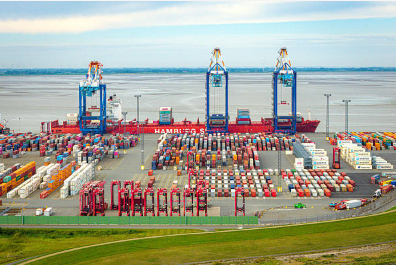
The two companies established their 50:50 partnership in 1998 and operate the North Sea Terminal Bremerhaven, which opened in April 1989. The terminal serves approximately 130 ports worldwide and provides strong connections to the European hinterland, the Baltic States, and Scandinavia through feeder services, dedicated rail links, and direct highway access, making it a strategic logistics hub for global container trade.
The planned expansion comes amid shifting dynamics in northern Germany’s port landscape following MSC Mediterranean Shipping Company taking control of the Port of Hamburg. While Maersk maintains a significant presence in Hamburg, Bremerhaven represents a vital second gateway for cargo flows in the region and supports the company’s broader ocean network.

Vincent Clerc, CEO of A.P. Moller – Maersk, said the investment is designed to unlock Bremerhaven’s full potential as a strategic hub, strengthening cargo flows into Germany and enhancing its role within Europe’s competitive North Range. The proposed plan includes a long-term extension of the partnership between APM Terminals and Eurogate, along with modernization efforts to position North Sea Terminal Bremerhaven among Europe’s most efficient container terminals.
The expansion would increase annual handling capacity from 3 million TEU to 4 million TEU, supported by infrastructure upgrades and sustainability measures. Plans include electrification of equipment and the use of renewable electricity to reduce emissions and improve environmental performance.
Andreas Bovenschulte, Mayor of Bremen, stated that combined investments by Maersk, along with federal and state funding for port infrastructure, would strengthen Bremerhaven’s role in the North Range. He emphasized the need for the federal government to move forward quickly with the deepening of the Outer Weser to secure the port’s long-term competitiveness.
Read More: Maersk to Temporarily Manage Panama Canal Ports Following Court Decision
Currently, the terminal operates six berths capable of accommodating ultra-large container vessels, supported by 18 super-post-Panamax gantry cranes, 102 straddle carriers, more than 2,000 reefer plugs, and six rail tracks. With the planned €1 billion investment, the partners aim to transform Bremerhaven into one of the world’s most efficient, resilient, and potentially zero greenhouse gas emission container handling facilities, reinforcing its position in global shipping and European maritime logistics.