Op-Ed: Seaweeds– A Billion-Dollar Resource Lying along the Coast
By Dr. Saima Haider
Pakistan is a maritime nation by geography, yet much of its marine wealth remains unexplored and undervalued. The coast of Pakistan is over 1000 km long, which consist of Sindh and Makran coast includes a number of beaches, various islands and mangrove swamps. The coastal belt around Buleji, Hawks bay, Manora, Sandspit, Paradise Point, Nathia Gali, Pacha and Cape Monze have various species of seaweeds. Among the most neglected of these are seaweeds.
The seaweed is commonly referred to as a bit more than a sticky litter that has been washed along the beaches, but this simple plant of the sea can possibly have the solutions to some of the most urgent issues known to the world. Seaweed has much more significance than its coverage in issues such as nutrition and climate change. According to the United Nations Conference on Trade and Development (UNCTAD) estimates that the global seaweed industry is worth some USD 17 billion per annum, sustaining a great variety of industries such as food systems, cosmetics, pharmaceuticals, agriculture, and highly developed biotechnology.
We have a big ocean, and it has been neglected in terms of algal studies and scientific research. Biofertilizers and bio stimulants made of seaweed demonstrate to enhance the health of the soil, improve crop production, and lower the dependence on the use of chemical fertilizers. In addition to the economic benefits, it is also crucial to the environment; it captures carbon dioxide, contributes to climate change reduction, enhances the quality of coastal waters, and supports the life of numerous marine creatures. They have been used as a common diet for a long time, mainly in China, Japan, the Philippines, and other countries of the Indo-Pacific region. Seaweeds are eaten in both fresh and dried forms in different ways.
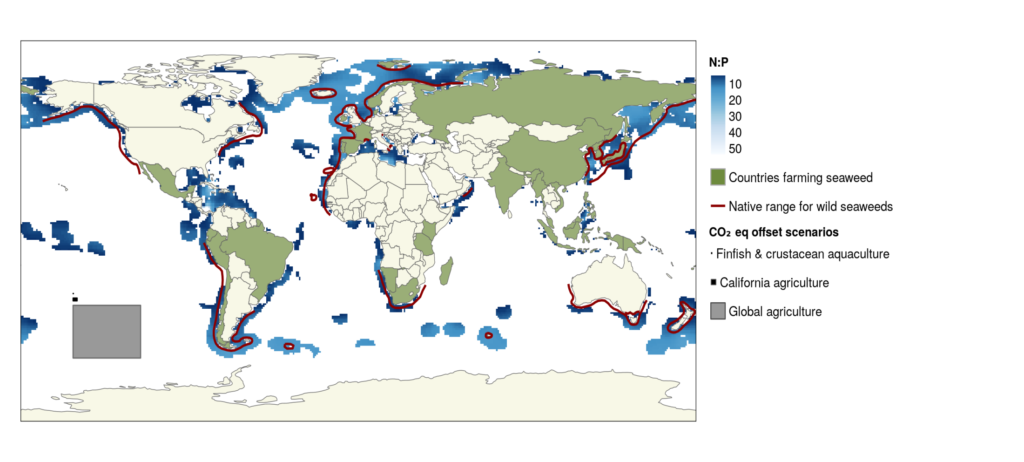
The products derived from seaweeds, such as agar, carrageenan, and alginate, are the most valuable. They are natural hydrocolloids (form gels, thicken liquids, and stabilize products). Agar is a natural gelling agent; it forms a clear gel when cooled and is extracted mainly from species of red seaweeds such as Solieria robusta, Botryocladia leptopoda, Coelarthrum opuntia, Gracilaria corticata, Gelidium sp., Hypnea musciformis, etc., and is used in cosmetics, pharmaceuticals, as well as in the food industry. Carrageenan (thickeners and stabilizers, which provide foods with a smooth, creamy texture) is also derived as a by-product of red seaweed species, including Kappaphycus and Eucheuma; it is used in ice cream, yogurt, cheese, toothpaste, and even shampoo. Alginate (gels when it is combined with calcium) is harvested both in brown seaweeds like Sargassum, Laminaria, and Macrocystis, among others, and in other varieties on the Pakistani coast. The most special feature of alginate is that it can be transformed into solid form at the press of a button, and this property is highly applicable in the pharmacological sector; it is applied in wound dressings, dental impressions, food, textile as well as paper.
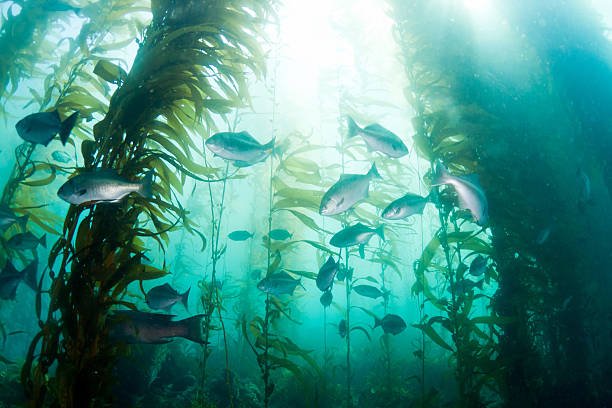
Seaweed habitats are considered an important ecological element since they provide nursery and sheltering grounds to several fish and invertebrate species, where they offer three-dimensional structure that provides defense against predators, foraging, and attachment sites to eggs and juveniles, similar to traditional nursery environments such as seagrass or mangrove beds. Investigations have demonstrated that organized seaweed beds and aquaculture facilities may lead to significant enhancement of juvenile fish populations through providing complicated habitat ecosystems to support early growth and raise biodiversity, and research has indicated that seaweed farms are linked to greater diversity and areas of protection for young fish and mobile invertebrates. Indonesia, being a global leader in seaweed aquaculture as one example, traditional seaweed farming not only supports the economy of the coastal areas but also feeds local fisheries in the sense of providing habitat, which breeds fish, develops them, and supports their livelihoods.
Pakistan possesses an extensive coastline with valuable seaweed species; these are hydrocolloids that are worth billions of dollars in the world, and we are importing them. Through suitable cultivation of seaweeds, Pakistan would be able to: provide employment in the coastal area, decrease imports, enhance the biotechnology and food industry, and enhance exports. Seaweeds remain absent from national blue economy policies, as a result of which funding is limited and collaboration between academia, government, and industry is weak. Without pilot projects, commercial trials, and supportive regulations, seaweed will continue to be seen as little more than beach waste.
Dr.Saima Haider is a Marine Biologist with extensive experience in studying marine ecosystems along the Karachi coast. Her research focuses on marine fauna, including the collection, identification, and examination of various species inhabiting sandy shores, with an emphasis on understanding biodiversity and its ecological components. In addition, she specializes in marine flora, particularly red seaweeds, conducting work ranging from species collection and identification to agar extraction and detailed physical and chemical analyses.
The views and opinions expressed in this article are solely those of the author and do not necessarily reflect the views of Maritime Current News.