Pakistan-China Naval Drill Sea Guardian IV Boosts Maritime Security in Arabian Sea
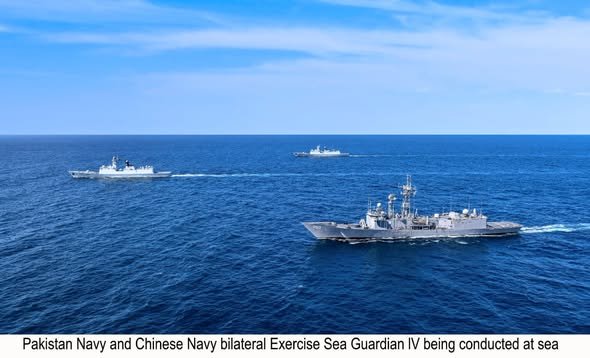
The joint Pakistan-China naval drill, Sea Guardian IV, successfully concluded in Karachi on Wednesday, marking a significant step toward enhanced maritime security cooperation, naval interoperability, and regional stability in the Arabian Sea.
The bilateral exercise, which commenced on March 25, was conducted between the Pakistan Navy and the People’s Liberation Army Navy. It was designed to boost joint operational readiness, strengthen defense collaboration, and address evolving maritime threats in strategic sea lanes.
Sea Guardian IV was executed in two phases. The first phase included a five-day port visit to Karachi, where PLA Navy Ship Daqing received a warm welcome from PNS Taimur. During this phase, both navies engaged in professional exchanges, onboard visits, and strategic discussions focused on modern maritime challenges, including security threats and naval coordination.
A key highlight of the port phase was the inaugural Young Officers Seminar, aimed at fostering future naval leadership and strengthening bilateral defense ties.
The second phase took place in the North Arabian Sea, featuring advanced naval warfare drills. These included air defense exercises against multi-domain threats, coordinated operations with a Pakistan Navy submarine, conventional war-at-sea maneuvers, and live gunnery firing drills. The exercises significantly improved tactical and operational interoperability between the two allied navies.
Following the successful completion of Sea Guardian IV, both navies conducted a coordinated patrol in the Arabian Sea, reinforcing their shared commitment to maritime security, safe shipping routes, and regional peace.
The conclusion of this high-level Pakistan-China naval exercise highlights growing defense cooperation, strengthens regional maritime stability, and underscores the strategic importance of joint naval operations in safeguarding international waters and trade corridors.