Qatar’s ports container throughput hit 1.46 million TEUs in 2025
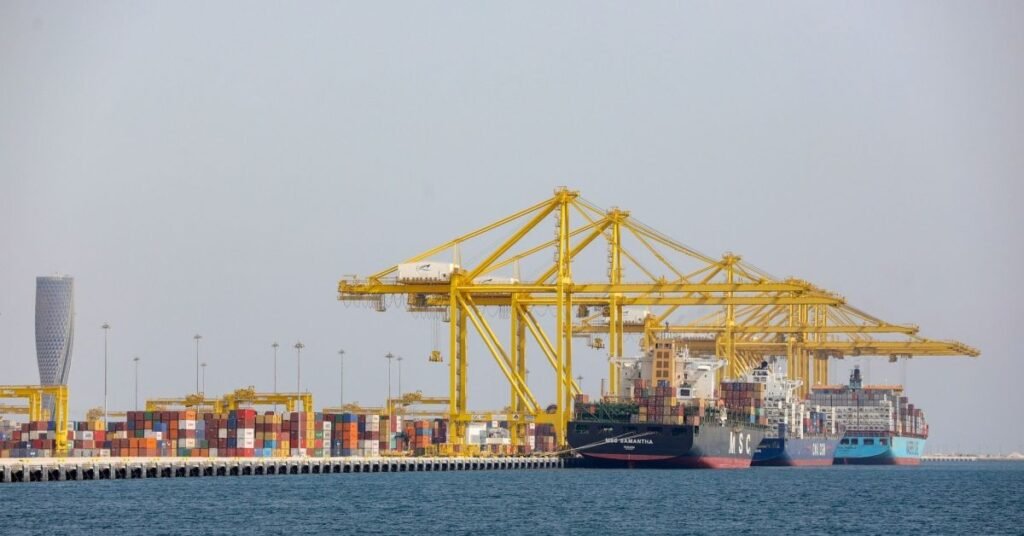
Doha, Qatar: Hamad, Ruwais and Doha ports illustrated excellent development in 2025 that enhanced its ability to propel the economic growth of the country following the sharp increase in volumes of handling of cargoes, containers, RORO and building materials as compared to the same period the previous year.
The total container throughput amounted to about 1.46 million twenty-foot equivalent units (TEU) with transshipment volumes at Hamad Port of about 50 percent of the overall and increasing by 3 % annually.
In addition, more than 1.8 million tonnes of general and bulk cargo were handled, representing an 11 percent increase. Meanwhile, building materials reached 509,000 tonnes, marking a notable 106 percent increase. Vessel calls also rose by 8 percent compared to 2024 reaching 3,019 ships, further strengthening Qatar’s status as a key regional logistics hub”, Mwani Qatar stated in a post on its X platform, yesterday.
The ports are a good connection between the Asian, Middle East, African, European, and American markets to reduce the time of transit of cargo, and enhance the efficiency of a supply chain. They also underline the diversification strategy of the country economy through providing the export and re-export activities, the possibility of development of the local industries to enter foreign markets, and the development of maritime tourism.
The three ports handled 1,458,708 TEUs containers, 1,845,425 tonnes of general and bulk cargo from January to December last year.
During 2025 the three ports received 3,019 vessels. Meanwhile, the ports handled 122,165 RORO units, 490,556 heads of livestock and 509,277 tonnes of building materials.
The main driver of economic activity in Qatar connected with the maritime trade is the Hamad Port, which is the main entry point to the global trade and is far beyond the local market demands. It is key in promoting a number of economic activities particularly the industry, warehousing and logistic services but complies with the utmost environmental and development standards.
It is close to industrial and economic areas, which helps in minimizing transportation cost and accelerating the transfer of goods, which increases the competitiveness of business.
The high performance of Hamad Port indicates the high level of infrastructure, modern technologies and high quality services offered by the organization.
The innovative environment with modern infrastructure, automated devices and scalability of the design of the port makes its handling of various types of cargo, such as: containers, bulk and general cargo, and RORO operations, quick.
Al Ruwais Port is situated on the Northern section of Qatar with an approximated size of, about, 1.29 square kilometres. It has eight 1,646-metre-long berths and a 200 metre by seven metres large basin that will cater to small and medium-sized vessels, exporters, and importers of the regional countries.
It serves the Northern parts of the country and is an essential outlet to the exporters and importers within the region especially on food, building materials and general cargo markets.
The port is also recently developed to serve more vessels in order to enhance its importance in serving as a feasible alternative to regional trade and contributes to sustainability in the maritime services.
Also witnessed during the year was the hosting of first edition of the Seatrade Maritime Qatar Conference and Exhibition that deliberated on various key issues such as safe and sustainable shipping, digitalisation and sustainability in the maritime sector, the energy transition in the maritime sector and the role of liquefied natural gas, financing technologically advanced and environmentally friendly fleets to the future, and a group of specialists, experts, and decision-makers around the world attended the event.
The idea behind the first-of-its-kind event in Qatar was to ensure that its ports and logistics industry can keep up with the growth and take advantage of the international experience in these areas which goes hand in hand with the strategic plan of the Ministry of Transport of transforming Qatar to a successful regional trade and logistics center.