South Africa Fines Four Chinese Fishing Vessels for EEZ Violation and Suspicious AIS Activity
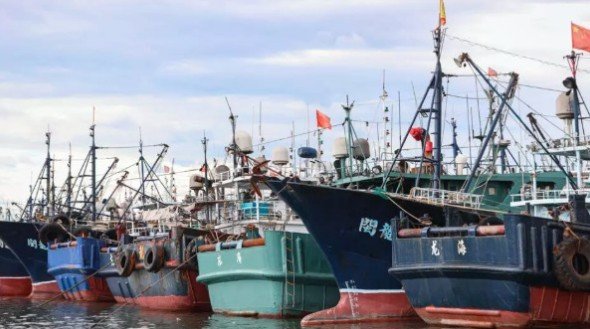
South African authorities have taken decisive action against illegal maritime activity after four Chinese fishing vessels were intercepted for violating national fishing and maritime regulations within the country’s Exclusive Economic Zone (EEZ). The operation, carried out by the Department of Forestry, Fisheries and the Environment in coordination with the South African Police Service, has been welcomed by the Democratic Alliance as a strong step toward protecting marine resources and strengthening ocean governance.
According to officials, the vessels entered South African waters before receiving the required authorization to operate in the EEZ. Their permit applications were later rejected because of incomplete documentation submitted to the regulatory authorities. Despite the absence of approved permits, the vessels had already moved into the country’s maritime zone, prompting authorities to closely monitor their movements.
Maritime monitoring systems also detected suspicious activity while the vessels were inside the EEZ. The ships repeatedly switched their Automatic Identification System (AIS) signals off and back on, a practice that raises major maritime security and compliance concerns. Continuous AIS transmission is required under South African maritime law to ensure vessel safety, transparency, and real-time monitoring of shipping activity. Turning off AIS signals is often associated with attempts to obscure vessel movements and is a common tactic linked to illegal, unreported, and unregulated (IUU) fishing operations worldwide.
Authorities have long warned that foreign fishing fleets sometimes disable AIS transponders while operating in protected or restricted waters, making enforcement difficult. Although investigators could not confirm illegal fishing activities in this specific case, the unusual AIS behavior triggered heightened scrutiny from maritime enforcement agencies responsible for protecting South Africa’s ocean economy.
Following the interception, the vessels were escorted to port in Cape Town, where regulators completed their investigation. The vessel owner ultimately paid a fine of R400,000 imposed by the Department of Forestry, Fisheries and the Environment for breaching South African maritime regulations. After settling the penalties and complying with authorities, the vessels departed South African waters.
Government officials reiterated that the country will continue to enforce strict maritime compliance rules in its EEZ. Minister Willie Aucamp emphasized that South Africa will not tolerate unauthorized activities in its maritime zones and that its ports will not serve as “ports of convenience” for vessels attempting to bypass regulations.
Illegal, unreported, and unregulated fishing remains a major global challenge for coastal states, threatening marine ecosystems, fisheries sustainability, and the livelihoods of communities dependent on the ocean economy. Experts warn that IUU fishing undermines fisheries management, reduces fish stocks, and creates economic losses for legal operators and local fishermen.
Read: Japan Arrests Chinese Fishing Boat Captain after Vessel Enters EEZ near Nagasaki
The interception highlights the growing importance of maritime surveillance technologies, AIS monitoring systems, and coordinated enforcement between environmental agencies and law-enforcement authorities. Analysts say stronger monitoring capabilities and stricter enforcement will be essential to prevent illegal fishing fleets from exploiting maritime zones and to safeguard South Africa’s marine resources for future generations.