South Korea and Japan Discuss CPTPP Accession Bid and Ongoing Seafood Ban
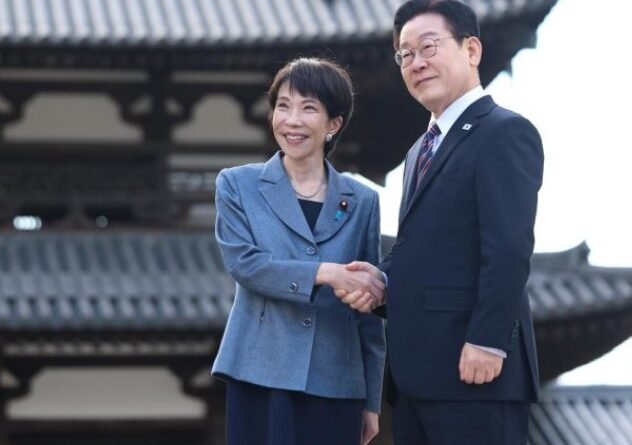
South Korea has reiterated its intention to join the trans-Pacific trade pact during high-level summit talks between President Lee Jae Myung and Japanese Prime Minister Sanae Takaichi, according to an official statement released. The discussions highlighted Seoul’s interest in acceding to the 12-member Comprehensive and Progressive Agreement for Trans-Pacific Partnership (CPTPP), a major regional free trade agreement.
South Korea’s National Security Adviser Wi Sung-lac said both countries agreed to continue consultations on Seoul’s CPTPP membership. The issue remains a key part of ongoing South Korea–Japan economic dialogue, reflecting broader regional trade integration efforts in the Asia-Pacific.
During the summit, the two leaders also addressed South Korea’s long-standing ban on seafood imports from eight Japanese prefectures. The restriction was imposed in 2013 following the 2011 Fukushima nuclear disaster and continues to be a sensitive issue in bilateral relations.
President Lee met Prime Minister Takaichi on Tuesday during his two-day official visit to Japan. On Wednesday, the leaders visited Horyuji, a UNESCO World Heritage Buddhist temple located in Nara Prefecture, where part of the summit program was held.
Following their summit talks, Lee and Takaichi participated in a symbolic cultural exchange by playing drums together, a moment that recalled the Japanese prime minister’s university years when she performed in a heavy metal band. President Lee also presented Prime Minister Takaichi with a drum set produced by the Korean brand Markers, along with a pair of drums crafted by a Korean lacquerware artisan.
South Korea and Japan formally normalized diplomatic relations in 1965, when Tokyo provided $500 million in economic assistance to Seoul. Since then, bilateral trade between the two maritime neighbors has expanded significantly, with total trade volume reaching approximately $75 billion over the decades.