Strait of Hormuz Shipping Crisis Disrupts Gulf Container Trade as Global Carriers Suspend Services and U.S. Announces $20 Billion Maritime Insurance Support
A deepening shipping crisis in the Strait of Hormuz has severely disrupted global container trade, forcing major shipping lines to suspend services and invoke force majeure clauses while the United States moves to stabilize maritime insurance with a $20 billion reinsurance backstop.
The disruption followed escalating regional tensions after military strikes involving the United States, Israel, and Iran, which effectively halted commercial navigation through one of the world’s most critical energy and trade corridors. Vessel traffic through the narrow waterway has reportedly fallen by nearly 90 percent, dropping sharply from the historical average of about 138 ships per day.
Major global shipping companies including Evergreen Marine Corporation, Maersk, CMA CGM, Hapag-Lloyd, COSCO Shipping, and HMM have suspended or restricted container services across the Gulf region due to security risks.
Evergreen Marine confirmed that it has halted all new cargo bookings to and from several Gulf destinations including Bahrain, Kuwait, Qatar, United Arab Emirates, Saudi Arabia, excluding Jeddah, and Umm Qasr Port in Iraq. The carrier cited safety concerns and operational uncertainties linked to the worsening security environment in the Gulf.
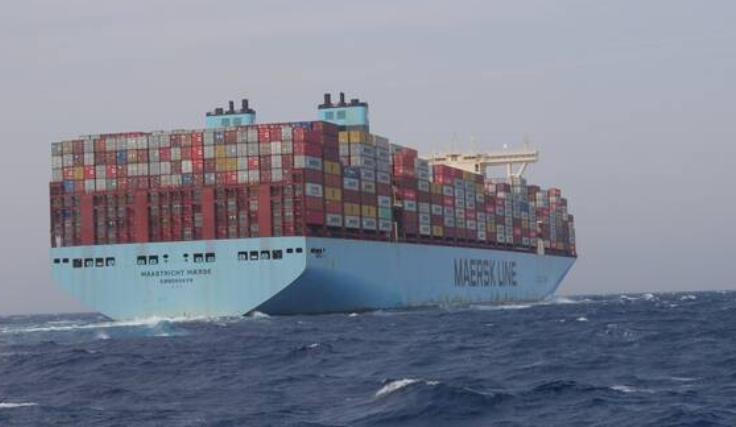
Meanwhile, Maersk has suspended two key Middle East container shipping services and introduced emergency freight rate increases as supply chain disruptions intensify. Other global lines, including CMA CGM and COSCO, have also frozen bookings across multiple Gulf trade routes.
Shipping analysts say the crisis has left 147 container ships stranded inside the Persian Gulf, according to data from Kpler, as vessels remain unable to safely transit the Strait of Hormuz. Since late February, at least eight commercial vessels have reportedly been struck by Iranian missiles or drones, resulting in casualties and heightened risk for merchant shipping.
The maritime disruption has also triggered sharp increases in marine fuel costs. Prices for Very Low Sulphur Fuel Oil (VLSFO) have surged above $650 per metric tonne, while marine gasoil has exceeded $1,000 per tonne for the first time since October 2023, significantly increasing operating expenses for container carriers already rerouting ships via the Cape of Good Hope.
Major carriers including MSC Mediterranean Shipping Company, Maersk and CMA CGM are invoking force majeure provisions in their shipping contracts, a legal mechanism that allows companies to suspend obligations during extraordinary events. The move could leave cargo owners and exporters with limited compensation options for delayed or diverted shipments.
The crisis is already impacting regional supply chains. More than 1,000 export containers carrying garments, processed food and plastic goods are currently stranded at Port of Chittagong and nearby inland depots. Exporters in Bangladesh face mounting losses as shipping services to seven key Middle Eastern markets, worth roughly $900 million annually in trade, remain suspended.