Strait of Hormuz Shipping Disruptions Trigger Energy Market Volatility and Global Trade Concerns
Disruptions to maritime traffic in the Strait of Hormuz, one of the world’s most critical shipping corridors, are raising major concerns for global energy markets, fertilizer supply chains, and vulnerable economies. According to a rapid assessment released by the United Nations Trade and Development (UNCTAD), escalating military tensions in the region have significantly disrupted shipping flows through the strategic waterway.
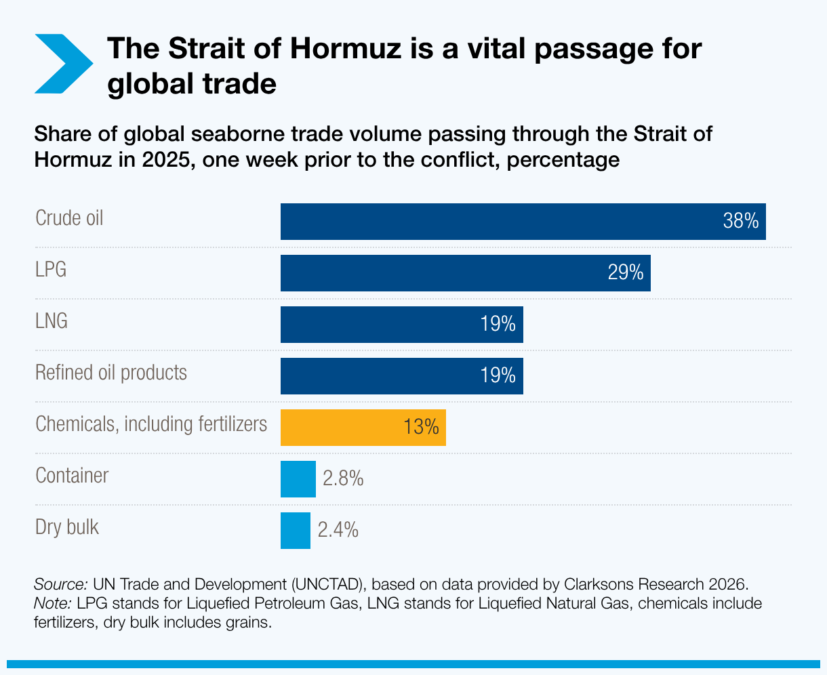
The Strait of Hormuz handles approximately one quarter of global seaborne oil trade, making it a key artery for international energy supplies. Large volumes of liquefied natural gas (LNG), liquefied petroleum gas (LPG), refined petroleum products, and fertilizers also transit through the narrow maritime passage connecting the Persian Gulf to global markets.
Strait of Hormuz: A Critical Global Energy Shipping Route
Data compiled by UNCTAD and Clarksons Research indicates that before the recent conflict escalation, a significant portion of global maritime trade passed through the strait. Around 38% of global seaborne crude oil shipments, 29% of LPG, and 19% of LNG and refined oil products relied on this strategic route. Fertilizers and chemical cargoes accounted for roughly 13% of global maritime flows, highlighting the strait’s importance for agricultural supply chains.
The Strait also carries containerized cargo and dry bulk commodities such as grains, though in smaller volumes.
Maritime Traffic through Hormuz Drops Sharply
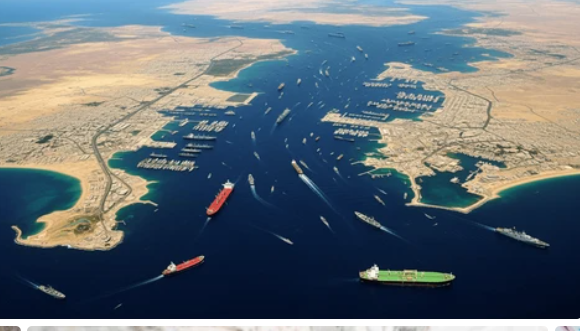
Recent military tensions have led to a dramatic decline in vessel movements through the passage. According to shipping intelligence data, daily ship transits dropped from an average of about 129 vessels in February to just a handful of ships in early March, signaling a near halt in maritime traffic.
The sudden disruption is sending shockwaves through global shipping routes, energy logistics, and maritime insurance markets, increasing uncertainty for traders and shipping companies worldwide.
Oil and Gas Prices Surge Amid Supply Concerns
Energy markets reacted quickly to the disruption. Brent crude oil prices surged above $90 per barrel, while natural gas prices also climbed sharply. Between 27 February and 9 March 2026, oil prices increased significantly as traders anticipated possible supply shortages and shipping delays.
Analysts warn that prolonged disruptions in the Strait could further tighten global energy supplies and amplify price volatility across international markets.
Tanker Freight Rates and War Risk Insurance Spike
Shipping costs are also rising sharply. Freight rates for oil tankers have jumped to historic levels as operators face higher risks when navigating the region.
The Baltic Exchange Dirty Tanker Index (BDTI), which tracks the cost of transporting crude oil, increased by 54%, while the Clean Tanker Index (BCTI), covering refined petroleum product shipments, surged by 72% since the start of the disruption.
At the same time, war risk insurance premiums for vessels operating near the Persian Gulf have climbed rapidly, adding further pressure to global supply chains.
Marine Fuel Costs Jump Nearly 100%
The cost of bunker fuel used by ships has also surged. Prices for both high-sulphur and low-sulphur marine fuels in Singapore, the world’s largest bunkering hub, have almost doubled since late February.
Rising fuel costs increase operational expenses for shipping companies, which can eventually translate into higher prices for global goods transported by sea.
Fertilizer Trade at Risk for Developing Countries
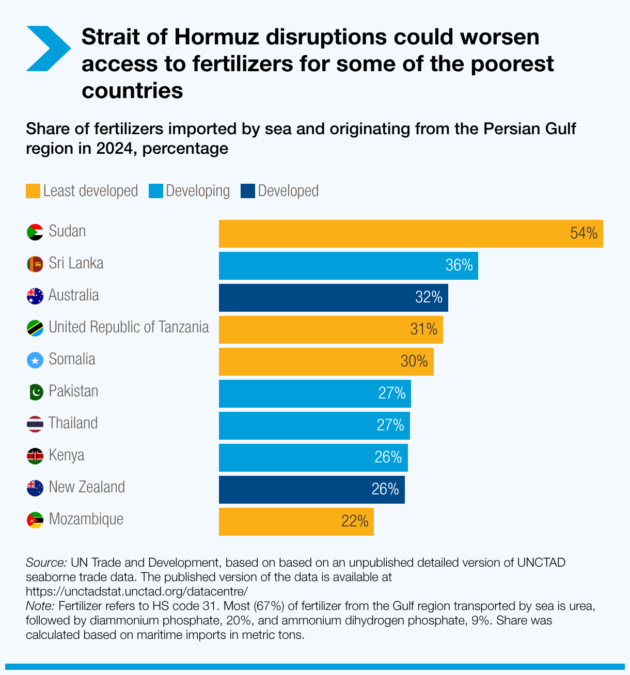
Beyond energy markets, fertilizer supply chains are also vulnerable. Approximately one third of global seaborne fertilizer trade,around 16 million tonnes,passes through the Strait of Hormuz.
Many developing economies rely heavily on fertilizer shipments originating from the Persian Gulf. Countries including Sudan, Sri Lanka, Tanzania, Somalia, Pakistan, and Kenya import a significant share of their fertilizer supplies from the region.
Historically, increases in natural gas prices , a key input for nitrogen fertilizers such as urea and diammonium phosphate ,often lead to higher global fertilizer prices. Any disruption to fertilizer trade could therefore affect agricultural production and food security in vulnerable regions.
Developing Economies Face Greater Financial Pressure
UNCTAD warns that developing economies could face the greatest economic impact. Many already carry high levels of external debt, and rising global interest rates have increased borrowing costs.
Bond yields in several Middle Eastern economies have climbed since the escalation began, reflecting heightened financial risks and market uncertainty.
Global Supply Chains Remain Highly Vulnerable
Previous crises such as the COVID-19 pandemic and the war in Ukraine demonstrated how disruptions to energy supplies, transport routes, and agricultural inputs can quickly spread through interconnected global markets.
If tensions continue to disrupt shipping through the Strait of Hormuz, analysts warn the consequences could extend far beyond energy markets, potentially affecting global trade, food security, shipping logistics, and economic stability worldwide.
Related:
- IMO Secretary-General Condemns Seafarer Deaths in Strait of Hormuz, Calls for Protection of Global Shipping Crews
- China’s COSCO Shipping Suspends Gulf Routes as Strait of Hormuz Tensions Disrupt Global Shipping and Oil Tanker Traffic