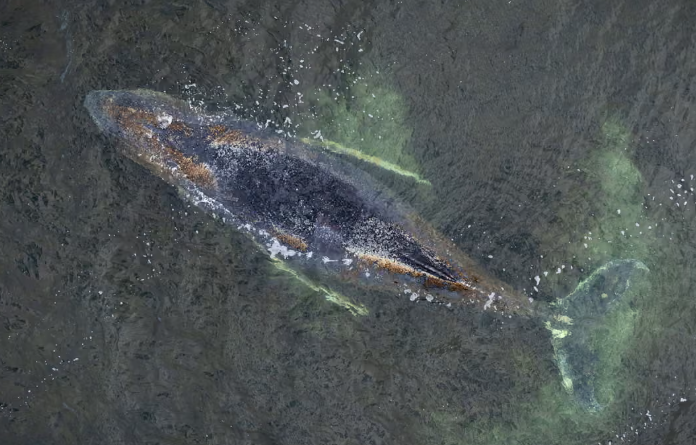
Stranded Humpback Whale Crisis in Baltic Sea Raises Marine Conservation Concerns in Germany
A struggling humpback whale has once again become stranded along Germany’s Baltic coastline, sparking urgent concern among marine scientists and wildlife authorities as its condition continues to deteriorate.
The approximately 10-meter-long whale, which entered the Baltic Sea earlier this month, was found stranded for the third time in shallow waters, appearing weak and disoriented. Experts monitoring the situation warn that the whale’s chances of survival are rapidly diminishing.
Marine scientist Burkard Baschek assessed the animal and stated that the overall prognosis “doesn’t look good,” noting a significant decline in breathing frequency and lack of responsiveness to nearby vessels,key indicators of severe distress.

Authorities in the German state of Mecklenburg-Western Pomerania established a 500-meter restricted zone near the coastal town of Wismar to minimize disturbance and give the whale a chance to recover naturally. Environment Minister Till Backhaus emphasized that the animal might still free itself if it regains strength, though he acknowledged it is likely both sick and injured, possibly due to entanglement in fishing gear.
The whale, nicknamed “Timmy,” was first sighted in the Baltic Sea on March 3. Experts believe it may have strayed off course while following prey or become disoriented due to underwater noise, potentially from submarine activity. The Baltic Sea’s low salinity and limited food supply make it an unsuitable habitat for humpback whales, further complicating survival prospects.
Despite earlier rescue efforts, including dredging channels and using boats to generate waves,the whale has repeatedly become trapped on sandbanks. After briefly freeing itself and being guided by vessels toward the Atlantic Ocean, it was stranded again over the weekend.
Marine biologist Stephanie Gross reported a dramatic decline in the whale’s activity levels, stating that it no longer reacts to external stimuli and shows minimal movement, clear signs of critical condition.
Read:Op-Ed: Seaweeds– A Billion-Dollar Resource Lying along the Coast
The situation has drawn widespread public attention across Germany, highlighting growing concerns about marine biodiversity, ocean noise pollution, and the risks posed by fishing operations. Experts warn that even if the whale escapes again, it still faces a challenging journey of over 300 miles through narrow straits to reach the open Atlantic.
With survival chances described as “relatively slim,” the case underscores the urgent need for stronger marine conservation measures and safer maritime practices in European waters.