U.S. Pursues Third Oil Tanker Tied to Venezuela, Official Confirms
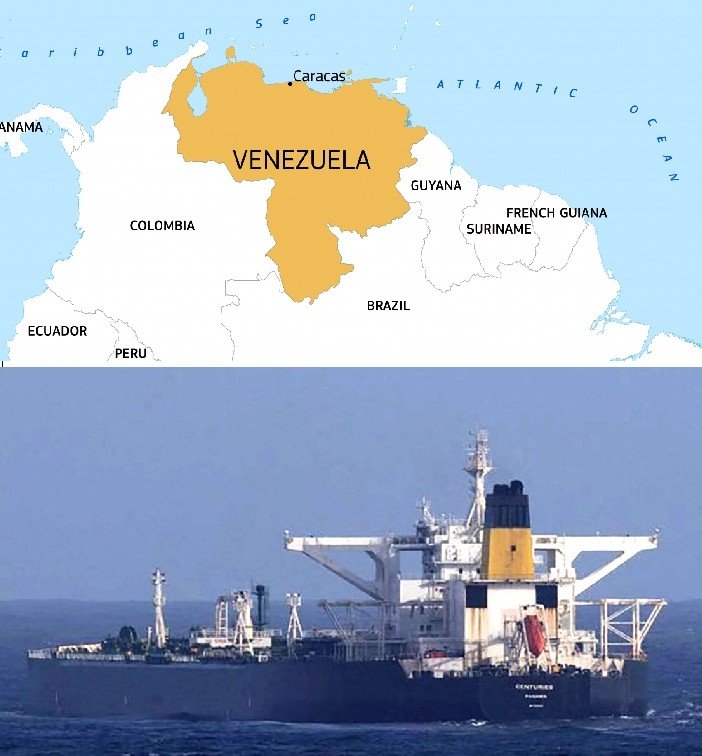
The United States has escalated its maritime enforcement campaign against Venezuela by tracking a third oil tanker near Venezuelan waters, according to a US official. The move signals a tightening of Washington’s pressure strategy aimed at the government of President Nicolás Maduro, particularly targeting the country’s oil exports, which remain the backbone of its economy.
The latest operation follows two tanker seizures carried out by the US Coast Guard within a two-week period. These actions form part of what the Trump administration has described as a “total and complete blockade” against vessels accused of bypassing US sanctions on Venezuela’s oil sector.
the US official affirmed that the government of the US is actively involved in the track of the tanker which it suspects to be part of what Washington terms the dark fleet of the Venezuelan ocean that carries its vehicles with an obscure identity along an unclear path to avoid sanctions.
The tanker also carries a false flag which is a judicial seizure order according to the US sources. Although the ship has not been taken over, officials have pointed out that maritime interception does not necessarily involve boarding, but may involve close monitoring in the sea or on the air. The information about the exact position of the tanker and its identity remained confidential.
Nonetheless, maritime risk consultancy Vanguard claimed the ship was Bella 1, a very large crude carrier that had been recently sanctioned by the US Treasury Department because of its supposed ties with Iran. Monitoring records indicate the tanker was empty when it was nearing Venezuela, but it has been reported to carry oil of Venezuela to China and carry Iranian crude in the past.
This increased enforcement is coupled with a dramatic build up of US military in the Caribbean and surrounding waters which is officially explained as a counter-narcotics campaign. Critics have however drawn legal and humanitarian issues which question the legitimacy of recent US forms of maritime actions which have allegedly claimed more than 100 lives during interdictions. Venezuela has strongly denied being a drug dealer and denounced the tanker confiscations as a form of international piracy but the larger aim is to control the huge oil deposits of the nation according to the Venezuelan government.
The white house has justified the seizures as to the fact that the intercepted vessels were trading in markets beyond the law and supplying oil to authorized states. US officials have tried to outsourcing domestic economic issues where they claim that the few tankers that have been captured will not hurt the world or US fuel prices.
The dispute was further intensified with the seizing of a Panama-flagged tanker, Centuries reportedly loaded with about 1.8 million barrels of Venezuelan crude bound on their way to China. There are questions regarding the legal foundation of the seizure, with the US authorities admitting that even the vessel was not sanctioned and that no warrant was issued, but the oil cargo was considered sanctioned because it was owned by a state-owned oil company in Venezuela.
In the meantime, the first of the tanksers, Skipper has been diverted to US waters, where the crude cargo of that vessel is also said to be being offloaded to be refined, a situation which has only served to support the arguments of Caracas that the US is essentially stealing Venezuelan resources.
Even in the US, lawmakers have come out to oppose the operations politically, citing that the seizures will lead to a wider conflict. Analysts warn that further maritime enforcement measures might create more tension in the region, increase human rights issues, and create a precedent of unilateral maritime interventions in the name of sanctions enforcing.
Although the rhetoric and enforcement is on the rise, analysts point to oil trade between Venezuela and the international partners including constrained, regulated exports to the US. This implies that although high-profile interdictions of tankers focus the international attention, it is just a part of the ongoing oil exports in Venezuela, which emphasizes the inconsistency and contradiction of US-Venezuela energy affairs.