UK Deploys Military Assets to Deter Russian Submarine Threats near Undersea Cables and Pipelines in High North
The United Kingdom has confirmed a major maritime security operation involving the deployment of military vessels and surveillance aircraft to deter suspected Russian submarine activity targeting critical undersea infrastructure, including communication cables and energy pipelines in waters surrounding the UK and its allies.
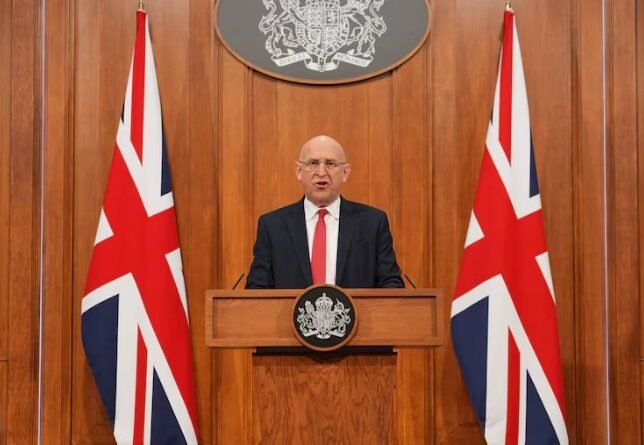
UK Defence Minister John Healey revealed that British armed forces, supported by NATO partner Norway, actively monitored and deterred Russian submarine movements that were operating for over a month near British waters earlier this year. The operation comes amid rising global concerns over the security of undersea fiber optic cables, offshore energy pipelines, and critical maritime infrastructure security in the North Atlantic and High North regions.
According to the UK Ministry of Defence, the suspected Russian naval presence included an Akula-class attack submarine along with two specialized deep-sea intelligence submarines linked to Russia’s Main Directorate for Deep-Sea Research (GUGI), units widely believed to be capable of seabed surveillance and sabotage operations during conflict scenarios.
Heightened NATO Maritime Surveillance in North Atlantic
Following detection of the vessels entering broader international waters, Britain deployed a coordinated response involving a Royal Navy frigate, a support tanker, and a maritime patrol aircraft. Norway simultaneously contributed naval and aerial surveillance assets, including a P-8 patrol aircraft and a frigate, to track underwater movements and ensure infrastructure protection.
Officials confirmed that while the Russian submarines did not enter UK territorial waters, they operated within the UK Exclusive Economic Zone (EEZ) and adjacent allied maritime regions, areas considered strategically vital for global communications and energy security.
Defence Minister Healey emphasized that the mission was designed to send a clear deterrent message to Moscow:
“We see you. We see your activity over our cables and pipelines, and any attempt to damage them will not be tolerated and will have serious consequences.”
He further stated that the Russian vessels were fully aware they were being tracked and that their covert mission had been exposed and disrupted.
Russia Denies Allegations amid Rising Maritime Tensions
In response, the Russian Embassy in London dismissed the UK’s claims, stating that the allegations were “impossible to either believe or verify” and denied any involvement in threatening undersea infrastructure.
Moscow has repeatedly rejected accusations of participation in incidents involving damaged subsea cables across Europe, despite growing concern among NATO allies over hybrid maritime threats and critical infrastructure sabotage risks.
Strategic Importance of Undersea Infrastructure Security
The incident highlights escalating geopolitical tensions in maritime domains where subsea internet cables, offshore energy networks, and deep-sea communication lines form the backbone of global connectivity and trade.
Since 2022, NATO members have increased surveillance across the North Atlantic maritime routes and Baltic Sea corridors following multiple disruptions involving cable damage and pipeline failures, many attributed to civilian shipping accidents, though security analysts warn of potential hybrid warfare risks.
NATO Strengthens High North Maritime Defense Posture
NATO Secretary General Mark Rutte welcomed the UK-Norway operation, stating that efforts to disrupt surveillance of critical infrastructure contribute to collective security across allied waters.
The UK operation also comes amid domestic scrutiny of naval readiness and force allocation, with Defence Minister Healey defending Britain’s strategic deployment decisions and emphasizing the need to prioritize maritime threat detection, subsea surveillance capabilities, and asymmetric warfare readiness.