Op-Ed: Salvage Operation at Gaddani: A Serious Threat to National Underwater Heritage and Marine Biodiversity
By Aeliya Zehra Fadoo and Muhammad Moazzam, WWF-Pakistan, Karachi
Coral reef habitats in Pakistan occur at a limited number of locations. These include areas off Hawksbay (between Abdur Rehman Goth and Cape Monz), Goth Mubbarak/Bhit Khori, Churna Island, Kaio Island, Ormara (Rodrigues Shoal), off Taq/Sakoni, Astola Island, Gwadar (off Headland), and the Daran-Jiwani region. Smaller reef patches are also present along parts of the Sindh and Balochistan coastlines.
Although restricted in distribution, these reef systems support a variety of marine organisms and provide habitat for many fish species. In addition to natural reef environments, shipwrecks along Pakistan’s coastline also influence local biodiversity patterns.
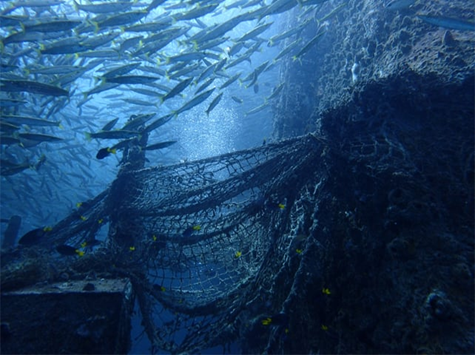
Shipwrecks frequently function as artificial reef structures. Their surfaces gradually become colonised by sessile organisms, including algae and invertebrates. As biological growth increases, additional species are attracted to these sites. Over time, structurally complex habitats develop, providing shelter and feeding opportunities for a range of marine organisms. Many shipwrecks along Pakistan’s coastline are known for supporting high levels of marine life. As a result, they are regularly visited by recreational divers, snorkelers, and fishers. Certain wreck sites have also become active fishing grounds.
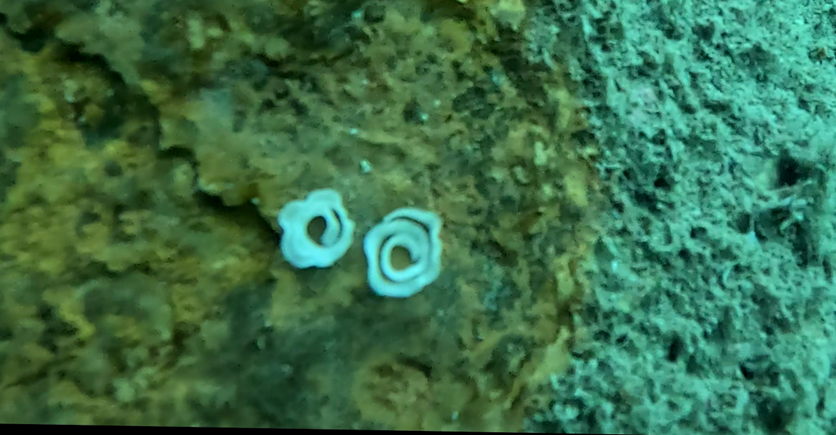
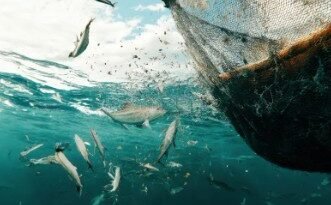
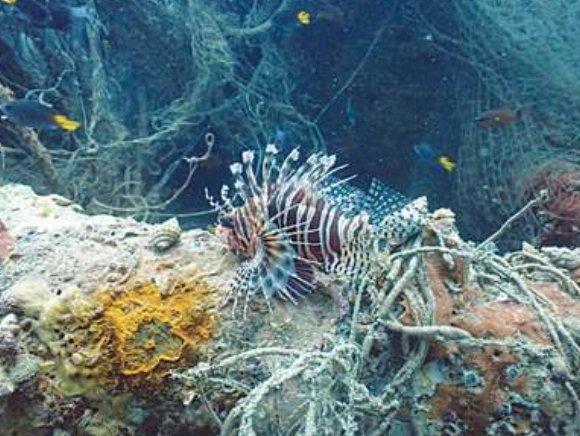
One such wreck is located northwest of Charna Island near Khalifa Point (Latitude N 25.001190°; Longitude E 066.645520°), locally referred to as the “Tugboat.” The wreck dates back to the late 1990s and has since become an ecologically important site. Coral growth on the structure remains limited. However, extensive sections of the surfaces are heavily colonised by encrusting organisms, including barnacles, oysters, hydroids, and marine algae. Fish species observed at the site include barracudas, groupers, snappers, trevallies, pennant coral fish, demoiselle fish, sweepers, and scads. Recreational divers frequently report high fish abundance at this location. The wreck is also affected by fishing activity. Abandoned fishing gear is commonly observed, and large sections of the exposed structure remain entangled in gillnets. Both multifilament and monofilament nets are present, contributing to ongoing ghost fishing. Attempts have been made to remove derelict gear from the site. Nevertheless, substantial quantities of netting remain, continuing to pose risks to the surrounding marine community.
Salvage Activities at the Tugboat Wreck
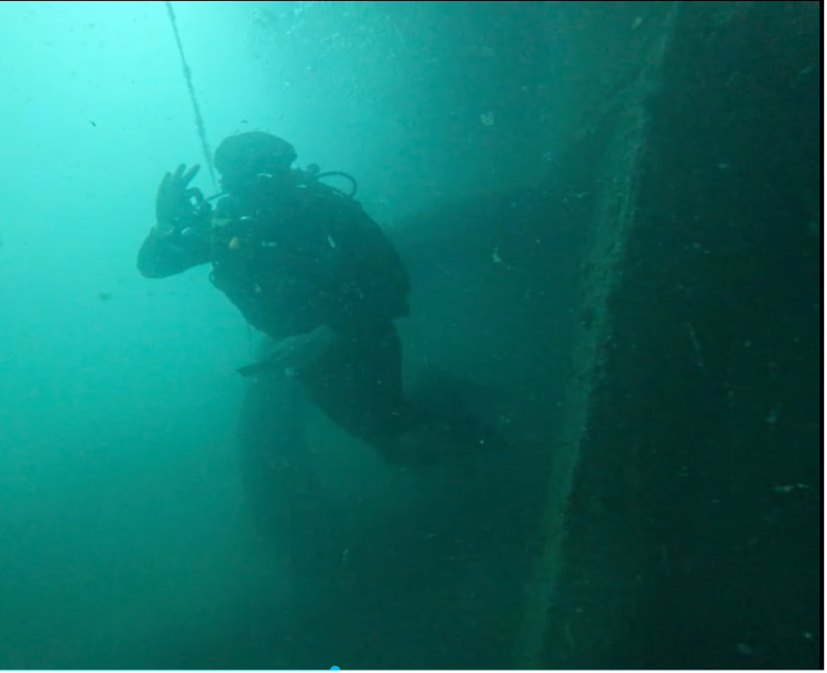
In January 2025, information became available regarding unauthorised salvage activity at the Tugboat wreck site. Relevant provincial authorities and the National Institute of Maritime Affairs were subsequently informed. While enforcement actions temporarily interrupted these activities, operations later resumed. Dives conducted from February 2025 onward, supported by photographic and video documentation, indicated that salvage efforts were focused on the tugboat’s propeller assembly. Early observations confirmed that the propulsion system initially remained intact. Earlier recreational dives also recorded the presence of propeller blades, fittings, and associated fasteners. No visible disturbances were noted at that time.
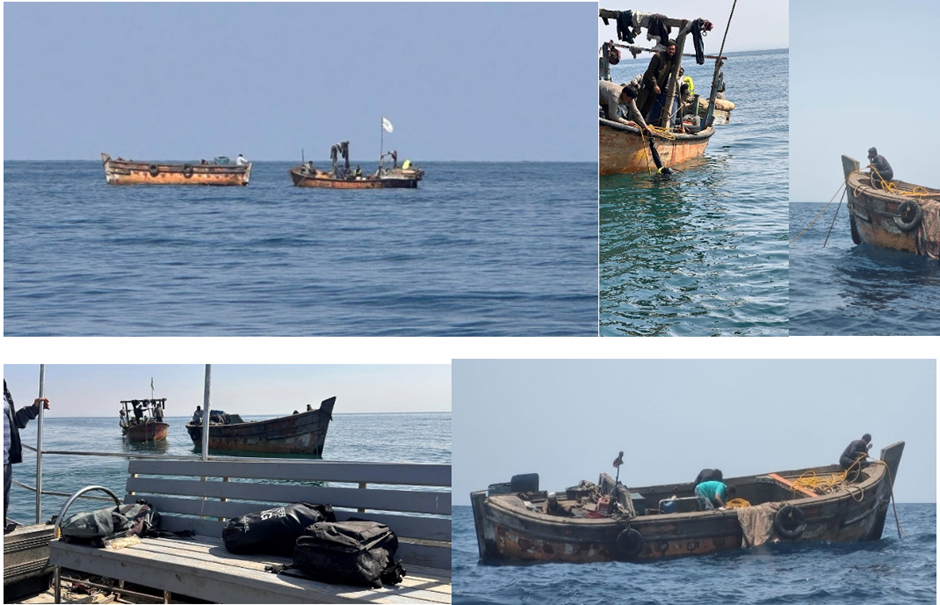
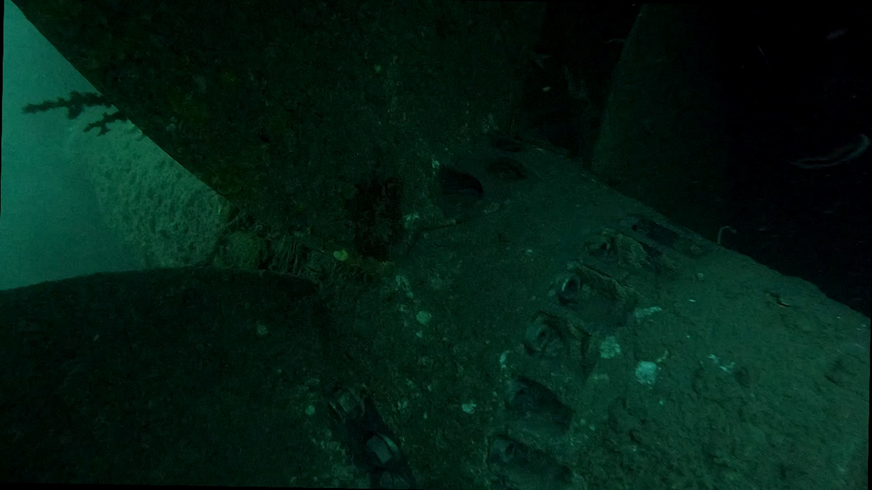
Later dives, however, identified signs of mechanical alteration. Observations included manipulated fasteners and attempts to loosen structural components associated with the propeller assembly. Photographic and video records documented multiple individuals operating from small wooden vessels positioned above the wreck site. Surface activity included the handling of ropes, lines, and deployed equipment. In several recordings, a diver was observed partially submerged near one of the vessels. Additional footage captured vessels maintaining proximity while equipment was managed at the surface. These combined observations suggest a coordinated salvage effort. Follow-up surveys confirmed that the propeller assembly had been removed. The now-empty propeller housing provides visible evidence of this alteration.
Recovered bronze propellers are commonly reused in vessel repairs or processed for metal recovery. Unauthorized salvage operations, such as the one documented at Gaddani, exemplify this practice, where valuable parts of a sunken tugboat were illicitly removed. Information from multiple sources confirms that those responsible for removing the propellers and possibly other components neither owned the tugboat nor had authorization from any relevant authorities.
Unauthorised Salvage and the Blue Economy
Unauthorised salvage represents an ongoing management concern in marine environments. Such activities may result in environmental disturbance, safety risks, and economic impacts. Disturbing submerged structures can lead to the release of pollutants, including residual fuels and heavy metals. These substances may negatively affect surrounding marine habitats. Earlier studies have shown that unregulated salvage and ship-breaking practices can influence local ecological conditions, including fish assemblages and habitat structure. Many shipwrecks also possess cultural or historical value. The removal of structural elements may therefore contribute to the gradual degradation of submerged heritage resources.
The disturbance of the Tugboat wreck at Gaddani highlights wider governance challenges associated with the monitoring and protection of submerged sites along Pakistan’s coastline. Improved documentation and protective measures may help reduce similar incidents in the future. Despite concerns raised within the diving community regarding salvage activities, responses were largely limited to documentation efforts. The contributions of divers including Amer Bazi Khan, Shabeeb Asghar, Javed Razzak, Eng. Pervaiz Sadiq, and Capt. Mujtabah were important in recording site observations.
Aeliya Zehra Fadoo is a marine science graduate with international field experience in Bali, South Africa and Egypt, focusing on marine biodiversity, conservation and marine protected areas, with particular attention to Pakistan’s coastal ecosystems. Mr. Moazzam Khan is a Technical Advisor at WWF with extensive expertise in marine conservation and sustainable fisheries, working at the interface of science, policy and practice to support ecosystem-based management and responsible fisheries through research, technical guidance and stakeholder collaboration. Mr. Moazzam Khan can be reached at (mmoazzamkhan@gmail.com)