17 Nations Launch New Global Framework to Strengthen Critical Underwater Infrastructure Security
Seventeen countries have officially launched a new international framework aimed at strengthening cooperation on the protection of critical underwater infrastructure (CUI), a move expected to enhance maritime security, subsea cable protection, and energy supply resilience worldwide.
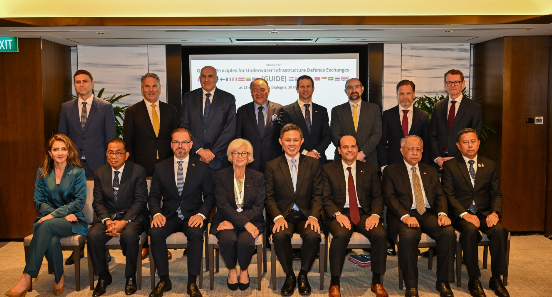
The Guiding Principles for Underwater Infrastructure Defence Exchanges (GUIDE) were formally introduced during the 23rd Shangri-La Dialogue, establishing a shared framework of principles and identifying areas where defence establishments can collaborate to improve the security of critical underwater assets.
The countries endorsing GUIDE include Australia, Brunei Darussalam, Estonia, Finland, France, Italy, Latvia, Lithuania, Malaysia, the Netherlands, New Zealand, the Philippines, Qatar, Singapore, Sweden, Thailand, and the United Kingdom.
Following its launch, the framework will remain open to participation by the wider international community, providing opportunities for additional countries to contribute to global efforts aimed at safeguarding underwater infrastructure and strengthening maritime resilience.
Speaking at the launch event, Singapore’s Defence Minister highlighted the interconnected nature of critical underwater infrastructure, emphasizing that disruptions in one area can have far-reaching impacts across international networks.
He noted that substantial work remains to establish international norms governing the installation, development, maintenance, and protection of critical underwater infrastructure, while also preventing deliberate interference and disruptions.
The minister expressed appreciation to the participating nations and underscored the importance of collective efforts to develop international standards and cooperative mechanisms to safeguard these essential assets.
Critical Underwater Infrastructure: Backbone of Global Connectivity and Energy Security
Critical underwater infrastructure consists of vital assets located beneath the ocean floor, including submarine telecommunications cables, subsea energy transmission systems, and offshore oil and gas pipelines.
These underwater networks carry approximately 95 percent of global internet traffic and transport a significant share of the world’s oil and natural gas supplies, making them indispensable to global trade, digital connectivity, energy security, and maritime commerce.
However, these strategic assets remain vulnerable to multiple threats, including accidental damage from maritime activities, environmental degradation, natural disasters, and intentional acts of sabotage or vandalism.
Historical and contemporary conflicts have demonstrated the strategic importance of underwater infrastructure. During World War I, for example, British forces targeted German undersea telegraph cables, highlighting the longstanding vulnerability of subsea communication networks during periods of conflict.
ASEAN Expands Regional Cooperation on Underwater Infrastructure Protection
Efforts to strengthen critical underwater infrastructure protection within Southeast Asia date back to 2019, when ASEAN adopted guidelines aimed at improving the resilience and repair capabilities of submarine cable networks.
Regional cooperation advanced significantly during the 19th ASEAN Defence Ministers’ Meeting, held in Penang, Malaysia, on 26 February 2025, where defence ministers agreed to enhance military capabilities and cooperation for protecting critical underwater infrastructure.
At the same meeting, ministers expressed support for a discussion paper jointly submitted by Singapore and Thailand, proposing deeper military cooperation on underwater infrastructure security. The proposal recognized that armed forces are frequently called upon to support emergency response and recovery operations following disruptions to critical subsea networks.
Read: Archaeologists Discover Centuries-Old Shipwrecks in Bay of Gibraltar
Further strengthening regional efforts, ASEAN Digital Ministers updated and enhanced the 2019 submarine cable resilience guidelines during their 6th ASEAN Digital Ministers’ Meeting in Hanoi, Vietnam, in January 2026.
The launch of GUIDE marks a significant step toward greater international cooperation in protecting the underwater systems that support global communications, maritime trade, offshore energy transportation, and digital economies.