Op-Ed: Panama and its Important Role in International Maritime Trade and its Ship Registry
By Rogelio M. Aguilar
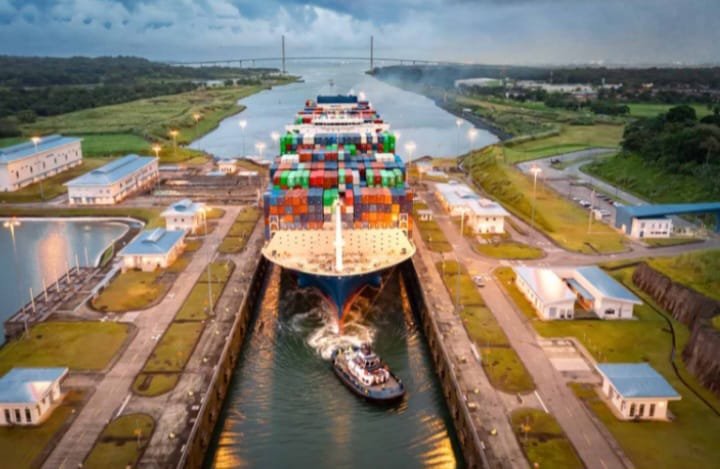
Before 1914, vessels had to travel all the way to the southern tip of the American continent to cross from one ocean to another. The opening of the Panama Canal drastically transformed global trade since its inauguration, reducing transit time and avoiding high transportation costs. Panama not only leads in the transit of goods but also positions itself as one of the largest ship registries in the world, with strong legal security in ship mortgages and a specialized legal framework that guarantees safe and efficient transactions.
Approximately 5% of global trade passes through this engineering work, generating significant revenue for the National Treasury in the Republic of Panama. On September 7, 1977, the Torrijos–Carter Treaties were signed between Panama and the United States, completely changing the course of the Canal’s administration. This treaty established that Panamanians would have control over the Canal, and the transfer was completed on December 31, 1999.
Due to the constant growth of global trade and the demand for ships with tonnage and dimensions exceeding the locks built in 1914, a decision was made to expand the Canal, which was approved through a referendum in which the Panamanian people participated. On June 26, 2016, the expansion was inaugurated, allowing the transit of vessels with greater length, beam, and cargo capacity, the so-called Neopanamax ships.
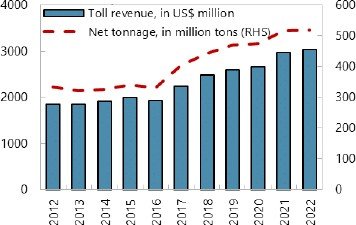
After the 2016 expansion, the Canal’s toll revenues and tonnage progressively increased, as the project effectively doubled its capacity by adding a new traffic lane and enhancing the width and depth of lanes and locks to accommodate larger vessels. This increase in transit capacity led to a rise in both passenger and container flows, reflected in higher toll revenues and shipping tonnage. The expansion also enabled ships carrying over 15,000 containers,triple the previous capacity,to access new markets, while opening the Canal to large cruise ships and expanding hydrocarbon gas liquid transit by allowing liquefied natural gas (LNG) tankers to pass through and facilitating the movement of liquefied petroleum gas (LPG), mainly from the United States to Asia. With this expansion, Panama further strengthened its importance as a global logistics hub.
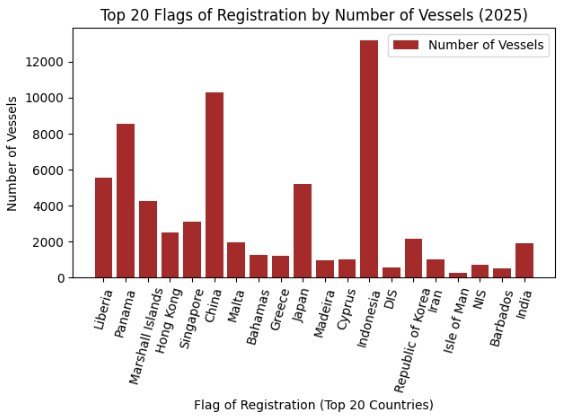
On the other hand, Panama has one of the largest ship registries in the world, consolidating it as a fully maritime nation. It is a registry with fast and flexible procedures, supported by a modern system that has been developing rapidly. In 2020, the Panama Maritime Authority took a major step forward with the implementation of a QR code system, where documents are issued digitally, speeding up delivery times for clients. It has also developed new platforms for issuing technical certificates and the new REN system for registering ownership titles and ship mortgages.
This last point, ship mortgages, is one of the most important for clients, as it provides legal certainty for mortgage creditors seeking protection for their investments. The registry allows for the preliminary registration of mortgages through its extensive network of merchant marine consulates worldwide. Another key development of the Panamanian Registry is the creation of technical offices in major regions of the world, where clients have direct access to meet their needs.
As an active country closely involved with the International Maritime Organization (IMO), Panama plays a significant role in implementing new maritime regulations, such as the recent ratification of the Beijing Convention 2022 on the judicial sale of ships. This convention seeks to ensure legal certainty when purchasing a vessel through judicial sale, guaranteeing that the ship is free of liens, mortgages, or any other debts that could create recognition conflicts in any state.
Finally, to briefly mention our maritime experience, we are a law firm specialized in Maritime Law in Panama, primarily focused on ship registration in Panama, registration of ownership titles, mortgage registration and cancellations, as well as the issuance of technical certifications.

Rogelio M. Aguilar is a maritime professional with academic training in Maritime and Port Administration, complemented by practical experience at the Panama Maritime Authority, where he specialized in Port State Control and maritime safety inspections. He has also worked with leading maritime law firms in Panama, gaining expertise in vessel registration processes and providing advisory services to international shipowners from countries such as Chile, Denmark, and Greece.
The views and opinions expressed in this article are solely those of the author and do not necessarily reflect the views of Maritime Current News.